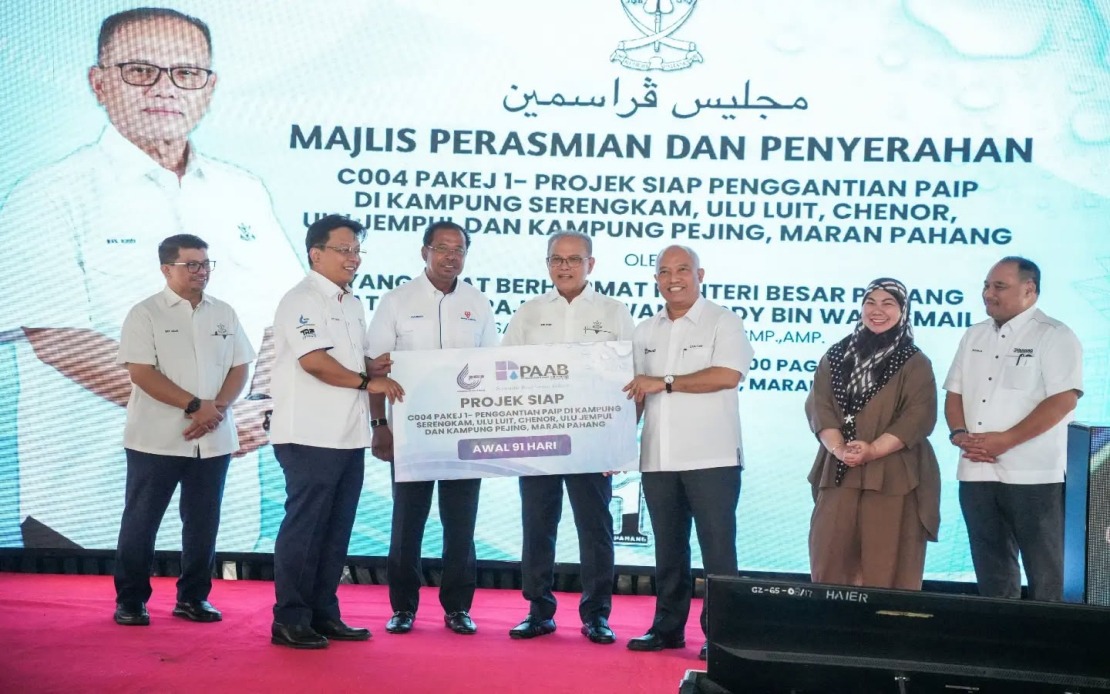
Residents of Maran in Pahang can finally look forward to uninterrupted water supply after Pengurusan Aset Air Berhad (PAAB) completed a RM11.19 million pipe replacement initiative that tackles nearly two decades of chronic water shortages. The project, which included the replacement of 29.6 kilometres of aged and corroded pipes across several communities including Kampung Serengkam, Ulu Luit, Pejing, Ulu Jempul and Chenor, was delivered three months ahead of schedule—a rare occurrence in Malaysian infrastructure projects that underscores the commitment to resolving this long-standing community grievance.
The water supply disruptions that plagued Maran, particularly affecting the Chenor sub-district, have been a persistent headache for authorities and residents alike. Frequent burst pipes, inconsistent pressure during peak demand periods, and seasonal shortages during dry months and festive holidays have disrupted daily life and economic activity. The completion of this project represents a turning point in addressing infrastructure deficits that have accumulated over decades of underinvestment in water systems serving smaller towns and rural areas across Malaysia.
With nearly 10,000 residents directly benefiting from the initiative, the scope of impact extends well beyond merely fixing a utility problem. Access to reliable clean water is fundamental to public health, educational outcomes, and local economic development. In Maran's case, the project promises measurable improvements in quality of life that extend to neighbouring communities dependent on the same supply network. Authorities estimate the initiative will contribute meaningfully to socioeconomic advancement across the district by removing a significant barrier to business operations and residential stability.
A cornerstone achievement of the project lies in its approach to reducing non-revenue water—the technical term for water lost through leakage in distribution networks. In many Malaysian municipalities, non-revenue water losses exceed 30 per cent, representing both financial wastage and environmental inefficiency. By replacing deteriorating pipes with modern infrastructure, PAAB addresses both the symptom and underlying cause of supply instability, potentially improving system performance across Maran's broader water network.
The official handover ceremony at Chenor Water Treatment Plant drew attendance from Pahang Menteri Besar Datuk Seri Wan Rosdy Wan Ismail, alongside Deputy Energy Transition and Water Transformation Minister Datuk Seri Abdul Rahman Mohamad and Deputy Economy Minister Datuk Mohd Shahar Abdullah. This high-level political presence signals the national importance attributed to resolving regional water infrastructure challenges, reflecting broader federal priorities around water security and service reliability.
Beyond the immediate Maran project, PAAB's three-year commitment to collaborate with Pengurusan Air Pahang Berhad (PAIP) on comprehensive water infrastructure planning across multiple Pahang districts demonstrates strategic thinking about systemic vulnerabilities. The partnership encompasses upgrading electrical systems at the Jengka Utama Water Treatment Plant, addressing recurring supply issues in the Felda Jengka settlement—another area that has experienced recurring disruptions. Additionally, a RM35.7 million initiative will replace 76.2 kilometres of aged pipes in Jerantut and Lipis, while a separate RM13 million project targets 11 kilometres of replacement pipework in Felda Keratong to enhance supply efficiency in Rompin.
These parallel initiatives reveal a coordinated strategy to modernise Pahang's water infrastructure systematically rather than in isolated pockets. For Malaysian readers, this approach offers encouragement that water security—increasingly critical amid climate variability and population growth—is receiving serious capital allocation and strategic attention. The scale of PAAB's financial commitment is substantial: as of July this year, the organisation had allocated RM1.17 billion for water supply infrastructure projects specifically in Pahang, with nearly RM70 million already spent on completed works and another RM67 million committed to ongoing construction.
The broader context of PAAB's operations illuminates how Malaysian federal water infrastructure is managed. Established in 2006 under the Water Services Industry Act 2006, PAAB functions as the federal government's principal instrument for implementing the National Water Services Industry Restructuring Plan. As a wholly owned entity under the Minister of Finance Incorporated, it operates within a governance structure regulated by the Ministry of Energy Transition and Water Transformation (PETRA), ensuring alignment with national water sector transformation objectives.
PAIP's engagement in Pahang's water systems deepened following the Pahang State Water Supply Services Restructuring Agreement signed in 2020, formalising the partnership between federal infrastructure investment and state-level service delivery. This institutional arrangement reflects a deliberate framework for decentralising water management while maintaining overarching federal standards and capital support. For Southeast Asian readers tracking water security trends, Malaysia's approach demonstrates how federal agencies can partner with state entities to address regional disparities in infrastructure investment.
Looking beyond the immediate achievements in Maran, the project underscores a critical gap that persists in Malaysian water service delivery: many smaller municipalities and rural areas have historically received insufficient infrastructure investment compared to major urban centres. The substantial time lag—nearly two decades of disruptions before comprehensive remediation occurred—suggests systemic pressures in infrastructure prioritisation that likely affect other regions similarly. This project's successful completion may catalyse faster intervention in comparable crisis zones elsewhere.
The federal government's stated objective to transform Malaysia's water sector into a more resilient, efficient and sustainable system provides the overarching framework driving PAAB's Pahang initiatives. This ambition encompasses not merely repairing existing infrastructure but fundamentally upgrading capacity to withstand climate pressures, population growth, and service demand increases. The RM981 million in projects currently in planning and design stages across Pahang alone indicates the scale of transformation envisioned across the coming decade.
For Maran residents and observers monitoring Malaysian infrastructure governance, this project demonstrates that persistent advocacy, political attention, and capital mobilisation can eventually resolve even entrenched public service deficiencies. The three-month acceleration ahead of schedule suggests efficient project management and adequate resource allocation—qualities that citizens increasingly demand from government infrastructure initiatives. As climate variability intensifies water security challenges across Southeast Asia, Malaysia's investment in modernising regional water systems offers both practical benefits to affected communities and a model for addressing similar crises in comparable jurisdictions.

