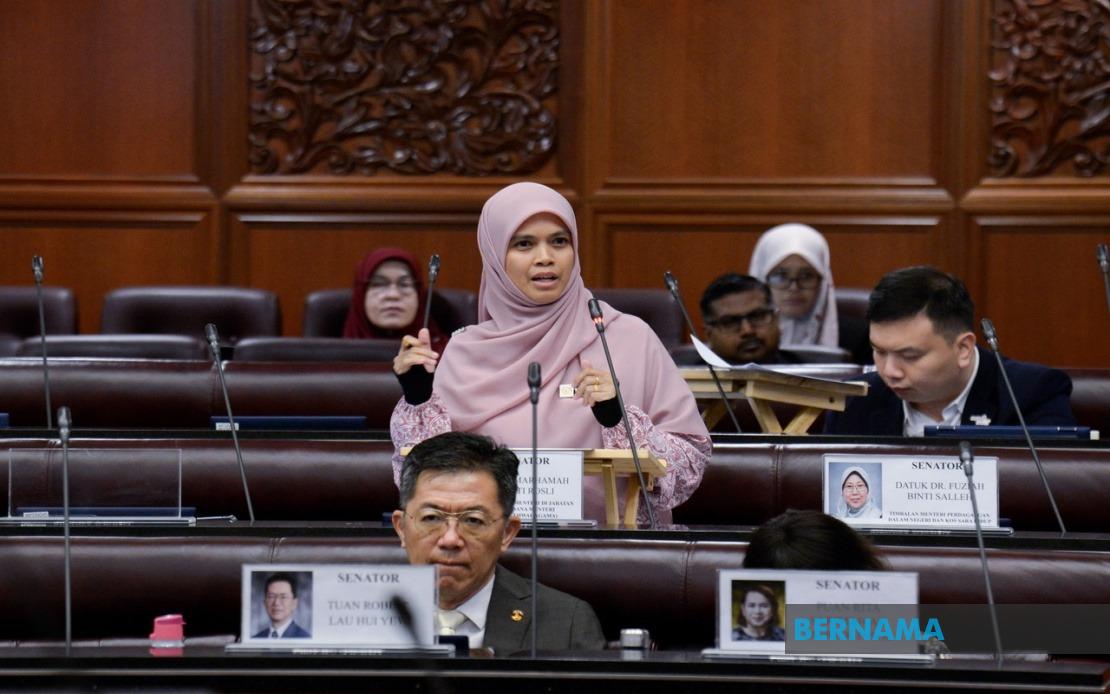
Malaysia's commitment to expanding mosque infrastructure has taken concrete form with the approval of 92 construction projects totalling RM160.82 million in allocations since 2023, according to Deputy Minister in the Prime Minister's Department (Religious Affairs) Senator Marhamah Rosli. Speaking in the Dewan Negara, Marhamah revealed that the nationwide initiative has already yielded tangible results, with 54 mosques completed and another 16 currently under active construction across various states.
The remaining 22 projects are still in early stages, either awaiting implementation or navigating the procurement process that precedes groundbreaking. This staggered development timeline reflects the complexity of coordinating large-scale religious infrastructure across Malaysia's diverse federal system, where approval must cascade through multiple layers of state and federal oversight. The phased approach allows authorities to prioritise projects based on urgency and readiness rather than rushing all developments simultaneously.
The approval framework for new mosque construction reflects a careful assessment of genuine community requirements rather than arbitrary expansion. State religious authorities conduct detailed evaluations examining demographic trends, including Muslim population growth and density in specific localities. Planners consider the existing mosque network, examining both current capacity constraints and geographical gaps where worshippers must travel excessive distances to reach available facilities. Land availability and legal status receive scrutiny to ensure sites are suitable and properly registered, while state governments' willingness and capacity to contribute funding determines feasibility.
This collaborative financing model emerged from a pivotal decision reached at the 139th Meeting of Menteri Besar and Chief Ministers in June 2022. Under this arrangement, both federal and state governments share the financial burden of mosque development, acknowledging that religious infrastructure constitutes a shared responsibility within Malaysia's constitutional framework. The partnership approach distributes costs equitably and ensures that state governments maintain agency over projects within their jurisdictions, respecting the constitutional allocation of religious affairs between federal and state authorities.
Beyond the physical infrastructure milestone, Malaysia's mosque expansion programme addresses broader social functions within the Islamic community. Mosques have increasingly become community hubs serving vulnerable populations including the homeless, urban poor, and low-income groups. This expanded role reflects recognition that religious institutions can deliver welfare services extending far beyond spiritual guidance, particularly in urban areas where traditional social safety nets have weakened.
Various welfare initiatives operate through collaborative networks spanning the Department of Islamic Development Malaysia (JAKIM), state-level Islamic religious departments, municipal councils, non-governmental organisations, and faith-based community groups. This multi-stakeholder approach leverages different strengths: government agencies provide regulatory oversight and resources, while NGOs contribute grassroots expertise and established community connections. The practical output includes targeted assistance for asnaf groups (deserving categories in Islamic welfare classification), regular food basket distribution reaching vulnerable families, and community kitchen programmes that provide affordable meals while fostering social cohesion.
Financial support extends to emergency assistance for families facing unexpected hardship, coupled with education aid enabling children from disadvantaged backgrounds to remain in school. Counselling services address psychological and social challenges that often accompany poverty, while funeral management assistance removes financial barriers when families cannot afford burial costs. Temporary shelter facilities provide immediate refuge for those experiencing homelessness, representing a humane response to urban poverty that remains inadequately addressed through secular welfare channels alone.
For Malaysian policymakers and religious leaders, this expansion represents strategic alignment between infrastructure development and social welfare objectives. Rather than treating mosque construction as ceremonial box-ticking, the MADANI government has positioned mosques as operational centres for community support. This rationale gains particular relevance in Malaysia's rapidly urbanising landscape, where traditional community structures have fragmented and newly arrived urban residents often lack established social networks. Mosques provide trusted institutional anchors where vulnerable populations can access support without navigating bureaucratic complexity.
The initiative also reflects demographic realities within Malaysia's Muslim-majority nation. Population growth, internal migration, and changing settlement patterns mean that mosque coverage gaps emerge in previously underdeveloped areas or newly expanding urban neighbourhoods. Rapid development in the Klang Valley, satellite cities around Kuala Lumpur, and emerging economic zones in other states has created legitimate demand for prayer facilities and community spaces. Systematic expansion ensures that religious accommodation keeps pace with demographic change rather than lagging several years behind.
For Southeast Asian observers, Malaysia's integrated approach to religious infrastructure and social welfare offers a model balancing institutional expansion with practical community service. While the scale remains modest compared to Malaysia's total development expenditure, the strategic linking of mosque construction to welfare delivery demonstrates how religious facilities can serve plural functions within secular governance frameworks. The federal-state cost-sharing mechanism also provides lessons for other federalised systems managing religious affairs across jurisdictional boundaries.
Looking forward, the success of this initiative depends on several factors beyond approval and funding. Project execution quality will determine whether mosques function as intended community centres or become underutilised monuments. Staff training and community engagement programmes must accompany physical completion to ensure welfare initiatives achieve genuine impact. Coordination between multiple agencies requires sustained institutional commitment to avoid the fragmentation that often undermines multi-stakeholder social programmes.
The approval of these 92 projects represents substantial investment in Malaysia's religious and social infrastructure during a period of fiscal scrutiny. By demonstrating that mosque development delivers quantifiable welfare outcomes alongside religious accommodation, policymakers have constructed a compelling rationale for continued support. As more projects progress to completion, evaluating actual usage patterns and welfare delivery effectiveness will provide critical feedback for refining the programme's design and scaling its impact across Malaysian communities.

