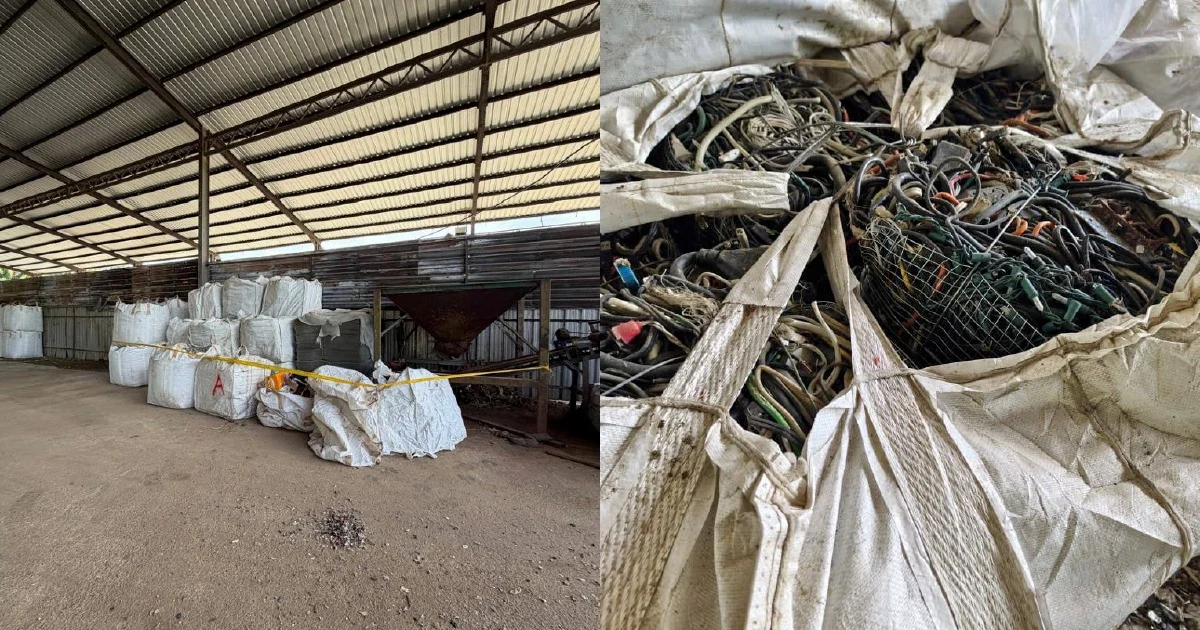
Enforcement authorities executed a substantial raid on an unlicensed electronic waste facility in Bukit Mertajam yesterday, resulting in the seizure of materials estimated at RM3 million and the arrest of five individuals connected to the illegal operation. The discovery represents another significant blow against the underground e-waste industry in Penang, a state that has increasingly become a focal point for environmental crime syndicates operating across Malaysia's manufacturing-heavy regions.
The facility targeted in yesterday's enforcement action was operating without proper licensing or regulatory approval, processing and stockpiling electronic waste in violation of Malaysia's environmental protection legislation. Such unauthorised operations typically extract valuable metals and components from discarded electronics whilst creating substantial environmental and public health hazards through improper handling of toxic materials including lead, mercury, and cadmium. The illegal dismantling process often occurs in inadequate conditions, exposing workers and nearby communities to dangerous pollutants that contaminate soil and groundwater.
Electronic waste has emerged as a persistent challenge across Southeast Asia, with Malaysia serving as an important transshipment point for discarded electronics from developed nations. Much of this waste enters illegal processing networks rather than flowing through legitimate recycling channels, creating a two-tier system where informal operators undercut licensed facilities through non-compliance with safety and environmental standards. The Bukit Mertajam operation exemplifies how such illegal networks establish themselves in industrial areas where monitoring can be evaded through coordination with local contacts and exploitation of enforcement resource constraints.
The arrested individuals are expected to face charges under Malaysia's Environmental Quality Act 1974 and potentially the Occupational Safety and Health Act 1994, depending on the scope of the investigation. Prosecutions in e-waste cases have increased in recent years as authorities recognise the environmental threat posed by uncontrolled processing activities. Conviction typically results in substantial fines and imprisonment, though sentencing patterns suggest that penalty levels remain insufficient to deter major operators within organised syndicates.
The RM3 million valuation reflects both the quantity of seized materials and the market value of recoverable metals including copper, gold, and rare earth elements that illicit processors extract. Legitimate recyclers estimate that a tonne of electronic waste contains significantly more gold than ore mined from typical gold deposits, which explains the economic incentive driving illegal operations despite environmental and safety costs. Underground networks capture this value whilst avoiding compliance expenses, creating competitive pressure on licensed operators and distorting the entire Malaysian recycling market.
Penang's prominence as an enforcement target reflects both the state's heavy concentration of electronics manufacturing and the established presence of smuggling networks that facilitate transnational waste flows. The state has experienced multiple major raids in recent years, suggesting that illegal operators either rapidly reconstitute operations following enforcement action or operate multiple facilities to distribute risk. The sustainability of these enforcement successes depends on whether authorities can identify and prosecute upstream smugglers and downstream buyers of processed materials.
The operation demonstrates coordination between environmental enforcement agencies and other authorities in executing comprehensive raids on complex illegal facilities. Such operations require prior intelligence gathering, surveillance, and planning to ensure officer safety and evidence preservation. Yesterday's seizure followed similar patterns observed in previous enforcement actions, indicating that authorities are developing stronger intelligence about the operational structures and geographic distribution of e-waste syndicates throughout Peninsular Malaysia.
Environmental advocates have characterised the continued emergence of illegal e-waste operations as evidence of insufficient formal recycling capacity relative to the volume of discarded electronics generated across Malaysia. The nation generates hundreds of thousands of tonnes of e-waste annually, yet licensed recycling facilities reportedly cannot process volumes at competitive rates relative to illegal operators. Extended producer responsibility schemes, which require manufacturers to fund recycling programmes, remain underdeveloped in Malaysia compared to jurisdictions such as South Korea and the European Union.
International frameworks for managing e-waste have strengthened substantially, with the Basel Convention and its amendments establishing protocols for cross-border movement of electronic waste. Malaysia is a signatory to these agreements, which creates legal obligations to inspect shipments and prosecute smugglers. However, enforcement of transnational provisions remains inconsistent across Southeast Asia, allowing organised networks to route waste through jurisdictions with weaker port controls and inspection capacities.
The investigation into the Bukit Mertajam facility will likely focus on identifying the sources of incoming waste materials, the distribution networks for processed outputs, and the financial beneficiaries coordinating the operation. Such facilities typically involve layers of intermediaries, making it difficult to establish liability for senior organisers. Authorities will examine whether the operation represents part of a larger syndicate or functions independently, information that carries implications for whether enforcement has disrupted a network or merely removed a single processor.
Licensed e-waste recyclers in Malaysia have increasingly advocated for stricter enforcement and higher penalties for illegal competitors, arguing that compliance costs create unsustainable disadvantages when operating alongside unregulated facilities. Industry representatives have called for increased government support for the formal recycling sector through extended producer responsibility funding and market protection measures. Yesterday's enforcement action, whilst substantial, underscores the ongoing tension between growing volumes of discarded electronics and the capacity of legitimate infrastructure to manage these materials sustainably.