Prime Minister Datuk Seri Anwar Ibrahim has approved a RM44.5 million investment package dedicated to implementing 30 flood mitigation projects spanning Petaling Jaya and Damansara, marking a significant step in addressing persistent flooding challenges affecting these populated Selangor districts. The initiative represents a coordinated response between federal and state authorities to tackle infrastructure vulnerabilities that have repeatedly exposed residents and businesses to inundation risks during heavy rainfall seasons.
According to government spokesperson Datuk Seri Fahmi Fadzil, the Implementation Coordination Unit (ICU) operating under the Prime Minister's Department will serve as the central hub managing the execution of these flood defence measures. This institutional arrangement underscores the administration's commitment to streamlining project delivery and ensuring accountability across multiple jurisdictional layers. The establishment of dedicated coordination mechanisms reflects lessons learned from previous infrastructure projects where fragmented oversight contributed to delays and cost overruns.
Beyond the primary flood mitigation allocation, the government has committed additional resources to address broader community development priorities within these constituencies. The Petaling Jaya parliamentary area will receive RM3 million earmarked specifically for implementing Projek Mesra Rakyat (PMR) initiatives, community-focused schemes designed to respond directly to grassroots concerns and support civil society organisations operating within the region. Meanwhile, the Subang Jaya parliamentary constituency has been allocated RM1.5 million for similar targeted interventions, demonstrating a differentiated approach to resource distribution based on local needs assessments.
The coordination structure itself merits examination as it reveals the operational complexity of managing large-scale infrastructure across overlapping administrative boundaries. Both the Selangor ICU and the Federal ICU will share oversight responsibilities, a framework intended to synchronise state and national priorities while preventing duplication and facilitating resource efficiency. For Malaysian readers familiar with governance challenges, this dual-layer coordination illustrates attempts to harmonise federal-state relations in service delivery, a persistent tension point in the nation's federal structure.
The identification of flood hotspots in Petaling Jaya and Damansara reflects accumulated data from previous inundation events and hydrological assessments. These districts, densely populated and economically significant areas within the Klang Valley, have experienced recurring monsoon-related flooding that disrupts commerce, displaces residents temporarily, and imposes substantial recovery costs on affected communities. The targeted approach suggests planners have moved beyond blanket solutions toward precision interventions addressing specific vulnerable zones prone to accumulating water during intense precipitation.
During the announcement event held at the Petaling Jaya Smart Centre, the administration's emphasis on collaborative federalism between national and state governments became evident. This partnership model carries implications beyond flood mitigation, signalling potential templates for addressing other cross-jurisdictional challenges including waste management, transportation, and public health infrastructure. For Southeast Asian observers, Malaysia's approach offers insights into how larger metropolitan areas within the region might coordinate responses to climate-induced weather volatility.
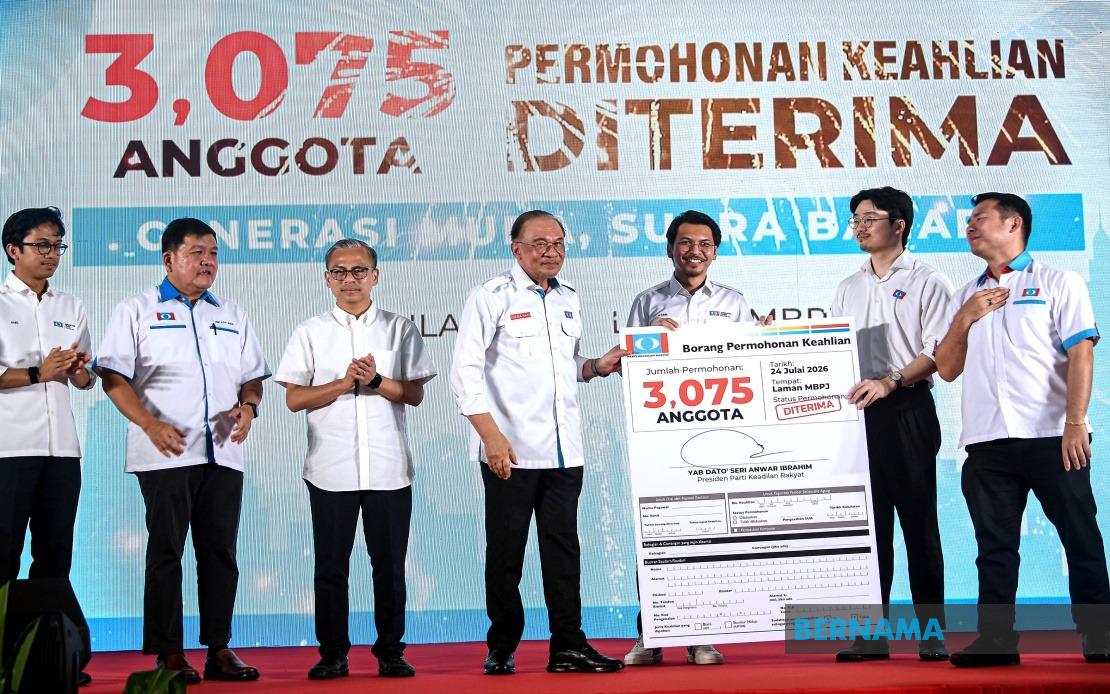
In related developments, the occasion also highlighted significant momentum within the ruling coalition's efforts to consolidate youth participation and political engagement. Datuk Seri Fahmi announced that PKR welcomed 3,075 new members during the event, with Generation Z comprising the substantial majority of recruits who joined specifically through Angkatan Muda Keadilan (AMK), the party's youth wing. This influx reflects broader demographic shifts in Malaysian politics where younger cohorts increasingly constitute decisive electoral segments.
The strategic focus on Generation Z represents a deliberate calculus regarding future electoral viability and the reformation of political messaging to resonate with digitally-native populations. The overwhelming youth participation at the Petaling Jaya gathering has prompted PKR leadership to conceptualise a nationwide expansion of its recruitment and engagement apparatus through the proposed Jelajah AMK Gen Z programme. This initiative appears designed to operationalise the party's reformasi narrative in vernacular terms accessible to voters born after 2000, who possess fundamentally different political reference points than their predecessors.
Fahmi's clarification that the nationwide tour programme should not be construed as preparation for state elections or general elections reveals sensitivity regarding perceptions of premature campaign mobilisation. Malaysian electoral regulations and political conventions establish boundaries around when political parties may initiate large-scale outreach activities. By characterising the initiative as a sustained party-building exercise rather than campaign preparation, PKR seeks to position itself within acceptable parameters whilst capitalising on demonstrated grassroots enthusiasm among younger demographics.
The convergence of flood mitigation investment announcements with youth recruitment drives within a single public event illustrates how Malaysian political leadership strategically integrates governance delivery with party organisational interests. The provision of concrete infrastructure funding validates the administration's competence narrative whilst simultaneously creating opportunities for party apparatus to mobilise community appreciation into expanded membership bases. This dual messaging approach remains common across Malaysian political landscapes regardless of which coalition holds office.
For residents of Petaling Jaya and Damansara specifically, the RM44.5 million commitment addresses immediate concerns rooted in lived experience of flood-related disruption. The success of these 30 projects will substantially influence public assessments of the current government's effectiveness in translating electoral mandates into tangible service improvements. Climate projections indicating intensifying rainfall patterns throughout Southeast Asia suggest such infrastructure investments will become increasingly essential across the region's urbanised zones, establishing precedents for how national governments allocate resources toward climate adaptation.
The implementation timeline for these flood mitigation projects remains unspecified in current announcements, representing a detail crucial to assessing genuine commitment levels. Malaysian infrastructure initiatives historically experience significant delays between funding approval and project completion, factors attributable to design finalisation, land acquisition complexities, and contractor mobilisation challenges. Close monitoring of project progression will provide valuable indicators regarding the effectiveness of ICU-based coordination mechanisms and whether this particular funding allocation follows or diverges from historical implementation patterns.

