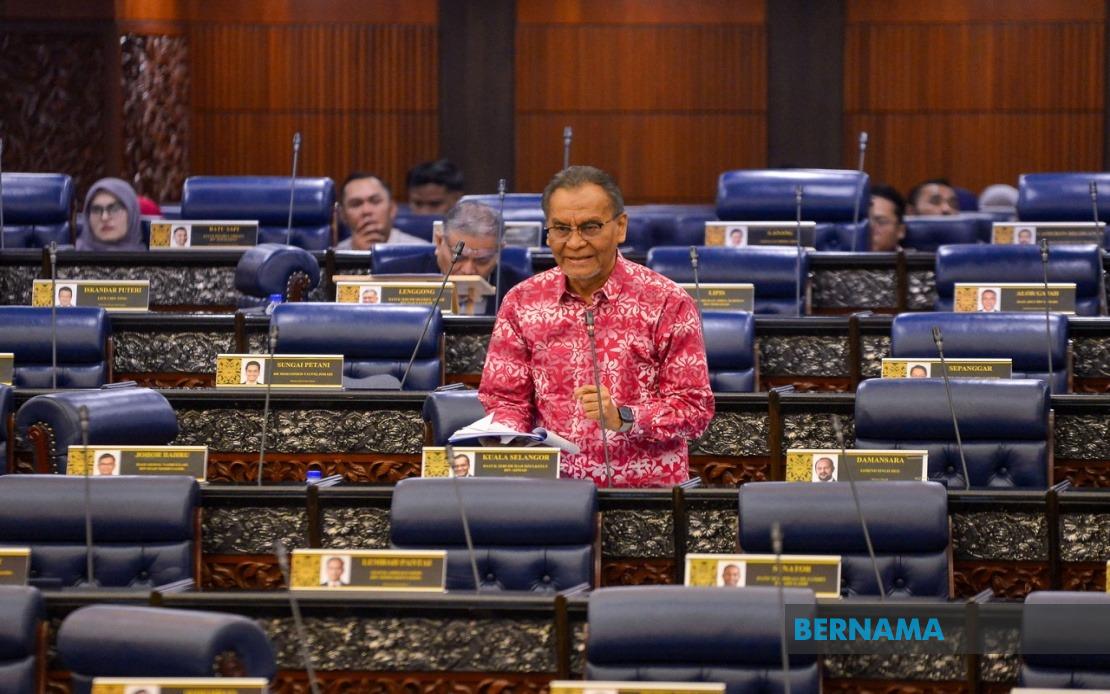
The Ministry of Health faces a RM500 million expenditure restriction warrant, yet Health Minister Datuk Seri Dr Dzulkefly Ahmad insists the measure poses no threat to the quality or scope of healthcare services delivered to Malaysians. Speaking in Parliament on July 2, the minister characterised the financial adjustment as a straightforward technical manoeuvre targeting allocations earmarked for vacant civil service positions that remain unfilled throughout the fiscal year.
At its core, the budget restriction reflects a mismatch between approved staffing levels and actual recruitment capacity across Malaysia's healthcare system. The Ministry of Health has received approval for 18,641 positions from the Public Service Department, yet the government has struggled to recruit sufficient qualified personnel to occupy all these roles. Dzulkefly explained that this persistent gap in recruitment has created a pool of unutilised funding—approximately RM500 million—that the Finance Ministry has moved to restrict under the warrant issued on June 5. The minister framed this recalibration as prudent fiscal housekeeping rather than a cutback to operational capacity.
The restricted amount represents merely 1.07 per cent of the MOH's total annual allocation of nearly RM46.52 billion, a relatively modest proportion of the overall health budget. This contextual detail becomes crucial when assessing public anxiety about service disruptions. Dzulkefly was responding to parliamentary queries from Datuk Shahelmey Yahya, the BN member for Putatan, and supplementary questions from Abdul Latiff Abdul Rahman, representing Kuala Krai for Perikatan Nasional, both of whom raised concerns that fiscal retrenchment might compromise healthcare delivery, particularly in rural and underserved regions.
The minister explicitly differentiated between the frozen allocation and actual operational spending. He stressed that the RM500 million adjustment does not touch funding for day-to-day hospital operations, staff salaries and allowances, professional development and training initiatives, or the acquisition of medical equipment and supplies. Instead, the government has undertaken what Dzulkefly termed a deliberate re-prioritisation of expenditure patterns, shifting resources toward areas of genuine operational need whilst redirecting surplus allocations back to the central treasury.
Dzulkefly's parliamentary statements directly rebut suggestions that the warrant would constrain service capacity at healthcare facilities, whether urban teaching hospitals or regional clinics serving rural populations. He categorically denied that the adjustment would curtail basic medical services or freeze ongoing health infrastructure development projects. This assurance carries particular weight given Malaysia's ongoing challenges in providing equitable healthcare access across geographically dispersed communities, where distance and limited facilities already create service barriers.
Beyond defending the current budget adjustment, Dzulkefly outlined broader initiatives aimed at strengthening Malaysia's healthcare landscape. The Ministry of Health, working through the Joint Committee on Private Healthcare Costs (GBMKKS), plans to launch a new insurance product during the present month at selected hospitals. This scheme, formally titled the Base Medical and Health Insurance or Takaful (MHIT), represents an attempt to provide Malaysians with affordable basic health coverage that addresses the escalating cost of private sector treatment. The product is designed to offer straightforward, economical protection whilst still meeting essential coverage needs, with full nationwide availability anticipated by January 2027.
The MHIT initiative responds to genuine public concern about healthcare affordability. Private hospital charges in Malaysia have risen substantially over recent years, driven by regulatory expenses, technological advancement, and competitive staffing costs. Insurance premiums corresponding to private sector treatment have similarly climbed, pricing comprehensive coverage beyond the reach of middle-income households. By introducing a basic, lower-cost insurance alternative, the government seeks to expand health protection beyond those able to afford premium-tier private plans whilst reducing pressure on public sector facilities absorbing uninsured patients requiring emergency care.
Complementing the insurance initiative is the government's implementation of a Diagnosis Related Groups (DRG) payment system designed to standardise charges and billing methodologies across Malaysia's fragmented hospital landscape. Currently, hospitals operated by the public health ministry, private healthcare corporations, university medical centres, and military medical facilities employ varying cost structures and billing approaches. The DRG framework establishes uniform payment benchmarks based on diagnosis and treatment type, enabling transparent, comparable pricing across all provider categories. This standardisation promises to reduce administrative complexity for patients navigating multiple healthcare settings whilst promoting cost discipline among service providers.
The combined effect of these measures—the budget adjustment, the MHIT insurance product, and the DRG payment standardisation—suggests a government strategy focused on sustainable healthcare financing rather than immediate spending reductions. Dzulkefly's emphasis on technical reallocation rather than operational cuts reflects an effort to maintain public confidence during a period of broader fiscal constraint affecting multiple government ministries. The reassurance about uninterrupted service delivery, however, requires monitoring against actual performance metrics in subsequent months.
For Malaysian healthcare stakeholders, including patients, healthcare workers, and hospital administrators, the budget adjustment's actual impact will ultimately prove more significant than ministerial assurances. Public facilities serving millions of Malaysians, particularly in states with limited private sector alternatives, operate on carefully calibrated budgets where even modest reductions can create operational friction. The sustainability of the health system depends on whether recruitment targets genuinely remain unmet—requiring verification of Public Service Department hiring data—or whether the RM500 million restriction masks deeper structural pressures on healthcare spending.
The political context surrounding the budget warrant also warrants consideration. Parliamentary questions from both government-aligned and opposition figures suggest cross-party concern about healthcare funding adequacy, indicating that budget uncertainty extends beyond routine fiscal adjustments. As Malaysia's demographic profile shifts toward an ageing population with corresponding increases in chronic disease burden, sustaining healthcare system performance whilst managing fiscal sustainability represents one of government's most complex policy challenges. The effectiveness of initiatives like MHIT and DRG implementation will ultimately determine whether new financial mechanisms can compensate for any operational constraints introduced through the expenditure restriction warrant.

