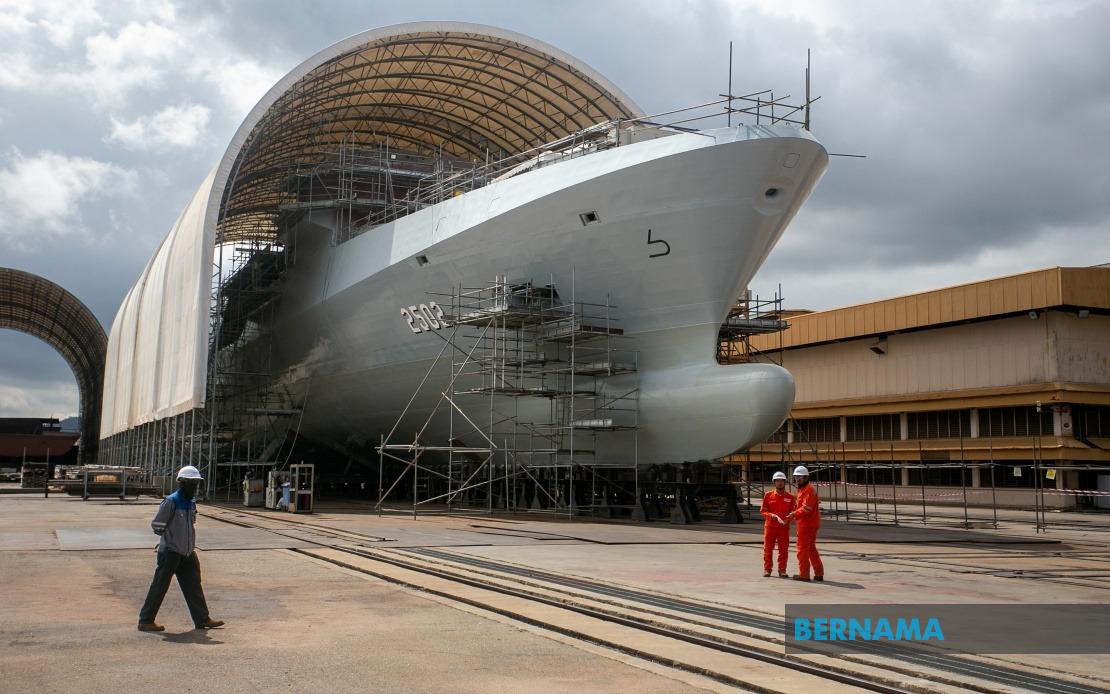
The Malaysian Defence Ministry has moved to address parliamentary concerns over the controversial RM571.9 million payment to Norway for Naval Strike Missile systems destined for the Navy's Littoral Combat Ship fleet, asserting that the funds were disbursed only after all contractual milestones had been achieved rather than released prematurely without corresponding deliverables.
In responding to questions raised by parliamentarians from both the ruling coalition and opposition benches, MINDEF provided a detailed breakdown of the payment structure, emphasising that when the RM571.9 million was transferred to the Norwegian supplier, all NSM systems had already undergone full manufacturing and successfully completed rigorous testing protocols administered by the Royal Malaysian Navy. This sequential approach, the ministry argues, demonstrates adherence to standard procurement practices where payments follow tangible progress rather than preceding it.
The clarification becomes particularly significant given the ongoing diplomatic tension surrounding Norway's decision to revoke the export licence for the missile systems, a development that has cast the entire acquisition into uncertainty. MINDEF's statement seeks to reframe the narrative by distinguishing between the initial payment—which it characterises as legitimate and properly sequenced—and the subsequent regulatory action by Oslo, which the ministry explicitly notes lies beyond the control of either the Malaysian government or the supplier. This distinction aims to deflect criticism that Malaysia acted precipitously in releasing funds.
Parliamentarians, notably Hassan Abdul Karim of Pasir Gudang and Mohd Kurniawan Naim Moktar of Kinabatangan, had questioned whether Malaysia had compromised its financial position by paying the full contract value too early and whether the procurement agreement adequately protected national interests should circumstances change. These concerns touch on a persistent vulnerability in major defence acquisitions, where developing nations sometimes find themselves disadvantaged when international suppliers or third-party governments impose restrictions without recourse.
On the protective mechanisms within the contract itself, MINDEF rejected suggestions that the agreement lacked safeguard provisions. The ministry pointed to clauses permitting governmental action in cases of non-performance or breach, framing these as evidence of prudent contract drafting. Whether these provisions prove sufficient in practice, however, remains an open question, particularly given the unprecedented nature of Norway's export licence revocation and the legal ambiguity surrounding whether such state-level actions constitute contractual breach by the supplier.
The Norwegian government's export ban, ostensibly motivated by concerns about Malaysia's involvement in the Russia-Ukraine conflict, has effectively frozen the delivery of systems that Malaysia had already paid for and that had completed testing. This creates a complex situation where Malaysia potentially faces a choice between pursuing legal claims against the Norwegian company—itself constrained by its government's export prohibitions—or engaging in diplomatic negotiations with Oslo to reconsider the licence decision. MINDEF's invocation of contractual remedies suggests the ministry is simultaneously exploring multiple avenues to recover the payment and associated damages.
Regarding immediate operational impacts, MINDEF moved to reassure both Parliament and the public that the current crisis has not degraded the Navy's capacity to fulfil its maritime defence obligations. The ministry stressed that the RMN retains existing weapons systems and assets sufficient to maintain operational readiness and defend Malaysia's maritime sovereignty, a statement clearly designed to prevent public concern that the Navy has been left strategically vulnerable. Nevertheless, the absence of the advanced NSM capability represents a loss of planned modernisation that was integral to the LCS programme's strategic rationale.
Simultaneously, MINDEF indicated that the Navy is undertaking a comprehensive evaluation of alternative missile systems that might substitute for the NSM, though the ministry provided no timeline, budget parameters, or specific candidate systems. This evaluation phase introduces further uncertainty, as exploring replacements necessarily involves time, additional costs for testing and integration, and potential delays in achieving the LCS platform's intended lethal capability. The process also highlights the risks of depending on single-supplier solutions for critical military capabilities, a lesson that may influence future major defence procurement decisions.
The broader implications for Malaysian defence acquisitions extend beyond this single programme. The NSM episode demonstrates how geopolitical considerations external to bilateral military relationships can unilaterally disrupt carefully negotiated procurement arrangements, even after funds have been transferred and systems completed. This development may prompt Malaysia to revisit its approach to defence contracts, potentially seeking explicit representations from supplier nations regarding export licence stability or negotiating escrow arrangements and insurance mechanisms to protect against such disruptions.
Furthermore, the incident underscores the vulnerability of maritime nations in Southeast Asia when acquiring advanced military technology. As regional tensions persist and major powers increasingly weaponise export controls, smaller nations face the strategic challenge of securing credible military modernisation without falling subject to external political pressure campaigns. Malaysia's experience with the NSM may influence how other ASEAN members approach major weapons acquisitions and their negotiations with potential suppliers.
Looking ahead, the resolution of the NSM payment dispute will likely depend on diplomatic channels rather than contractual enforcement mechanisms alone. How MINDEF navigates this challenge—whether through direct government-to-government engagement with Norway, alternative technology partnerships, or negotiated settlements with the Norwegian supplier—will shape Malaysia's credibility in future defence negotiations. The outcome will also carry implications for regional confidence in long-term military modernisation programmes across Southeast Asia.

