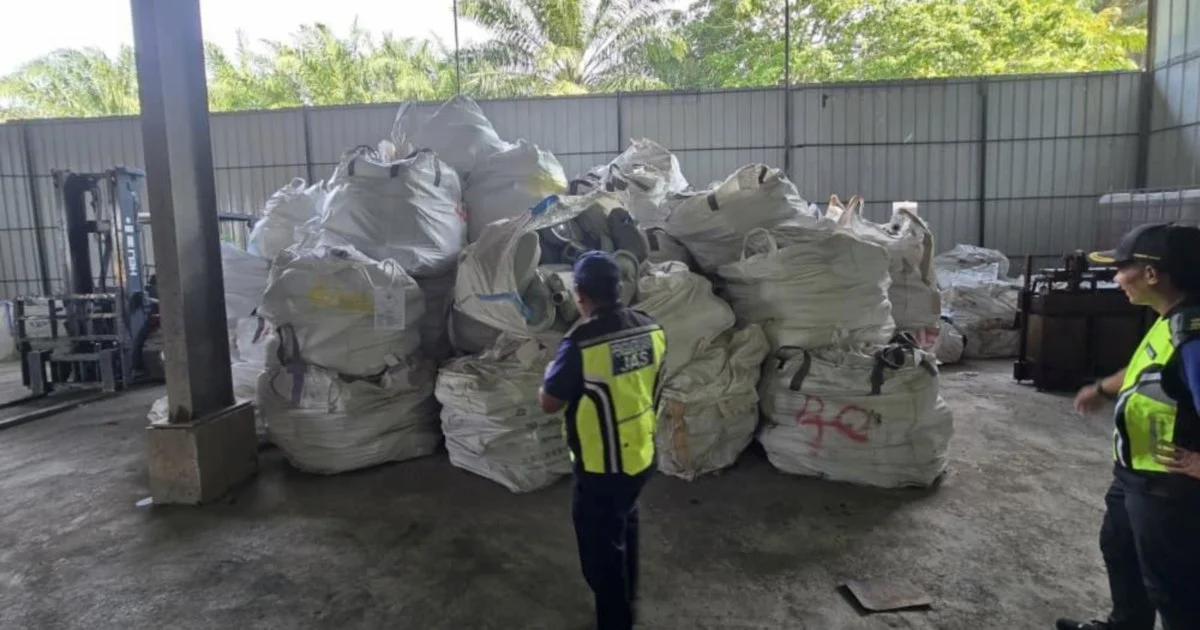
The General Operations Force carried out a major enforcement operation in the Gambang industrial area of Kuantan yesterday, uncovering what appears to be a significant illegal e-waste trafficking network. Officers descended on an unlicensed facility and confiscated a substantial haul of electronic waste materials valued at RM6.4 million, marking a substantial blow against the region's illicit recycling trade. The operation also resulted in the detention of the factory manager, signalling authorities' determination to prosecute those orchestrating such environmental crimes at the operational level.
Electronic waste trafficking has emerged as one of Southeast Asia's most pressing environmental challenges, with Malaysia serving as both a destination and transshipment hub for illegally imported refuse from developed nations. The e-waste problem extends beyond environmental degradation; these facilities often operate without proper licensing, labour protections, or safety measures, exposing workers to hazardous materials including lead, mercury, and cadmium. The scale of the Kuantan seizure demonstrates that substantial quantities of contraband waste are flowing through the Pahang region, potentially destined for further processing in uncontrolled environments.
The facility in Gambang appears to have been processing and potentially stockpiling electronic waste without authorization, suggesting an organized operation rather than a small-scale venture. Such illegal factories typically extract valuable metals and components from discarded electronics through crude methods that release toxic fumes and contaminate soil and groundwater. Kuantan's strategic location on the east coast, combined with its established port and industrial infrastructure, makes it an attractive hub for smugglers seeking to move contraband away from more heavily monitored areas.
Malaysia's persistent struggle with e-waste importation reflects broader challenges facing Southeast Asia as developed economies attempt to offload their refuse problems. Despite regulations prohibiting the importation of hazardous electronic waste, enforcement agencies regularly uncover shipments arriving disguised as legitimate second-hand goods or mixed cargo. The RM6.4 million valuation likely reflects the material's composition—waste from computers, mobile phones, and other electronics contains recoverable precious metals that make smuggling economically worthwhile for criminal networks.
The detention of the factory manager represents a critical step toward disrupting the supply chain. However, experts note that prosecuting individual operators often fails to address the demand side of the market. Scrap dealers and recyclers in both Malaysia and neighbouring countries purchase illegally imported waste because processing costs are substantially lower than complying with environmental and safety regulations. Without simultaneous efforts to regulate legitimate recycling industries and monitor ports more effectively, dismantling individual facilities offers only temporary disruption.
The environmental impact of illegal e-waste processing extends well beyond industrial zones. Uncontrolled exposure to electronic waste contaminates residential areas surrounding manufacturing hubs, affecting thousands of workers and their families. In Pahang, where agricultural activities remain significant, soil contamination from heavy metals poses long-term risks to food production and public health. The GOF operation therefore carries implications for environmental protection that extend far beyond criminal prosecution.
Cross-border coordination remains essential for addressing e-waste trafficking effectively. Much of the contraband enters Malaysia through ports in Kuantan and Tanjung Pelepas before being redistributed throughout the region. International cooperation between Malaysian customs authorities, environmental agencies, and their counterparts in Thailand, Vietnam, and Indonesia could significantly disrupt established smuggling routes. However, capacity limitations and varying enforcement priorities across nations continue to hamper coordinated efforts.
The investigation into the Gambang facility will likely reveal additional details about the supply chain, including which countries originated the shipments and where processed materials were ultimately destined. Such intelligence assists authorities in identifying larger trafficking networks and the foreign entities profiting from Malaysia's position as a logistical hub. Previous investigations have traced similar operations to organized crime syndicates operating across multiple Southeast Asian jurisdictions.
Government agencies and environmental organizations have increasingly emphasized preventive approaches alongside enforcement. Licensing requirements for recycling facilities, mandatory environmental impact assessments, and spot-check inspections create barriers to illegal operations. However, the prevalence of such busts suggests that current regulatory frameworks remain insufficient to deter determined smugglers willing to absorb occasional seizures as operational costs.
The broader context underscores Malaysia's vulnerability to becoming a dumping ground for global e-waste. Wealthy nations continue generating enormous quantities of electronic refuse, and the infrastructure gap between developed and developing economies creates lucrative opportunities for traffickers. Until producing nations implement extended producer responsibility schemes requiring manufacturers to manage waste from their products, and until enforcement agencies receive adequate resources and cross-border cooperation mechanisms, Malaysia will remain an attractive destination for illegal recycling operations.
Local communities near industrial areas like Gambang face disproportionate risks from such operations. Workers in illegal facilities often receive minimal safety training and protective equipment, while surrounding neighborhoods lack the environmental monitoring systems that operate in regulated industrial zones. The GOF operation provides temporary relief but underscores the need for systematic improvements in how Malaysia regulates hazardous waste management and polices its manufacturing sectors more comprehensively.

