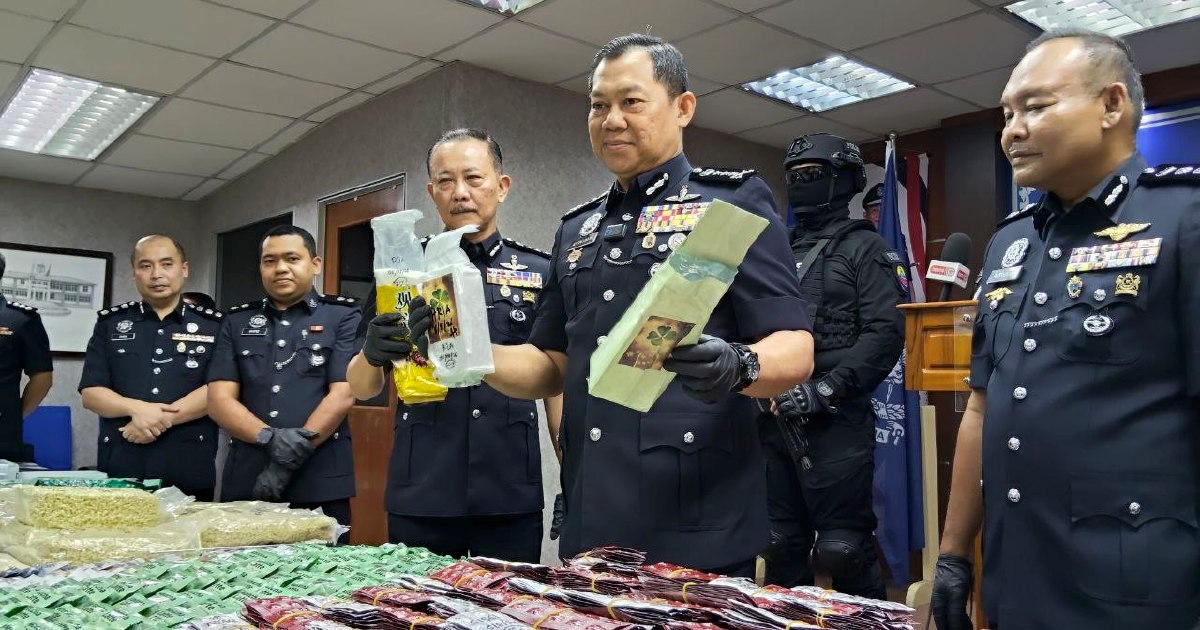
Johor Baru police have successfully disrupted a significant drug distribution network operating from a residential apartment in Persiaran Senibong, Masai, with the seizure of nearly 97 kilograms of assorted narcotics valued at RM8.49 million. The operation, which came to light following an investigative breakthrough, reveals the increasingly sophisticated methods employed by trafficking syndicates to distribute controlled substances across the region, with the suspects having deliberately leased the Masai accommodation solely to stockpile their inventory away from detection.
The discovery underscores growing law enforcement concerns about the exploitation of residential properties in suburban areas as clandestine storage hubs for major drug operations. Rather than maintaining active distribution points in high-visibility commercial zones, syndicates have adapted their tactics by establishing inconspicuous storage facilities in apartment complexes where regular surveillance is minimal. This strategic shift reflects the cat-and-mouse dynamic that characterises modern narcotics enforcement in Malaysia, where traffickers continuously evolve their logistics to outpace detection.
The dual arrest of two individuals connected to the operation marks a pivotal moment in this particular investigation, though authorities are likely pursuing additional leads within the network. Trafficking syndicates typically operate with multiple tiers of operatives—from street-level dealers to mid-level distributors and higher-ranking coordinators—meaning the two detained suspects probably represent only a fraction of the larger organizational structure. The timing and scale of the seizure suggest that police intelligence operations had been monitoring the apartment complex for a sustained period before executing the raid.
The composition of the drug haul itself offers insight into the diversified nature of modern trafficking operations in Malaysia. When a seizure encompasses various substance types rather than concentrating on a single narcotic, it typically indicates a wholesaler facility catering to multiple dealer networks and consumer demographics. This broad-based approach allows syndicates to penetrate different market segments simultaneously—from affluent urban users to vulnerable populations in industrial areas—thereby maximizing profit margins and distributing their supply chain risk across numerous smaller retailers.
From a regional perspective, this seizure exemplifies the persistent transnational challenges facing Malaysia's law enforcement apparatus. Johor's position as a major commercial and transportation hub, coupled with its geographical proximity to Singapore and surrounding states, has long made it attractive to trafficking networks seeking to transit or distribute contraband. The accessibility of the area via major highways and ports creates multiple smuggling corridors that require sustained intelligence and enforcement coordination among federal, state, and international agencies.
The RM8.49 million valuation attached to the seizure reflects street-level pricing rather than wholesale cost, a calculation method commonly adopted to emphasize the potential harm prevented. This valuation approach demonstrates how a relatively compact physical quantity of drugs—96.76 kilograms would fit within a modest apartment space—translates into substantial economic impact when converted to consumer units. The figure also highlights the enormous profit margins inherent in drug trafficking, where raw material costs are exponentially lower than retail pricing, providing traffickers with powerful economic incentives despite escalating legal penalties.
The apartment rental mechanism employed in this case represents a deliberate effort to create distance between the operation's financial trail and the actual perpetrators. By leasing the property through intermediaries or false identities, syndicate operatives attempt to obscure ownership connections and complicate efforts by authorities to trace funding sources or asset seizures. This layering technique—common across organized crime enterprises—forces investigators to pursue multiple investigative threads spanning property records, financial transactions, and witness testimony.
Police success in dismantling this particular node within the trafficking network carries implications beyond the immediate arrests. The intelligence gathered during the investigation—identifying supply sources, distribution partners, and customer networks—potentially provides law enforcement with expanding operational opportunities to roll up additional aspects of the larger criminal organization. Each seizure generates investigative leads that can branch outward to identify associate networks and disrupt broader trafficking patterns.
The operation also highlights the resource intensity required to maintain effective drug enforcement at the scale necessary to meaningfully impact trafficking flows. Identifying the apartment, establishing surveillance, and executing the raid represent significant investments of personnel, technology, and coordination across multiple police units. Multiplying this effort across the numerous suspected trafficking operations simultaneously active throughout Malaysia illustrates the enormous enforcement challenge facing authorities tasked with combating narcotics distribution.
Moving forward, this seizure will likely be referenced in policy discussions regarding residential property oversight, rental verification protocols, and inter-agency intelligence sharing mechanisms. Property management associations and rental platforms increasingly face pressure to implement screening procedures that might identify suspicious leasing patterns indicative of criminal activity. Yet balancing legitimate privacy rights with law enforcement objectives remains a persistent tension in Malaysia's ongoing battle against organized drug trafficking.

