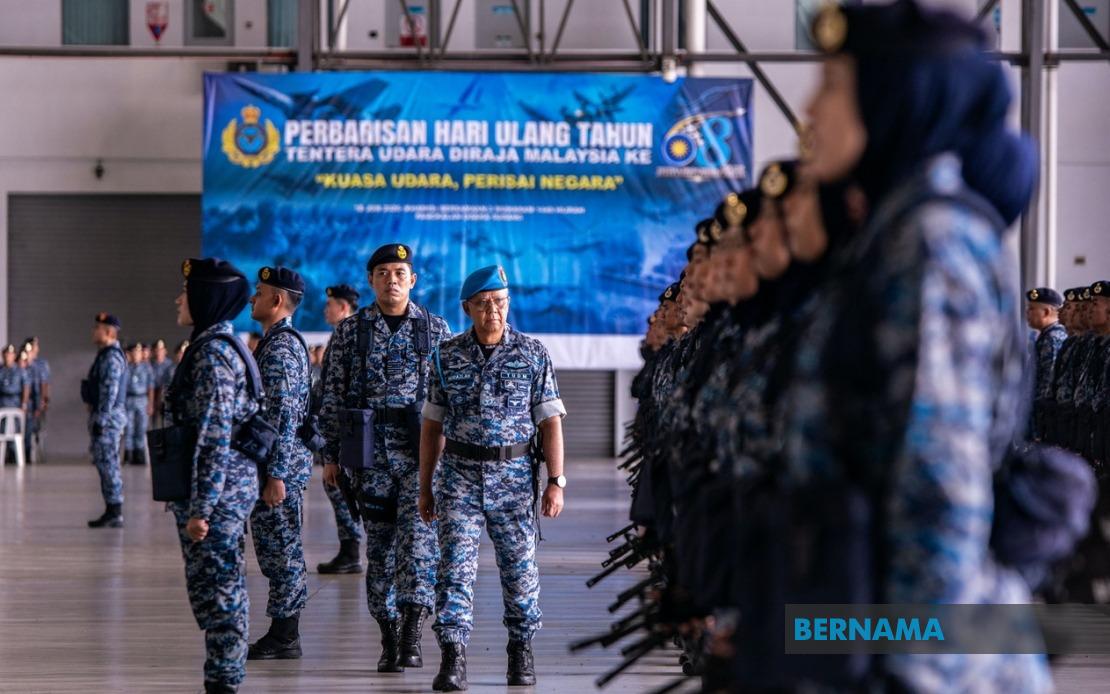
The Royal Malaysian Air Force marked its 68th anniversary celebration in Subang this week by announcing a significant expansion of its air defence and surveillance infrastructure, reflecting growing concerns about protecting Malaysia's critical airspace against evolving security threats. Air Force Chief General Tan Sri Muhamad Norazlan Aris outlined plans to deploy sophisticated radar systems at four geographically dispersed locations spanning Peninsular Malaysia, Sarawak, and a strategic outpost in the South China Sea, representing the most ambitious air surveillance upgrade in recent years.
The deployment pattern reveals a calculated approach to addressing existing gaps in Malaysia's airspace coverage. Three air defence radar installations are being positioned at Bintulu in Sarawak, Bukit Puteri in Terengganu, and Bukit Lunchu in Johor—locations chosen to provide layered protection across Malaysia's extensive territorial expanse and economically vital regions. Complementing this terrestrial network, an air surveillance radar facility will be established on Pulau Layang-Layang, the isolated coral atoll in the South China Sea that sits at the intersection of Malaysia's maritime interests and geopolitical sensitivities in one of the world's most contested waterways.
General Muhamad Norazlan framed these capability upgrades as essential components of the RMAF Capability Development Plan 2055, a long-term modernisation roadmap designed to ensure the air force remains technologically current and operationally responsive through mid-century. The radar installations constitute phase one of this ambitious plan, suggesting that subsequent phases will likely address other critical capability gaps in Malaysia's air defence architecture. This structured, phased approach indicates serious institutional commitment to sustainable force development rather than ad hoc procurement decisions.
The strategic rationale extends beyond territorial air defence into broader regional stability concerns. The Air Force Chief drew explicit connections between recent Middle Eastern conflicts and Malaysia's own security environment, particularly highlighting how disruptions to maritime trade corridors create cascading effects through global supply chains and energy markets. The vulnerability of the Strait of Hormuz to blockade or interference demonstrates how distant regional instability can rapidly impact Malaysia's economic interests and energy security through interconnected global systems.
Malaysia's geographic position along critical sea lines of communication amplifies these vulnerabilities. The Strait of Malacca and surrounding waters through which Malaysia has jurisdiction represent among the world's most strategically significant maritime passages, channelling enormous volumes of regional and global commerce. Any disruption to shipping through these routes would directly damage Malaysian trade, manufacturing competitiveness, and port revenues. Enhanced airspace surveillance capabilities provide earlier warning of potential threats to maritime traffic and enable more responsive air operations to protect these vital economic corridors.
The emphasis on closing surveillance gaps reflects operational realities that Malaysian defence planners have likely grappled with for years. Modern airspace monitoring requires continuous coverage across vast areas, yet previous radar networks apparently left portions of Malaysian airspace inadequately monitored. The new installations address these deficiencies by providing overlapping coverage patterns that enable rapid detection and tracking of unidentified aircraft, enabling timely interception or identification before potential threats materialise. Early warning capability provides decision-makers precious minutes to respond appropriately to air incursions or irregular activities.
Pulau Layang-Layang's inclusion in this upgrade programme carries particular significance given its disputed status and strategic importance. The atoll sits within claimed Malaysian waters but in contested territorial waters where overlapping claims create ongoing tensions. Establishing surveillance infrastructure there demonstrates Malaysian commitment to exercising effective control over the territory and monitoring activities across the broader South China Sea region. Enhanced awareness of aerial activity near the atoll and surrounding waters supports Malaysia's position regarding territorial jurisdiction and provides intelligence about operations by other regional powers in these sensitive waters.
The anniversary parade itself, themed "Kuasa Udara, Perisai Negara"—Air Power, The Nation's Shield—underscored the symbolic importance Malaysian leadership attributes to air force capabilities. The ceremonial inspection involving 288 personnel across multiple specialist units represented the force's operational diversity, from special operations personnel to ground defence elements and the Women's Composite Flight, demonstrating modern force composition. The presentation of service medals and commendations to 17 recipients acknowledged individual contributions to organisational effectiveness.
For Malaysian defence policy more broadly, these radar deployments signal a shift toward more sophisticated, technology-dependent air defence approaches. Rather than relying solely on fighter aircraft for air sovereignty protection, Malaysia is investing in the sensor networks and early warning systems that enable effective air operations. This layered approach—combining detection networks with rapid response capabilities—reflects international best practices adopted by regional neighbours and developed air forces.
Regional implications warrant consideration as well. Other Southeast Asian nations facing similar challenges regarding airspace surveillance and maritime security will likely monitor Malaysia's experience with these radar systems. Successful deployment and integration could provide templates for neighbouring countries seeking to upgrade their own capabilities amid rising concerns about unmanned systems, irregular maritime activities, and potential state-level air operations across the region. Malaysia's investments thus carry demonstration effects beyond its own borders.
The timing of this announcement reflects current strategic thinking about future threats. Rather than focusing exclusively on conventional aircraft encounters, the radar systems likely incorporate capabilities to detect and track unmanned aerial vehicles, which increasingly feature in regional security discussions. The integration of these systems into unified air defence networks remains a continuing challenge, requiring investment in command and control infrastructure beyond the radars themselves.
Looking forward, the successful integration and operational effectiveness of these installations will determine whether Malaysia achieves its stated objectives of comprehensive airspace awareness. The phased approach outlined by General Muhamad Norazlan suggests additional capability development lies ahead, potentially including enhanced command systems, expanded personnel training, and integration with civil aviation monitoring. Sustaining these capabilities through proper maintenance, personnel development, and regular modernisation will prove equally important as the initial deployment.
The Air Force's 68th anniversary remarks thus marked not merely a historical commemoration but a substantive statement about institutional priorities and Malaysia's evolving security posture. By announcing significant investments in surveillance infrastructure while explicitly connecting regional instability to national interests, Malaysian defence leadership demonstrated awareness that air power encompasses far more than fighter aircraft—it fundamentally requires the knowledge systems that allow effective decision-making in contested airspace.