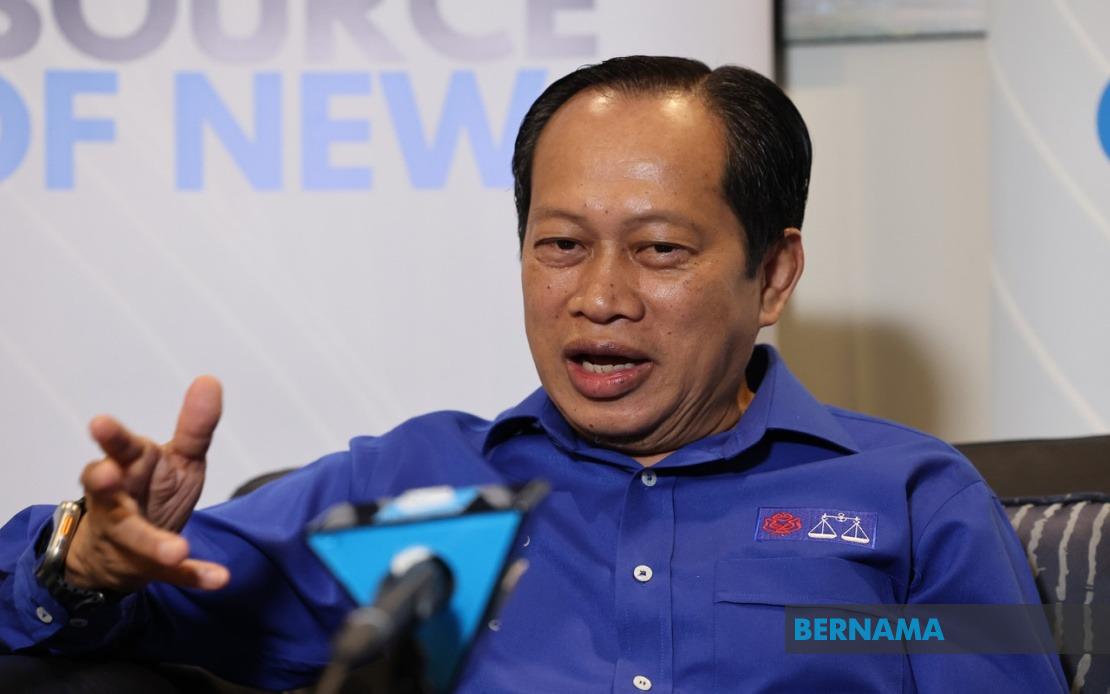
Effective road maintenance across Malaysia hinges on seamless coordination between elected officials and government departments, according to Deputy Works Minister Datuk Seri Dr Ahmad Maslan, who has instructed the Public Works Department to accelerate repair programmes nationwide. Speaking in Johor Bahru on July 2, Ahmad stressed that deteriorating road conditions demand immediate attention from multiple levels of government, with each stakeholder bearing responsibility for their designated role in the infrastructure upkeep process.
The ministry's directive reflects growing public concern about road quality, particularly following recent high-profile inspections by opposition figures. Pakatan Harapan candidate Dr Maszlee Malik, a former Education Minister, recently undertook a personal assessment of Jalan Tebrau after receiving widespread complaints through social media regarding both road surfaces and traffic management. His journey from Kampung Melayu Majidi to Ulu Tiram on June 29, completed in a Perodua Myvi, revealed significant problems including uneven surfaces causing vehicle jolting and substantial congestion during rush hours.
Ahmad's comments represent a measured government response to such criticisms, focusing on systemic improvements rather than defensive posturing. He has personally visited all ten district JKR offices operating across Johor, underscoring his commitment to understanding infrastructure challenges at ground level. These visits included detailed development briefings that have allowed him to identify specific bottlenecks and accelerate response mechanisms where roads require immediate intervention.
The coordination structure Ahmad outlined involves assemblyman representatives and Members of Parliament, each expected to identify deteriorating road conditions within their constituencies and escalate issues through proper channels. This tri-level approach—comprising local assemblies, federal representatives, and technical agencies—aims to create multiple accountability checkpoints that prevent roads from languishing in poor condition. By distributing responsibility, the government seeks to overcome historical delays where complaints fell through bureaucratic gaps.
Federal road maintenance funding operates through established bureaucratic pathways designed to ensure equitable resource allocation. Applications for repairs and upgrades flow through the State Economic Planning Unit (UPEN) and state executive councils, where they undergo assessment and prioritization before funds are approved. This structured approach prevents ad-hoc spending while theoretically ensuring that resources address the most critical infrastructure needs across states.
For Malaysian motorists and businesses relying on road transport, the emphasis on faster repairs carries direct implications. Poor road conditions increase vehicle maintenance costs, reduce fuel efficiency, and contribute to traffic accidents, making swift remediation a matter of public safety and economic efficiency. The pledge to expedite repairs suggests the government recognises these downstream costs and the political sensitivity surrounding infrastructure maintenance, particularly as opposition politicians leverage social media to highlight gaps in government service delivery.
The Jalan Tebrau incident illustrates how digital connectivity has transformed infrastructure oversight in Malaysia. Opposition politicians can now conduct highly visible inspections and immediately publicize findings through social platforms, putting pressure on government agencies to respond demonstrably. Ahmad's emphasis on JKR's rapid response capacity appears calculated to counter such narratives, positioning the ministry as proactive rather than reactive.
Johor's infrastructure challenges carry particular significance given the state's strategic importance as a commercial and industrial hub. With ten district JKR offices managing extensive road networks, the state represents a substantial portion of Malaysia's transportation infrastructure. Delays in maintenance directly affect logistics operations, manufacturing efficiency, and cross-border commerce with Singapore, making timely repairs crucial for economic competitiveness.
The minister's insistence on stakeholder cooperation also addresses a structural problem in Malaysian governance where responsibility frequently becomes diffused across agencies, leaving citizens uncertain whom to contact when roads deteriorate. By explicitly naming assemblyman, MPs, and local agencies as having defined roles, Ahmad attempts to establish clearer accountability. Should roads remain damaged despite these instructions, blame attribution becomes more straightforward.
Implementation challenges remain substantial, however. Budget constraints, competing maintenance priorities, and the sheer scale of Malaysia's road network mean that not every complaint can be immediately addressed. The prioritization process through UPEN and state councils, while theoretically rational, also introduces delays that can frustrate motorists experiencing daily problems on specific routes.
Ahmad's remarks signal that the government intends to present infrastructure maintenance as a shared responsibility rather than purely a government function. This framing carries political advantage by positioning elected representatives and agencies as working in partnership, reducing the appearance of government inadequacy. It also creates pressure on opposition representatives to contribute constructively rather than merely highlight problems.
Looking forward, the effectiveness of these coordination efforts will determine whether road conditions actually improve or whether complaints continue accumulating. Malaysian drivers will likely judge the government's commitment not by ministerial statements but by observable improvements in specific problematic routes. The Jalan Tebrau corridor, having received high-profile attention, will serve as a visible test case for whether such pledges translate into tangible action.

