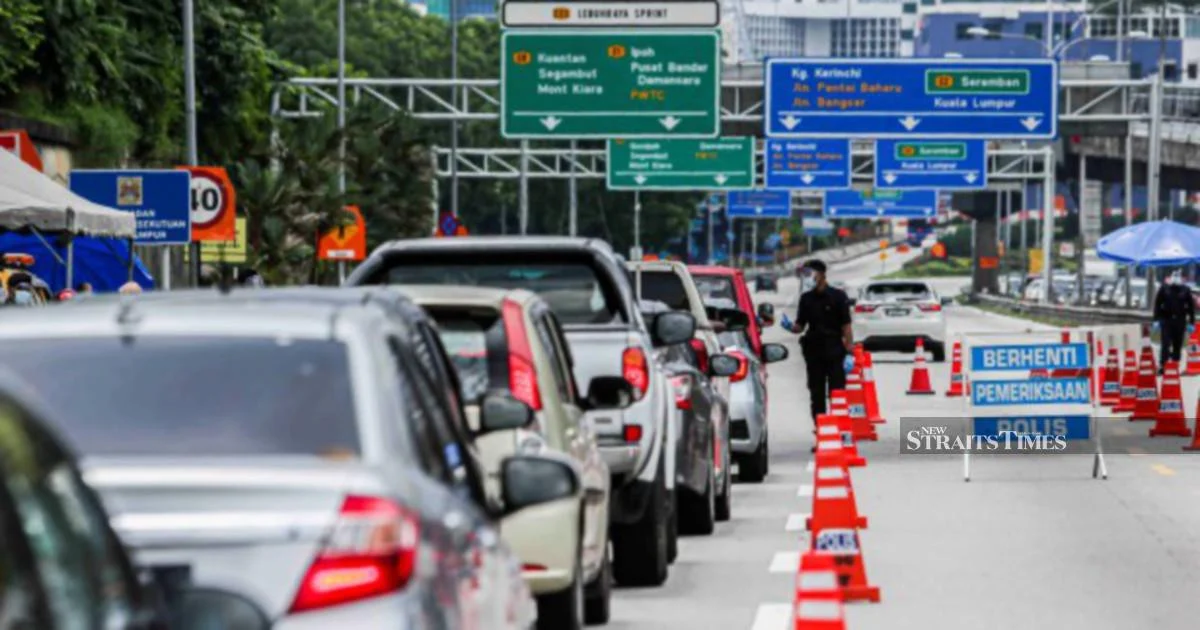
Malaysian motorists face substantially higher financial penalties for traffic violations if parliament votes to approve amendments to the Road Transport Act 1987. The proposed changes would lift the maximum compound fine from its current level to RM500 across more than 700 documented road offences, representing a meaningful escalation in the cost of non-compliance on Malaysian roads. The move signals the government's intention to strengthen its toolkit for traffic law enforcement through financial deterrence.
The exact current penalty structure varies across different categories of traffic infractions, with compound rates reflecting the severity of each violation. By establishing RM500 as a uniform ceiling, lawmakers would create a simplified framework that applies broadly across hundreds of separate offences under the act. This standardisation could streamline how authorities issue and process traffic compounds, though it also means relatively minor infractions might face penalties comparable to more serious violations depending on their classification.
The Road Transport Act 1987 has long been the primary legislation governing vehicle use, driver conduct, and enforcement mechanisms across Malaysia. Over the past three decades, the act has been amended numerous times to reflect changing traffic patterns, technological advances, and evolving enforcement priorities. These pending modifications represent the latest effort to keep the legislative framework aligned with contemporary road safety challenges and administrative expectations for managing Malaysia's increasingly congested urban and highway networks.
For Malaysian drivers, the increased fine structure would directly affect their motoring costs and financial accountability. A RM500 maximum compound represents a substantial jump from historical penalties, potentially making traffic violations considerably more expensive to resolve. This financial impact falls across all driver categories, from professional transport operators managing commercial fleets to private commuters navigating daily traffic. The higher penalties may particularly influence driving behaviour in categories where previous fines were considered relatively modest deterrents.
Road safety advocates have long argued that adequate financial penalties serve as crucial behaviour-modification tools, particularly for repeat offenders and those engaging in high-risk driving practices. The substantial increase to RM500 reflects recognition that historical fine levels may have lost their deterrent value due to inflation and changing public awareness of penalty severity. By raising the ceiling significantly, authorities hope to reinvigorate compliance incentives across the driving population.
The proposed amendments must navigate the parliamentary approval process, where members will examine the legislation's scope and potential effects. During debate, lawmakers typically consider feedback from transport agencies, road safety organisations, civil society groups, and the general public regarding whether the new penalty structure appropriately balances enforcement effectiveness with fairness to motorists. Parliamentary scrutiny also examines whether administrative procedures for issuing and appealing compounds require parallel updates to accommodate the higher financial stakes involved.
Implementation would require coordination across multiple enforcement agencies responsible for monitoring road behaviour and issuing compounds. The Royal Malaysia Police traffic division, along with municipal and local enforcement units, would need clear guidance on how the new maximum rates apply to specific offence categories and whether discretionary authority to levy lower compounds within the new ceiling exists. Training programmes would likely be necessary to ensure consistent application of penalties across all jurisdictions and enforcement personnel.
The broader context includes Malaysia's ongoing efforts to reduce traffic fatalities and serious injuries on roads that experience significant congestion, particularly in the Klang Valley, Penang, and other urban centres. Higher financial penalties theoretically reinforce campaigns emphasising speed control, seatbelt usage, mobile phone restrictions while driving, and proper vehicle maintenance. However, penalty effectiveness ultimately depends on perception of enforcement likelihood and consistent application, not merely the maximum fine level itself.
For commercial transport operators, the increased compounds would directly impact operational costs and profit margins, particularly for companies whose drivers accumulate violations. Fleet operators may respond by implementing stricter internal discipline policies, investing in driver training programmes, or adopting vehicle monitoring technology to reduce compliance violations. These secondary effects could create broader ripple effects throughout supply chains and logistics sectors depending on how widely traffic violations occur within different industries.
Regional comparisons show varied approaches to traffic penalty structures across Southeast Asia, with some neighbouring countries employing even higher maximum fines than Malaysia's proposed RM500 level. Singapore and Brunei, for instance, maintain stricter penalty regimes aligned with their intensive traffic enforcement cultures. The Malaysian increase would bring local penalties closer to regional norms while remaining within the broader spectrum of enforcement approaches adopted by developed economies managing substantial vehicle populations.
The timing of these amendments reflects accumulated evidence that Malaysia's traffic enforcement framework requires modernisation to address contemporary challenges. Urban expansion, increased vehicle ownership, and changing commuting patterns since the act's original 1987 enactment mean that penalty structures crafted four decades ago no longer reflect current economic conditions or enforcement priorities. The RM500 ceiling represents an attempt to recalibrate the financial framework without requiring complete legislative overhaul.
Once parliament approves the amendments, implementation would follow a transition period allowing authorities and the public to understand the new requirements. Communications campaigns would likely emphasise the increased penalties to maximise awareness and behaviour change. The effectiveness of these changes would ultimately be measured through data on traffic violation rates, accident statistics, and compliance patterns observed months after enforcement begins under the revised penalty structure.

