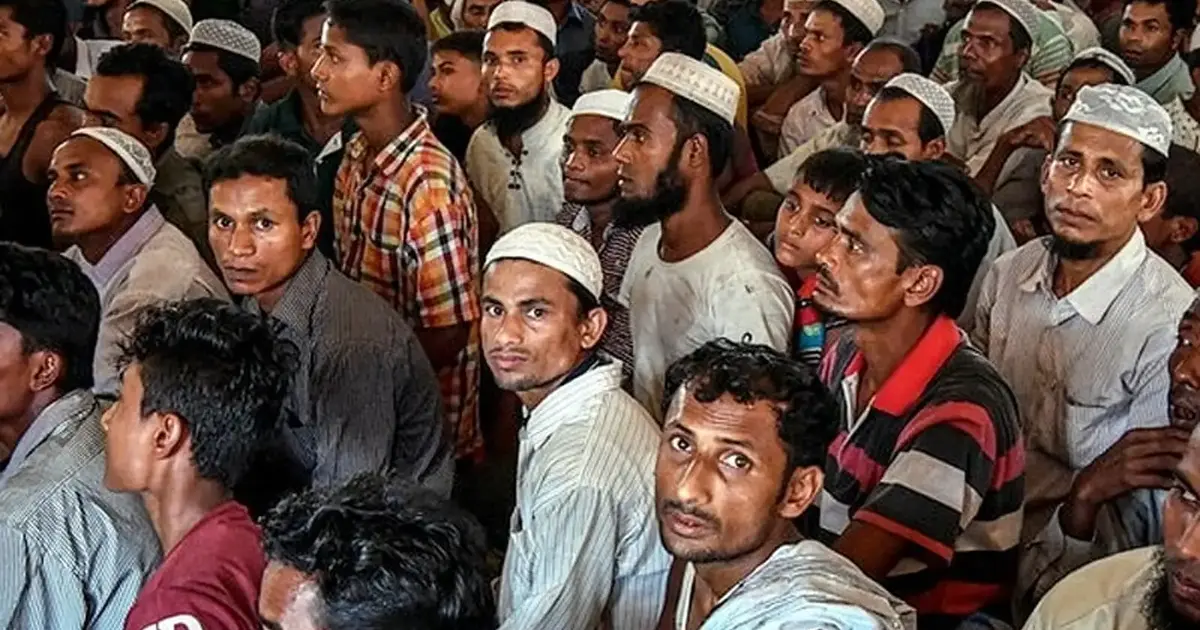
The leadership of the Rohingya Ulama Council has firmly rejected allegations suggesting that members of the Rohingya community are pursuing Malaysian citizenship, characterising such claims as deliberately fabricated narratives aimed at inflaming tensions. Rahimullah Hussain, who chairs the council, made the denial in response to recent statements circulating in public discourse that have raised questions about the intentions and long-term settlement plans of the Rohingya population in Malaysia.
The timing of such allegations reflects a broader pattern of scrutiny surrounding the Rohingya presence in Southeast Asia, particularly in Malaysia, which hosts one of the largest populations of the stateless minority outside of camps in Bangladesh. Malaysia's approach to the Rohingya issue has historically balanced humanitarian concerns with concerns about border security and social cohesion, making the community a frequently debated topic in political and public forums throughout the country.
Rahimullah Hussain's characterisation of the allegations as "fabricated" suggests a coordinated effort to weaponise claims about the community's future intentions. Such framing is strategically significant because it positions the allegations not merely as misunderstandings or miscommunications, but as deliberate disinformation campaigns. This distinction matters considerably for how the narrative unfolds in Malaysian public opinion and policy circles, where the Rohingya issue intersects with broader questions about citizenship, belonging, and national identity.
The denial also underscores the vulnerability of the Rohingya population to reputational attacks and mischaracterisation. Without formal citizenship anywhere, the community lacks institutional channels to effectively counter false narratives about their intentions or actions. The council's public statement represents one of the limited mechanisms available to respond to allegations that could affect their precarious status in Malaysia and their relationships with host communities.
From a Malaysian perspective, the controversy highlights the delicate equilibrium that authorities must maintain regarding the Rohingya issue. Public sentiment toward refugees and migrants remains contested, with significant portions of the population expressing concerns about integration, resource allocation, and security. Claims about citizenship-seeking by refugee populations can quickly escalate tensions if left unaddressed, making the council's swift denial a necessary defensive measure.
The allegation that such claims are "inciting hatred" points to the serious consequences that can flow from inflammatory rhetoric. In diverse, multicultural societies like Malaysia, accusations that portray migrant or refugee communities as harbouring hidden agendas to gain permanent status or citizenship can fuel discrimination, workplace tensions, and neighbourhood hostility. The Rohingya have already experienced significant discrimination in Malaysia, making them particularly susceptible to harm from such narratives.
The Rohingya Ulama Council's role as a voice for the community reflects the broader institutional structures that have developed within Malaysia's Rohingya population over decades of displacement and refuge. The council functions not merely as a religious body but as a de facto representative organisation that advocates for community interests and responds to external accusations. Its prominence in this denial suggests that reputational management has become a central concern for community leadership.
Contextually, Malaysia's position as a non-signatory to the 1951 Refugee Convention complicates the Rohingya situation considerably. Without legal recognition of refugees under Malaysian law, the Rohingya exist in a grey zone where they possess certain humanitarian protections through UNHCR registration but lack the formal status that citizenship discussions would require. This legal ambiguity itself may fuel speculation about the community's long-term plans and intentions.
The denial also occurs within a wider regional conversation about migration, citizenship, and integration across Southeast Asia. As nations throughout the region grapple with displacement crises—including from Myanmar, Afghanistan, and elsewhere—the handling of Rohingya populations has become emblematic of how states balance humanitarian obligations with domestic political pressures. Malaysia's experience thus carries implications for how other regional actors approach similar challenges.
For Malaysian society, the council's statement serves as a reminder that the Rohingya community, despite its vulnerability, remains actively engaged in defending itself against misrepresentation. The leadership's explicit framing of allegations as "inciting hatred" appeals to Malaysian values of social harmony and fairness while simultaneously positioning the community as victims of malicious propaganda rather than as actors pursuing hidden agendas.
Moving forward, the question remains how such allegations can be definitively addressed in public discourse. The Rohingya's lack of political power and institutional representation in Malaysia limits their capacity to shape narratives effectively, even when council leaders speak publicly. The burden of proof for establishing false allegations typically falls heavily on marginalised communities, creating asymmetrical opportunities for misinformation to take root in public consciousness.

