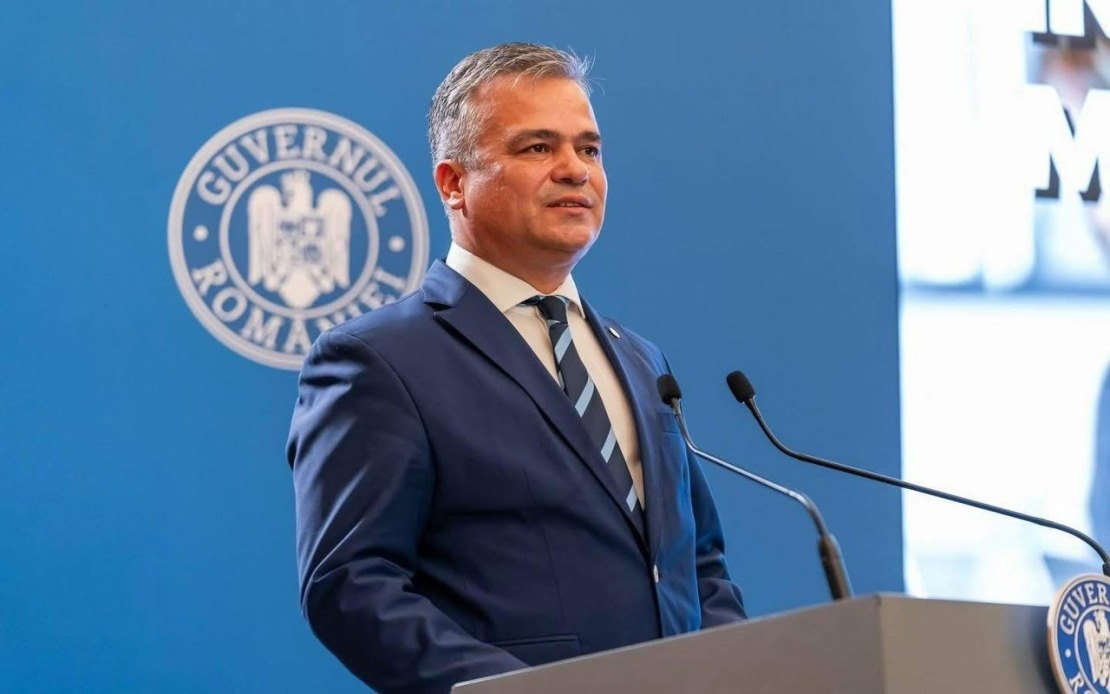
Adrian Vestea, Romania's prime minister-designate, formally introduced his Cabinet composition and governing programme to the Romanian parliament on Monday, signalling a significant step towards resolving the political stalemate that has gripped the country. The submission follows the Social Democratic Party's endorsement of Vestea on the previous day, providing crucial parliamentary support for his bid to lead the government. By presenting both his ministerial roster and policy priorities simultaneously, Vestea is attempting to demonstrate a comprehensive vision that extends beyond mere personnel appointments to address substantive governance challenges.
The presentation comes at a critical juncture for Romanian politics, as the country has been navigating institutional instability and public uncertainty regarding its political direction. Through his announcement on social media, Vestea emphasised that his administration's formation represents a deliberate effort to transition from what he characterised as a period of uncertainty into an era marked by stability, reliability, and properly functioning state institutions. This framing suggests that previous political configurations or transitions left considerable gaps in governmental effectiveness, a concern that resonates across Central and Eastern European democracies grappling with institutional challenges.
Vestea's policy platform rests on five foundational pillars designed to address Romania's most pressing governance and development concerns. Political stability ranks foremost among these priorities, reflecting the instability that necessitated the government's formation in the first instance. Acceleration of European Union funding absorption stands as the second key objective, indicating that Romania aims to maximise its access to the substantial financial resources available through EU mechanisms—a critical consideration given that adequate funding deployment directly influences infrastructure modernisation and socioeconomic development across the nation. Maintaining macroeconomic stability constitutes the third element, suggesting careful attention to fiscal discipline and inflation management in an era of regional economic volatility.
The remaining two pillars focus on longer-term national development. Infrastructure investment initiatives aim to modernise Romania's transportation networks, digital systems, and public facilities, addressing decades of underinvestment in these sectors. Meanwhile, the emphasis on strategic national security projects reflects heightened regional security concerns, particularly given Romania's NATO membership and geographic proximity to geopolitical tensions affecting Eastern Europe. This multifaceted agenda attempts to balance immediate economic stability with medium-to-long-term structural transformation necessary for sustained prosperity.
Vestea's position as the first vice-chair of the National Liberal Party adds complexity to the Cabinet formation process. The NLP leadership has officially rejected coalition arrangements with left-wing political forces, yet the proposed government includes both Social Democratic representatives and NLP members personally aligned with Vestea. This apparent contradiction highlights the nuanced nature of Romanian coalition politics, where personal relationships and pragmatic governance concerns sometimes override strict party ideology. The willingness of NLP members to work under Vestea despite their party's official stance suggests substantial confidence in his leadership or recognition that government formation requires flexibility beyond rigid ideological boundaries.
The Social Democratic Party's backing provides essential parliamentary arithmetic for Vestea's government. Without such support, forming a functional majority capable of passing legislation would prove impossible, underscoring how coalition formation in parliamentary systems depends on securing support from multiple political actors with divergent interests. The SDP's decision to endorse Vestea, despite the NLP's stated unwillingness to collaborate with left-leaning parties, demonstrates the pragmatic calculations that shape European coalition negotiations. Both parties apparently concluded that the governing challenges facing Romania necessitate cooperation transcending their usual political rivalries.
Romanian media reports indicate that formal parliamentary approval of the Cabinet's composition remains uncertain despite these preliminary endorsements. The presentation of the government programme and ministerial list to parliament initiates a deliberative process whereby lawmakers scrutinise proposed cabinet members' qualifications, backgrounds, and policy positions. Individual ministers may face questioning regarding their expertise, ethical records, and alignment with broader government objectives. This scrutiny period serves as an essential democratic check on executive power, ensuring that those wielding governmental authority possess demonstrated competence and public legitimacy.
The timing of this Cabinet formation carries significance within the broader European context. Romania, as both an EU and NATO member, faces pressure to maintain governmental stability while advancing reform agendas aligned with European standards. The prolonged period before a functional government took office potentially hampered Romania's capacity to implement urgent policy responses to economic challenges, security threats, or EU-mandated legislative changes. Vestea's presentation thus represents not merely a domestic political event but also a development with implications for Romania's standing within European institutional frameworks and its ability to fulfil international commitments.
For Malaysia and broader Southeast Asian observers, the Romanian Cabinet formation offers instructive lessons regarding coalition dynamics in parliamentary democracies. Although Malaysia and Romania operate within different constitutional frameworks and political traditions, both nations require coalition partners to form functional governments. The flexibility demonstrated by Romanian political actors—particularly the NLP members' willingness to support Vestea despite their party's official stance—provides interesting parallels to Southeast Asian political realities, where pragmatic governance often transcends rigid ideological positioning.
The uncertainty surrounding final parliamentary approval suggests that despite the Social Democratic Party's backing and the presentation of a comprehensive policy agenda, significant negotiations remain necessary before Vestea can formally assume office and begin implementing his government's programme. Romanian lawmakers must satisfy themselves that the proposed cabinet members possess requisite competence and that the governing agenda addresses legitimate national priorities. This deliberative process, while sometimes appearing cumbersome to external observers, reflects democratic accountability mechanisms designed to ensure that executive authority derives from substantive parliamentary consensus rather than mere numerical majorities.
Moving forward, Vestea's success will depend on translating his policy platform into concrete governmental action. His administration must demonstrate capacity to absorb EU funding efficiently, manage economic affairs competently, and advance infrastructure modernisation while maintaining political stability. The stability and predictability that Vestea emphasised in his presentation represent aspirational goals requiring sustained effort across multiple policy domains. Whether his coalition can maintain cohesion long enough to achieve these objectives remains an open question, particularly given the structural tensions between the NLP's official anti-left positioning and the practical need for Social Democratic parliamentary support.

