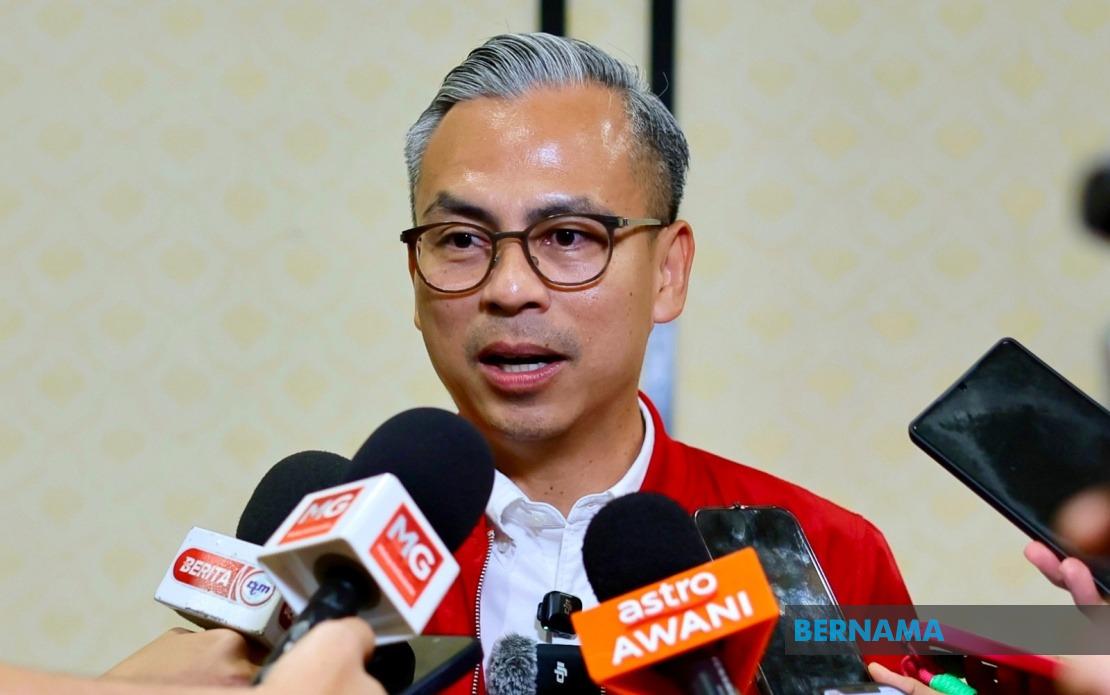
Radio Televisyen Malaysia has thrown open its airwaves for a potential high-stakes conversation between Johor's political leadership, should the key contenders agree to appear. Communications Minister Datuk Fahmi Fadzil made the overture while campaigning in Muar, signalling the national broadcaster's readiness to facilitate what could become a defining moment in the state's electoral contest ahead of polling on July 11.
The offer extends specifically to Menteri Besar Datuk Onn Hafiz Ghazi and Dr Maszlee Malik, the Pakatan Harapan candidate contesting the Puteri Wangsa state seat, though Fahmi's remarks suggest flexibility on the format and location. He indicated that RTM TV1 could broadcast the exchange from Johor Bahru or any other mutually convenient venue, with organisers ready to accommodate the participants' schedules. This flexibility reflects both the broadcaster's eagerness to serve the public interest during an election period and the pragmatic challenges of coordinating senior political figures during campaign season.
Fahmi drew a crucial distinction between this proposed engagement and traditional partisan debate. He framed the potential dialogue as a development-focused forum where both leaders could articulate their vision for Johor's trajectory over the next five years, rather than an arena for political point-scoring. This framing carries significance for Malaysian viewers accustomed to more combative political discourse. By emphasizing constructive discussion of governance priorities, the Communications Minister sought to elevate the conversation beyond factional rivalry and into territory where substantive policy differences could emerge naturally from differing approaches to state administration.
The minister's comments came as a response to suggestions that Pakatan Harapan should first declare its Menteri Besar candidate before engaging in any public dialogue with the incumbent administration. Fahmi rejected this sequencing logic, arguing instead that openness to respectful disagreement constitutes an essential leadership quality in any democratic system. His position carries an implicit criticism of those seeking to avoid scrutiny through procedural objections, positioning dialogue itself as a measure of democratic fitness.
Maszlee has already demonstrated his willingness to engage with constituents through a recent forum with 41 young voters where they discussed Johor's future aspirations and development priorities. Fahmi commended this approach, suggesting it reflects the kind of forward-thinking engagement that the state needs from its political representatives. For observers tracking generational shifts in Malaysian politics, such youth-focused dialogue suggests an emerging campaign strategy where younger voters are positioned as co-architects of the state's future rather than passive recipients of policy.
The backdrop to this offer is a crowded electoral landscape in Puteri Wangsa, where Maszlee faces competition not just from Barisan Nasional's Teow Chia Ling but also from Nicholas Paul Vincent representing Parti Bersama Malaysia, MUDA's Rashifa Aljunied, and independent candidate Wang Wee Seong. This multi-candidate configuration means that a two-person debate might oversimplify the actual electoral contest, raising questions about whether other candidates might seek RTM airtime as well. The complexity of the race reflects broader fragmentation in Malaysian electoral politics, where traditional two-coalition contests increasingly give way to more fractured competitions.
In the Machap constituency, where Onn Hafiz currently holds the seat, the competition takes a more straightforward form. The incumbent Barisan Nasional representative will face Nor Hafiz Roslan of Pakatan Harapan in a direct contest, making that race a clearer test of coalitional strength in this particular district. The contrast between the fragmented Puteri Wangsa race and the binary Machap contest illustrates how electoral dynamics vary even within the same state poll.
Fahmi's appeal to young voters carried an implicit acknowledgment of logistical challenges surrounding the mid-month polling date. Early voting on July 7 precedes the main election, offering flexibility for those facing scheduling difficulties, yet the minister recognized that some voters might still encounter obstacles. His exhortation for youth participation framed voting as both a right and a responsibility in determining Johor's development direction, emphasizing that individual voter choices aggregate into collective outcomes shaping the state for the next electoral cycle.
The RTM offer reflects a broader international trend where state broadcasters attempt to elevate public discourse during electoral periods by creating structured forums for candidate engagement. However, the Malaysian context presents particular considerations. As the national broadcaster, RTM operates under heightened scrutiny regarding perceived political balance, making any dialogue platform a matter of considerable sensitivity. The minister's framing of the debate as development-focused rather than partisan represents an attempt to navigate these expectations while still providing genuine public service value.
For Southeast Asian observers, the Johor election illustrates how regional democracies continue experimenting with mechanisms to improve campaign quality and voter engagement. While television debates remain standard in many Western democracies, their adoption in Malaysia reflects both growing expectations for candidate accessibility and evolving media consumption patterns. The offer to broadcast on RTM TV1 also assumes continued relevance of traditional television in an era of digital fragmentation, though the state broadcaster's reach still carries significant weight in reaching diverse demographic groups across the state.
The initiative also signals something about Malaysia's current political moment. That a Communications Minister would invest political capital in offering a debate platform suggests belief that public discourse has value beyond electoral horse-trading. Whether Onn Hafiz accepts the invitation will itself become a political signal, interpreted as either confidence or reluctance to face scrutiny depending on perspective. Should the dialogue proceed, it could establish expectations for similar engagement in other Malaysian state elections scheduled in coming months, potentially reshaping how campaigns unfold across the federation.

