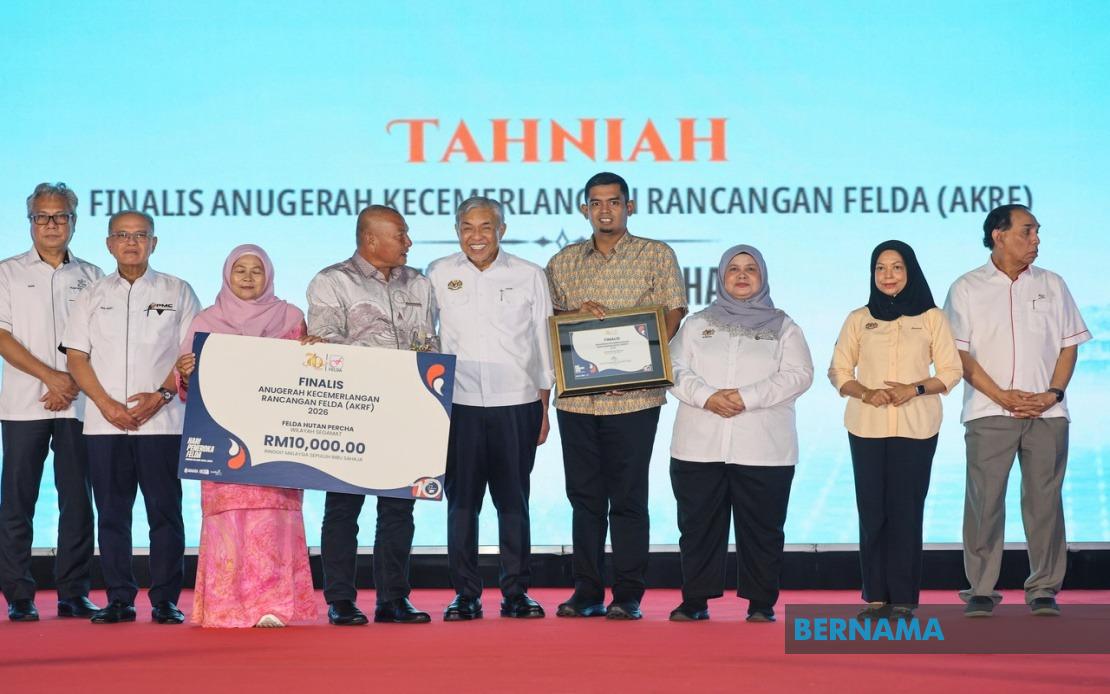
Deputy Prime Minister Datuk Seri Dr Ahmad Zahid Hamidi has reframed rural development as fundamentally a cross-border endeavour, arguing that Malaysia's agrarian and entrepreneurial sectors cannot prosper if confined within national parameters. Speaking at the World Rural Development Day 2026 celebration in Bandar Tun Razak Stadium in Maran, Ahmad Zahid stressed that rural communities and businesses must embrace international competition and seize opportunities across regional trade networks and the expanding global halal economy. The shift in rhetoric reflects a strategic recognition that Malaysia's rural potential extends far beyond domestic consumption and domestic market saturation.
As Rural and Regional Development Minister, Ahmad Zahid presented rural internationalisation as both an opportunity and an imperative. He emphasised that Malaysian rural products possess inherent quality and brand value capable of competing regionally and globally, yet that potential remains largely untapped because entrepreneurs lack either the confidence or the infrastructure to venture beyond familiar domestic channels. This diagnosis suggests that mindset change, coupled with systemic support, represents the missing ingredient in rural economic transformation. The ASEAN framework and the burgeoning halal sector present particularly fertile ground, given Malaysia's established credentials and geographic position as a regional hub.
The National Rural Economy Agenda, which Ahmad Zahid positioned as the government's comprehensive blueprint for the next phase of rural advancement, appears designed to institutionalise this outward-looking philosophy. Rather than treating rural development as a welfare or subsistence exercise, the agenda treats it as an engine for competitive economic participation. This conceptual shift has implications for how rural areas are perceived domestically—no longer as peripheral zones requiring charitable intervention, but as productive regions capable of generating wealth and employment through commercial activity and trade.
Progress under the current administration has been tangible, according to Ahmad Zahid's accounting. Two flagship initiatives, RisSMart and IkonDesa, have already mobilised support for rural entrepreneurship with measurable outcomes: more than 7,000 new rural entrepreneurs developed, 15,000 jobs created, and sales exceeding RM1.77 billion generated. These figures, while significant, also hint at the scale of untapped potential—Malaysia's rural population is substantially larger, suggesting that current penetration rates, though growing, remain modest relative to the addressable market.
Human capital development forms another pillar of the rural agenda, particularly the push to expand educational access for marginalised communities. Ahmad Zahid cited the admission of nearly 500 Orang Asli students to universities as a historic milestone, representing the highest intake on record. This investment in human capital addresses a structural constraint: without skilled personnel equipped for modern commerce and trade, rural entrepreneurs lack the capacity to navigate complex supply chains, international standards, and digital platforms necessary for global competitiveness. Education thus becomes instrumental to the internationalisation agenda rather than merely a social good.
Infrastructure investment during the 12th Malaysia Plan has similarly undergone purposeful expansion. Nearly 5,000 kilometres of rural roads were upgraded, electricity extended to more than 7,000 homes, and clean water supplied to over 10,000 rural households. Additionally, nearly 10,000 homes were built or refurbished, benefiting almost 40,000 rural residents. These metrics reflect a comprehensive approach to rural development that moves beyond symbolic gestures toward substantive improvements in connectivity, utilities, and living standards. Adequate infrastructure—transport networks, reliable electricity, clean water—removes operational frictions and enables businesses to function at competitive cost levels.
The World Rural Development Day designation itself carries strategic significance for Malaysia and the region. The United Nations General Assembly proclaimed the observance on September 6, 2024, with July 6 designated as the annual date, commemorating the establishment of the Centre on Integrated Rural Development for Asia and the Pacific. By formally observing this day from 2026, Malaysia positions itself alongside other member states in affirming the centrality of rural economies to national and regional development. The first global celebration occurred on July 6, 2025, establishing a new international focal point for rural policy discourse.
Ahmad Zahid's framing raises complex questions about the relationship between rural and urban economies in Malaysia. If rural entrepreneurs are encouraged to access regional and global markets, what mechanisms prevent brain drain and resource extraction from rural areas into urban hubs? How are rural communities themselves prepared for the transitions accompanying commercial integration? The narrative of competitive rural economies, while aspirational, requires careful management to avoid reproducing patterns of unequal exchange or creating isolated pockets of entrepreneurial activity disconnected from broader community welfare.
The emphasis on the halal economy warrants particular attention for Malaysian and regional readers. The global halal market, valued in the hundreds of billions of dollars annually, represents genuine opportunity for Malaysian rural producers, particularly in food, cosmetics, pharmaceuticals, and agricultural products. Malaysia's existing reputation and certification infrastructure provide comparative advantage, yet translating this into widespread rural participation requires not merely exhortation but sustained institutional support—market research, standards compliance assistance, export finance mechanisms, and trade facilitation.
For Southeast Asian observers, Ahmad Zahid's remarks reflect a broader regional reckoning with rural futures. ASEAN economies grapple with rural-urban divides, agricultural transformation, and competitive pressure from global supply chains. Malaysia's approach—integrating rural areas into transnational value chains rather than preserving them in protected domestic niches—mirrors strategies adopted elsewhere in the region. However, success depends critically on whether support mechanisms and market access genuinely equalise opportunities for rural participants or merely expose them to competition they are unprepared to meet.
The initiatives announced, particularly RisSMart and IkonDesa, represent Malaysia's attempt to address the marketing and business development gaps that constrain rural entrepreneurship. Yet sustained impact requires consistent funding, qualified personnel, and strategic alignment with emerging regional trade agreements and global market trends. The RM1.77 billion in sales generated by 7,000 entrepreneurs translates to approximately RM253,000 per business annually—a modest figure suggesting most remain small-scale enterprises requiring continued support to scale operations.
Looking forward, Ahmad Zahid's vision hinges on execution capacity at state and local levels. Rural and Regional Development Deputy Minister Datuk Rubiah Wang's presence at the Maran event, alongside Pahang Menteri Besar Datuk Seri Wan Rosdy Wan Ismail, underscores the multi-level governance approach required. State governments, local authorities, and community organisations must internalise and operationalise the international ambitions articulated at the national level. Without robust implementation frameworks and adequate resource allocation at these levels, the narrative risks remaining aspirational rather than transformative.

