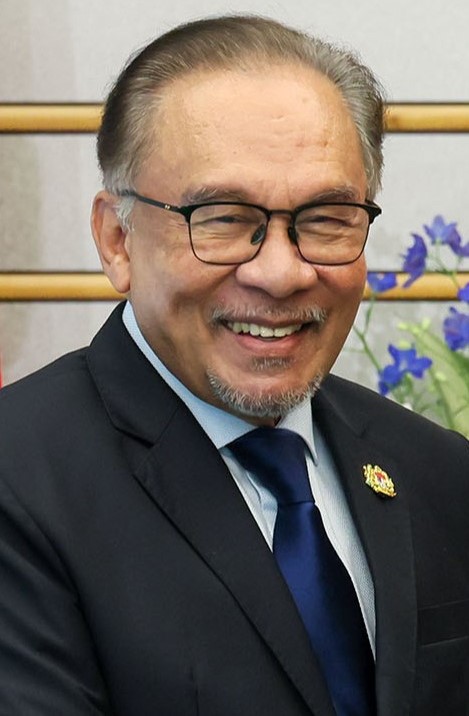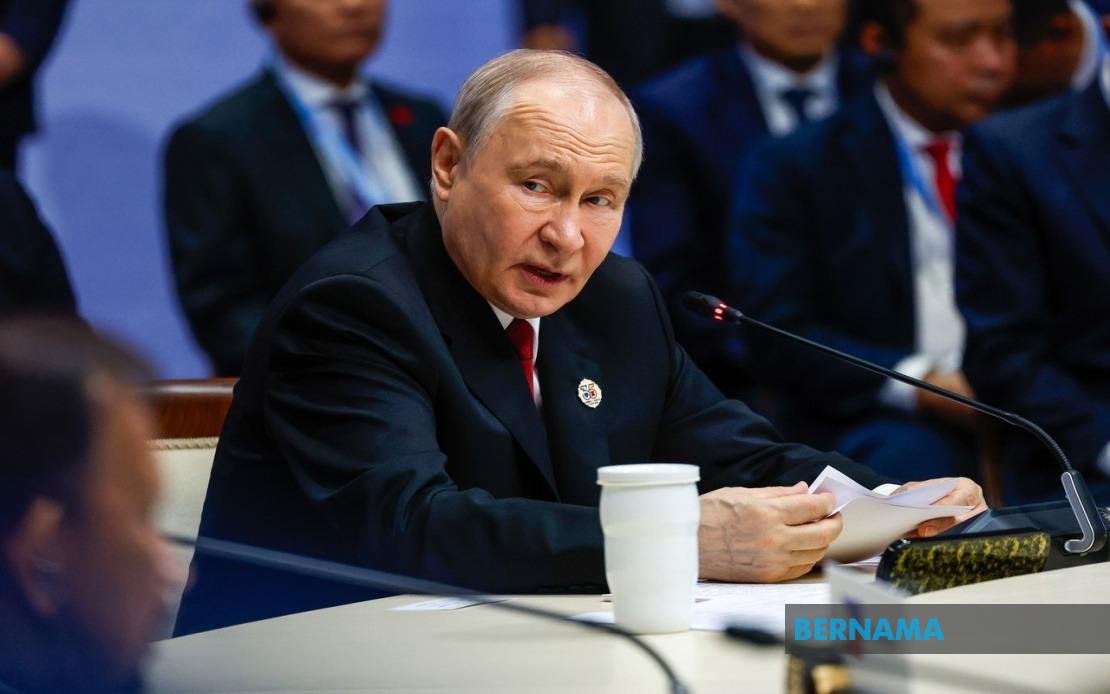
Russia and ASEAN marked a milestone in their bilateral relationship at a commemorative summit in Kazan, celebrating 35 years of engagement that has evolved into a robust strategic partnership. President Vladimir Putin used the occasion to emphasise the deepening ties between Moscow and the ten-nation regional grouping, highlighting how their collaboration now plays a crucial stabilising role across the Asia-Pacific at a time of considerable international tension and uncertainty. The two-day summit brought together regional leaders including Philippine President Ferdinand Marcos Jr, the current ASEAN Chair, alongside Prime Minister Datuk Seri Anwar Ibrahim and other ASEAN counterparts to reflect on past achievements and chart future directions for cooperation.
The relationship between Russia and ASEAN officially commenced in 1991 with the establishment of formal diplomatic ties in Kuala Lumpur. Over the subsequent decades, this connection has progressively deepened through successive upgrades in status and scope. When Russia attained full ASEAN Dialogue Partner status in 1996, it signalled Moscow's commitment to engaging substantively with Southeast Asia's regional architecture. The relationship reached a significant inflection point in 2018 when it was elevated to a Strategic Partnership designation, a formal acknowledgement that both sides viewed their engagement as transcending traditional diplomacy and encompassing multifaceted cooperation across numerous domains.
Putin outlined the comprehensive framework underpinning contemporary Russia-ASEAN relations, pointing to an extensive legal and contractual foundation that has been meticulously constructed over the partnership's history. This institutional architecture supports cooperation spanning security matters, commercial trade and investment flows, energy collaboration, agricultural development, digital innovation, scientific research, technological advancement, tourism promotion, and people-to-people cultural exchanges. The breadth of this engagement demonstrates that the relationship operates at multiple levels simultaneously, creating numerous channels through which both sides can advance mutual interests and address shared challenges.
Central to Putin's messaging was the assertion that Russia-ASEAN relations rest firmly on universally recognised international law and reciprocal strategic interests. He positioned this partnership as fundamentally distinct from transactional arrangements, instead framing it as rooted in principles of equality and mutual benefit. Within the current context of intensifying geopolitical competition and regional instability, Putin characterised the Russia-ASEAN partnership as a stabilising counterweight, contributing to the development of a more balanced security architecture in the Asia-Pacific rather than one dominated by any single power or bloc.
For Southeast Asian nations, Russia represents a significant player in sectors where Moscow possesses particular strengths. Energy security constitutes perhaps the most critical dimension of this relationship, given that Russia remains a major supplier of hydrocarbons globally and possesses substantial reserves and technological expertise. Beyond energy, ASEAN values Russia's contributions to technological development, agricultural knowledge and production capacity, and advanced higher education. These complementarities have created genuine interdependencies that sustain engagement even during periods of international tension elsewhere.
From Moscow's perspective, ASEAN holds equivalent strategic importance as Russia pursues deeper integration into Asia-Pacific affairs. Russia views the region not merely as a geographical market but as integral to its broader positioning in a multipolar international system. Strengthening ties with ASEAN's constituent members and the grouping as a whole aligns with Russian foreign policy objectives of diversifying partnerships, reducing dependency on European relationships, and establishing Moscow as an essential dialogue partner for regional security and development questions. The summit itself reflected this priority, with Putin's participation signalling the importance Russia attaches to Southeast Asia.
The timing of the commemorative summit carries particular significance given contemporary global conditions. Both Russia and ASEAN face mounting pressures from geopolitical fragmentation, economic uncertainty, and shifting strategic alignments. Trade protectionism, supply chain disruptions, energy volatility, and security concerns related to great power competition create pressures on all regional actors. The summit provided an occasion for ASEAN and Russia to reaffirm their commitment to deepening cooperation precisely when such solidarity proves valuable for navigating turbulent international waters. For ASEAN members, maintaining diverse partnerships with multiple powers, including Russia, helps preserve the grouping's non-aligned positioning and strategic autonomy.
Looking forward, the summit agenda encompassed substantive discussions on expanding cooperation in several priority areas. Food and energy security emerged as particularly pressing concerns for ASEAN nations, many of which depend significantly on imports and face vulnerability to global supply disruptions. Russia's agricultural and energy capabilities position it as a natural partner for addressing these vulnerabilities. Digital transformation has similarly become urgent across Southeast Asia as nations seek to modernise infrastructure and increase technological competitiveness. Russia's technological sector, particularly in specific domains, offers opportunities for mutually beneficial collaboration. Educational and scientific exchanges represent another avenue for deepening people-to-people connections that can build longer-term trust and understanding.
The strategic partnership between Russia and ASEAN also reflects broader patterns of Southeast Asian foreign policy. ASEAN's fundamental commitment to maintaining equidistance from major powers and refusing to align exclusively with any single actor has meant that Moscow retains an important role despite Western pressure to isolate Russia diplomatically. ASEAN's consensus-based decision-making and emphasis on non-interference in members' internal affairs create space for Russia to engage multiple Southeast Asian nations individually while also maintaining the broader regional relationship. This institutional flexibility has proven valuable for sustaining Russia-ASEAN ties through periods of international strain.
For Malaysia and other ASEAN members, the Russia-ASEAN relationship contributes to regional stability by ensuring that important geopolitical actors maintain constructive engagement channels. The diversification of partnerships that engagement with Russia facilitates helps counterbalance the concentration of influence that might otherwise result from excessive reliance on traditional Western partners or rising powers like China and India. The summit's emphasis on mutual respect for international law and sovereign equality reflects principles that resonate across ASEAN, which has long championed these concepts as cornerstones of its regional approach.
As the commemorative summit progressed, observers noted that both Russia and ASEAN faced incentives to demonstrate relationship continuity and expansion. For Russia, showcasing successful regional engagement provides evidence of Moscow's capacity to maintain significant international relationships despite Western sanctions and diplomatic pressure. For ASEAN, visible cooperation with Russia underscores the grouping's genuine non-alignment and its ability to work productively with diverse partners in pursuit of regional interests. The summit thus functioned as both a reflection of accomplished collaboration and a statement about each side's commitment to deepening engagement in coming years.
Looking at the practical implications for Southeast Asia, the deepening Russia-ASEAN partnership carries consequences for regional economic patterns, security architectures, and diplomatic alignments. Expanded energy cooperation could diversify ASEAN nations' import sources and reduce vulnerability to supply disruptions. Increased technological and educational exchanges could accelerate development in crucial sectors. Enhanced security dialogues could contribute to conflict resolution and regional stability maintenance. Simultaneously, closer Russia-ASEAN ties will likely attract attention from other major powers, influencing their own engagement strategies with Southeast Asia. The region thus finds itself in a position where its relationships with multiple powerful actors create both opportunities for beneficial cooperation and complexities in managing competing interests.