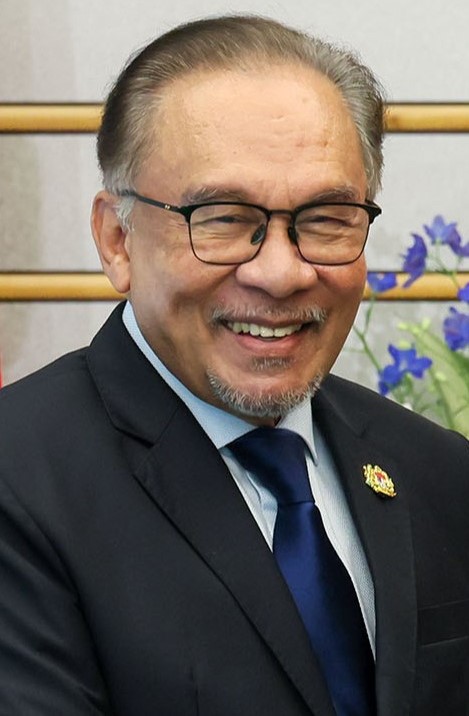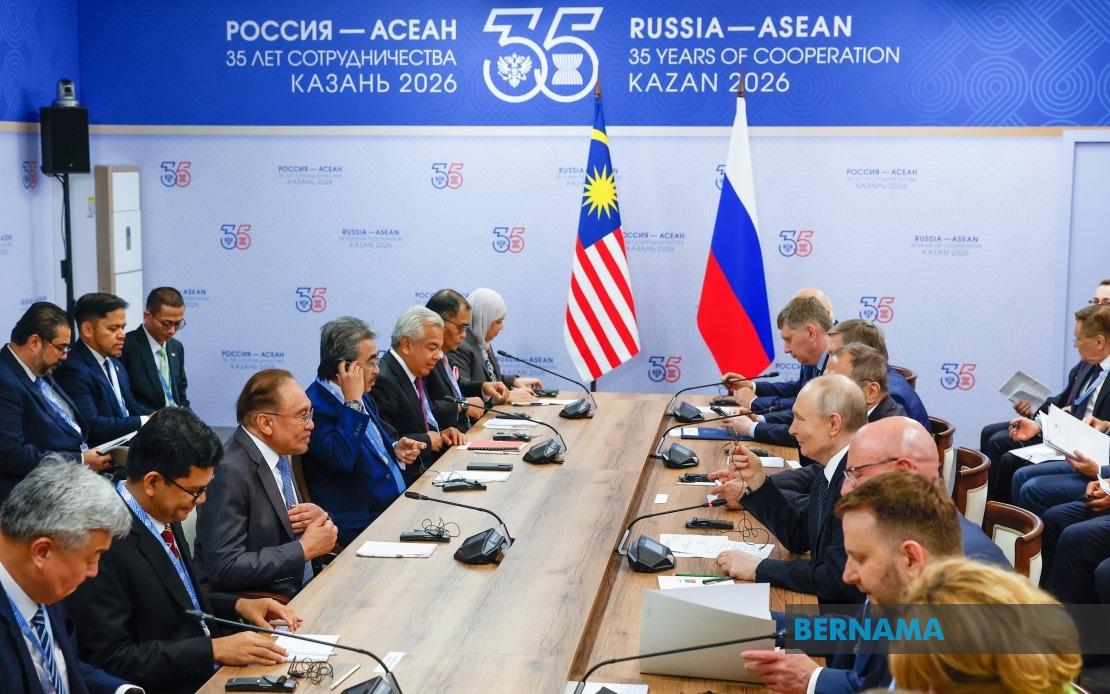
Russian President Vladimir Putin has signalled Russia's commitment to strengthening bilateral relations with Malaysia, emphasising that the two nations possess a robust foundation upon which to build expanding cooperation. The remarks came during bilateral discussions between Putin and Malaysian Prime Minister Datuk Seri Anwar Ibrahim at the ASEAN-Russia Commemorative Summit in Kazan on June 18. Putin highlighted that as the countries approach their 60th anniversary of diplomatic relations in 2026, they are entering this milestone year with what he termed "substantive positive experience" in mutual engagement, laying the groundwork for deeper partnership across multiple sectors.
The trajectory of Russia-Malaysia relations reflects decades of careful diplomatic cultivation. Putin underscored that the two nations have established robust institutional mechanisms to facilitate cooperation, with regular contacts maintained through governmental ministries, agencies and parliamentary channels. Critically, an intergovernmental commission dedicated to economic, scientific, technical and cultural cooperation serves as the practical engine driving joint projects and initiatives. This institutional architecture suggests both countries view their partnership as a long-term endeavour requiring sustained administrative attention rather than ad-hoc diplomatic gestures.
Economic cooperation has emerged as a significant pillar of bilateral engagement. Trade figures for 2025 demonstrate tangible momentum, with commerce between Russia and Malaysia expanding by 12.9 per cent during the year. While global trade patterns have shifted dramatically in recent years due to geopolitical tensions and sanctions regimes, this growth rate indicates that both nations have successfully navigated these challenges and identified mutually beneficial commercial opportunities. For Malaysian businesses and investors, this expansion suggests openness from Moscow to deepening economic ties despite the complex international environment.
Beyond trade, Putin identified education, science and technology, tourism and humanitarian exchanges as priority areas for cooperation. These sectors represent the softer dimensions of bilateral relations, yet they carry substantial importance for building people-to-people connections and fostering long-term goodwill. Educational partnerships, for instance, enable knowledge transfer and create networks of individuals with invested interests in maintaining strong Russia-Malaysia relations. Similarly, scientific and technological cooperation can yield innovations while positioning both nations as collaborators in addressing shared challenges.
Malaysia's strategic positioning within ASEAN has amplified its importance to Russian foreign policy in the region. Putin specifically welcomed Malaysia's support for developing Russia's strategic partnership with ASEAN as a collective entity. He recalled that the first summit-level meeting between Russia and ASEAN was held in Malaysia in 2005, a historical fact underscoring Malaysia's pivotal role in facilitating regional dialogue. Last year, Malaysia chaired ASEAN, and Putin commended the country's continued backing for the development of this strategic partnership framework.
From a broader Southeast Asian perspective, Malaysia's ability to maintain substantive ties with Russia while navigating its relationships with Western nations and other regional partners demonstrates the diplomatic dexterity required of middle-power nations in an increasingly multipolar world. Malaysia has consistently pursued a non-aligned foreign policy orientation, seeking benefits from partnerships across the geopolitical spectrum rather than aligning exclusively with any particular bloc. The Russia-Malaysia relationship exemplifies this approach, enabling Kuala Lumpur to preserve channels of communication and cooperation with Moscow while maintaining critical partnerships elsewhere.
Putin's characterisation of Malaysia as a "long-standing global partner" and his emphasis on principles of mutual respect and consideration of interests reflect the diplomatic language both nations employ to describe their engagement. This framing sidesteps contentious global issues while highlighting the pragmatic foundation of their relationship. For Malaysian policymakers, this approach permits continued economic and technical cooperation without requiring alignment on sensitive international matters where Russia and Malaysia may hold divergent positions.
The timing of these discussions holds particular significance given the current global geopolitical landscape. As Western sanctions on Russia persist and Moscow seeks to strengthen ties with non-Western nations, partnerships with ASEAN members like Malaysia take on heightened strategic value. Simultaneously, Malaysia benefits from maintaining access to Russian markets, technology and expertise in areas ranging from energy to education. This mutual dependency creates incentives for both nations to preserve and nurture their relationship despite external pressures.
Putin's transmission of goodwill to His Majesty Sultan Ibrahim, King of Malaysia, through Prime Minister Anwar Ibrahim represents standard diplomatic protocol that also carries symbolic weight. Such gestures underscore the respect accorded to Malaysia's monarchy and political system. The personal dimension of Putin's engagement, including his reference to previous meetings with Anwar in Malaysia itself, suggests a level of comfort and familiarity in bilateral relations that extends beyond formal state interactions.
Looking ahead, the 60th anniversary of diplomatic relations in 2026 will likely serve as an occasion for both nations to showcase achievements and articulate new goals for cooperation. The institutional mechanisms already in place, combined with demonstrated trade growth and cooperation across multiple sectors, suggest that Russia-Malaysia relations possess resilience and substance beyond rhetorical flourishes. For Malaysia specifically, maintaining this partnership while balancing relationships with other powers remains essential to its strategic autonomy and its role as a bridge between Russia and the broader Southeast Asian region.