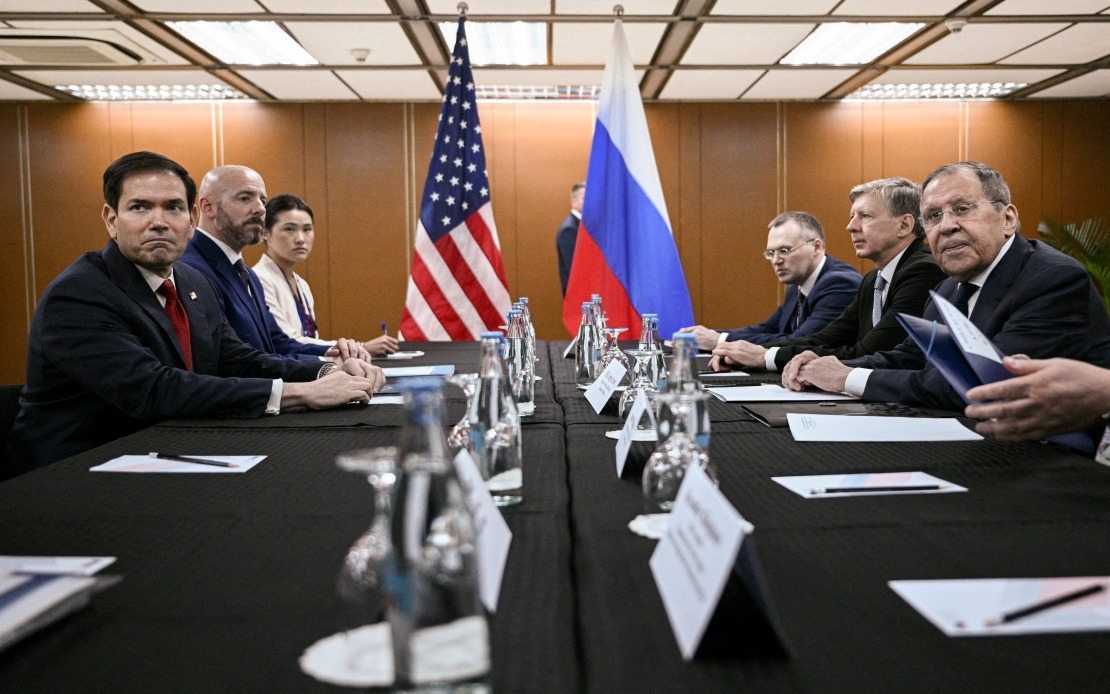
In a significant diplomatic development, Russian Foreign Minister Sergey Lavrov and United States Secretary of State Marco Rubio have committed to preserving official channels of communication between Moscow and Washington. The agreement, reached during their meeting in Manila, represents an effort to sustain dialogue even as relations between the two nuclear powers remain strained by various international disagreements. The Russian Foreign Ministry confirmed the arrangement on Thursday, underscoring that both nations will continue engaging through their respective foreign ministry structures and within multilateral forums where they maintain representation.
The decision to maintain contact reflects a pragmatic approach to managing superpower relations in an era of elevated geopolitical competition. Rather than allowing diplomatic channels to deteriorate entirely, the two parties have opted to preserve avenues for communication that could prove essential during periods of crisis or when mutual interests align. This approach recognises that even adversaries benefit from clear lines of communication to prevent miscalculation and misunderstanding. For Southeast Asian nations watching from the sidelines, the commitment signals that despite antagonism elsewhere, Russia and America maintain some commitment to dialogue rather than confrontation.
Particularly noteworthy is the explicit reference to continuing engagement within international organisations. This framework provides structured settings where Russian and American diplomats can interact across numerous forums—from the United Nations and its various committees to regional security bodies and specialised agencies. Such venues offer opportunities for negotiation and cooperation on issues transcending bilateral disputes, allowing both nations to compartmentalise their disagreements while addressing matters of common concern. For Malaysia and other regional powers, this development suggests that multilateral institutions will remain viable platforms for pursuing their own diplomatic objectives despite great power tensions.
Another significant aspect of the agreement concerns the normalisation of working conditions for diplomatic missions. Both Russia and the United States maintain extensive embassy and consular operations in each other's territory, and the smooth functioning of these missions depends on adherence to Vienna Convention protocols and bilateral arrangements. When diplomatic operations face restrictions or obstacles, it signals deteriorating relations. The focus on improving conditions for diplomatic staff suggests both governments wish to avoid further degradation of the bilateral relationship through administrative harassment or operational obstruction, a pragmatic step that reduces friction in day-to-day diplomatic work.
The memorandum also highlights resumed cooperation between Roscosmos, Russia's state space agency, and NASA, the American space administration. This restoration of full-fledged contacts in space exploration represents one of the few areas where Moscow and Washington have maintained substantive collaboration despite Cold War-style tensions. Space exploration operates in a realm somewhat insulated from terrestrial geopolitics, allowing scientists and engineers to work across national boundaries. The resumption signals recognition that certain fields of human endeavour—scientific advancement, space exploration, technological innovation—transcend political disagreements and benefit from international cooperation. For developing nations like Malaysia aspiring to develop space capabilities, this cooperation demonstrates that even major adversaries can compartmentalise their differences when pursuing shared scientific goals.
The agreement to develop interparliamentary exchanges and cultural ties addresses a softer dimension of bilateral relations. Cultural diplomacy and legislative exchanges help build understanding between ordinary citizens and policymakers, potentially creating constituencies within each nation predisposed toward constructive engagement. When such exchanges atrophy, entire generations can grow up with limited understanding of the other society, breeding suspicion and hostility. By committing to develop these channels, Lavrov and Rubio acknowledged that diplomatic relations cannot rest solely on governmental interactions but require investment in people-to-people connections and intellectual exchange. Malaysia and other nations benefit when great powers maintain such cultural bridges, as it reduces the likelihood of ideology-driven confrontation.
The Manila setting for this meeting carries its own significance. The Philippines, as a Southeast Asian nation with complex relationships encompassing both Russia and the United States, provides neutral territory where such diplomatic encounters can occur without appearing to favour either party. The location demonstrates continued American engagement with regional forums and Southeast Asia's role as a hub for international diplomacy beyond its formal institutional structures. For Malaysian observers, the venue underscores Southeast Asia's centrality to global diplomatic calculations and the region's capacity to host significant bilateral negotiations.
The timing of this agreement warrants consideration alongside broader international developments. In an environment where military tensions in Europe, Asia, and other regions have escalated, the preservation of diplomatic channels becomes increasingly valuable. History demonstrates that when governments cease communicating, misunderstandings multiply and accidental escalation becomes more likely. The commitment by both Lavrov and Rubio to maintain contacts, therefore, represents a hedge against catastrophic miscalculation, protecting not merely bilateral interests but potentially global stability.
For Malaysia's foreign policy orientation, these developments offer instructive lessons. As a nation maintaining relationships across the geopolitical spectrum, Malaysia benefits when major powers preserve dialogue mechanisms rather than descending into complete antagonism. The Russian-American agreement suggests that even profoundly divided nations can identify frameworks for continued engagement. This principle applies equally to Malaysia's engagement with various powers and its efforts to mediate regional disputes. The commitment to continue contacts through international organisations provides a template for maintaining relationships despite disagreements—an approach Malaysia itself has long practiced.
The broader implications extend to regional stability and the functioning of multilateral institutions. Should Russia and the United States have allowed diplomatic relations to completely rupture, international organisations would suffer significantly. The UN Security Council's effectiveness, already constrained by superpower divisions, would deteriorate further. Regional security arrangements and development initiatives would lose valuable potential for cooperation. By agreeing to maintain contacts, Lavrov and Rubio preserved the possibility that Russia and America might coordinate on issues affecting Southeast Asia and global governance, from maritime security to pandemic response to climate change initiatives.
Looking forward, this agreement establishes a baseline for bilateral relations that transcends the volatility of particular disputes or incidents. Rather than requiring constant renegotiation of whether communication should occur, both nations have committed to institutional continuity. This arrangement provides stability and predictability for international actors responding to great power dynamics. Malaysian policymakers and diplomats can take some reassurance that despite global tensions, mechanisms for constructive engagement between Moscow and Washington continue to function, reducing the likelihood of regional conflict resulting from great power confrontation.

