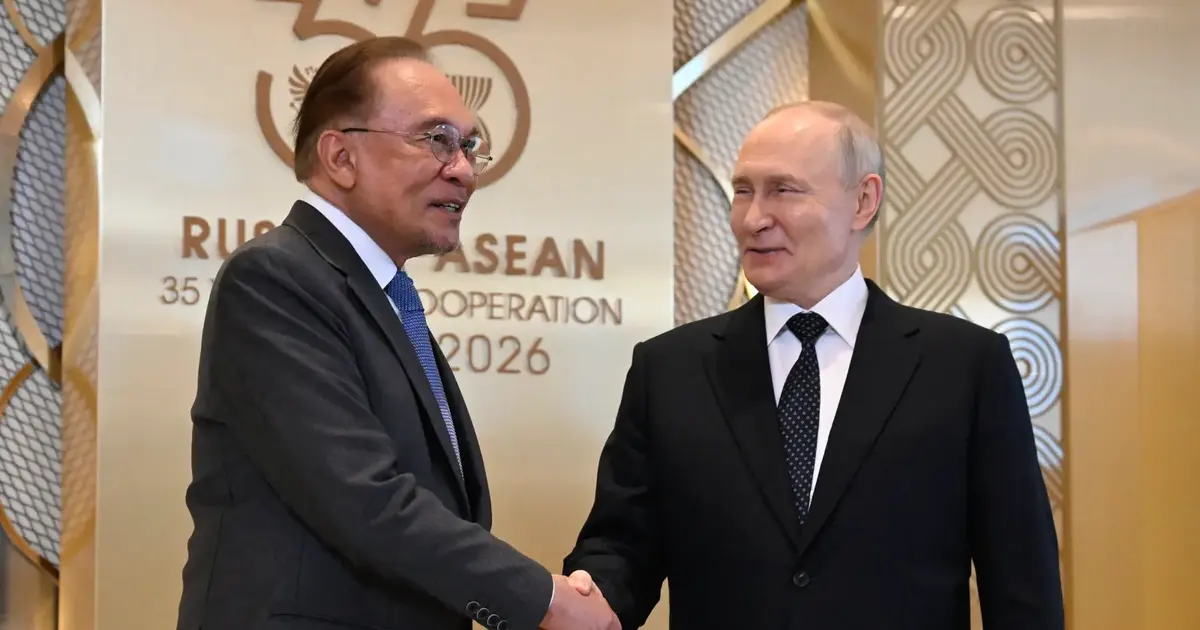
Prime Minister Anwar Ibrahim has returned from discussions with Russian officials carrying guarantees for Malaysia's energy security stretching two decades into the future. The assurances on consistent supplies of crude oil and natural gas represent a significant diplomatic achievement for a country increasingly conscious of supply chain vulnerabilities in global energy markets. With international energy prices remaining volatile and geopolitical tensions affecting conventional trading partners, Malaysia's ability to lock in long-term sourcing arrangements addresses a critical national interest.
The commitment reflects deepening ties between Kuala Lumpur and Moscow despite broader international pressures on Russian trade and investment. As Western nations maintain sanctions regimes targeting Russia's energy sector, Malaysia's willingness to engage demonstrates the country's strategic independence in pursuing national economic objectives. This positioning allows Malaysia to diversify energy sources beyond traditional Gulf suppliers while maintaining the pragmatic foreign policy stance that has characterised recent Malaysian diplomacy across multiple geopolitical spheres.
Stable energy supplies form the foundation of Malaysia's industrial competitiveness and manufacturing export capacity. The two-decade timeframe of the Russian commitment provides Malaysian businesses with certainty when planning long-term investments in energy-intensive sectors. Petrochemicals, semiconductors, and other high-value manufacturing depend on predictable input costs and reliable energy access. With competitors across Southeast Asia similarly seeking energy security, Malaysia's early move to cement supplies with a major producer positions the country advantageously for the next generation of economic development.
Beyond the energy dimension, Anwar's concurrent focus on Turkmenistan highlights Malaysia's broader strategy to strengthen regional economic corridors. The Central Asian nation serves as both a transportation hub and energy nexus linking multiple trading blocs. Malaysia's efforts to expand exports from Turkmenistan toward established Asian markets represent an understanding that supply chain relationships often involve multiple layers of commercial and diplomatic coordination. By positioning itself as a gateway between Central Asian producers and wealthy East Asian consumers, Malaysia enhances its value within regional trade networks.
China's voracious demand for raw materials and energy resources makes it a primary target for Malaysian export expansion. As the world's second-largest economy continues urbanisation and infrastructure development, opportunities for Malaysian commodities, agricultural products, and manufactured goods remain substantial. Japan represents another crucial market where Malaysian automotive components, electronics, and specialty chemicals maintain strong competitive positions. South Korea's dynamic manufacturing sector similarly creates complementary trading opportunities with Malaysian suppliers of intermediate goods and raw materials.
The Turkmenistan dimension of Anwar's diplomatic initiatives underscores Malaysia's recognition that Southeast Asia cannot operate in isolation from broader Asian economic dynamics. Central Asia possesses vast natural resources and serves as a critical land bridge between Europe and East Asia. Malaysian companies seeking to access these markets or benefit from transit arrangements require government-level relationships that smooth regulatory and commercial pathways. Anwar's personal engagement signals to Malaysian business communities that official channels now facilitate deeper Central Asian engagement.
Energy security concerns have intensified across Southeast Asia following pandemic-related supply disruptions and shifts in global production patterns. Malaysia's commitment from Russia addresses multiple vulnerabilities simultaneously. Diversification away from concentrated Middle Eastern supplies reduces exposure to regional instability. Direct supplier relationships diminish reliance on intermediary arrangements that increase costs and complexity. Long-term pricing frameworks provide budget certainty for energy-dependent government agencies and industries.
The geopolitical context surrounding Russia's assurances carries implications for Malaysia's broader international positioning. While maintaining strong relationships with Western partners and ASEAN colleagues, Malaysia demonstrates capacity to engage productively with major powers regardless of their standing in other international disputes. This balanced approach reflects a mature appreciation that Malaysia's interests sometimes align with one set of partners and sometimes with others, depending on specific sectors and circumstances. Energy security transcends ideological or political boundaries when national development depends on reliable supplies.
For Malaysian consumers, long-term energy supply agreements eventually translate into more predictable utility costs and industrial pricing. Petrochemical manufacturers relying on stable feedstock costs can maintain competitive export prices. Power generation facilities with assured fuel access can plan maintenance and capacity expansion rationally. The consumer-facing benefits of such arrangements remain indirect but measurable over years through economy-wide price stability and employment maintenance in energy-dependent sectors.
Anwar's emphasis on export expansion through Central Asian connections reflects awareness that Malaysian prosperity increasingly depends on third-country export flows. Direct bilateral trade relationships matter, but facilitating Malaysian goods transiting through regional hubs toward major markets multiplies commercial opportunities. Turkmenistan's geographic position and infrastructure capabilities make it valuable for this purpose. Government-to-government understandings about regulatory cooperation and customs procedures become essential when commerce travels overland across multiple jurisdictions.
The strategic value of Malaysia's Russia engagement extends beyond immediate energy needs toward longer-term positioning within evolving Asian power structures. As China's influence expands and American strategic involvement fluctuates, middle powers like Malaysia benefit from maintaining multiple strong relationships. Energy relationships particularly important because they span decades and create interdependencies encouraging continued diplomatic cooperation. Russia's investment in Malaysia's economic stability through energy commitments strengthens bilateral ties in ways that serve both nations' strategic interests.
Moving forward, Malaysia's energy security framework rests on the success of these Russian commitments alongside existing relationships with traditional suppliers. Monitoring implementation of the 20-year guarantees will reveal whether the arrangement proves as durable as announced. Meanwhile, Anwar's focus on export expansion through Central Asian channels represents an underutilised avenue for Malaysian economic growth that government-facilitated engagement can substantially develop. The combination of secured inputs and expanded output markets creates a coherent economic strategy addressing both sides of Malaysia's commercial equation.

