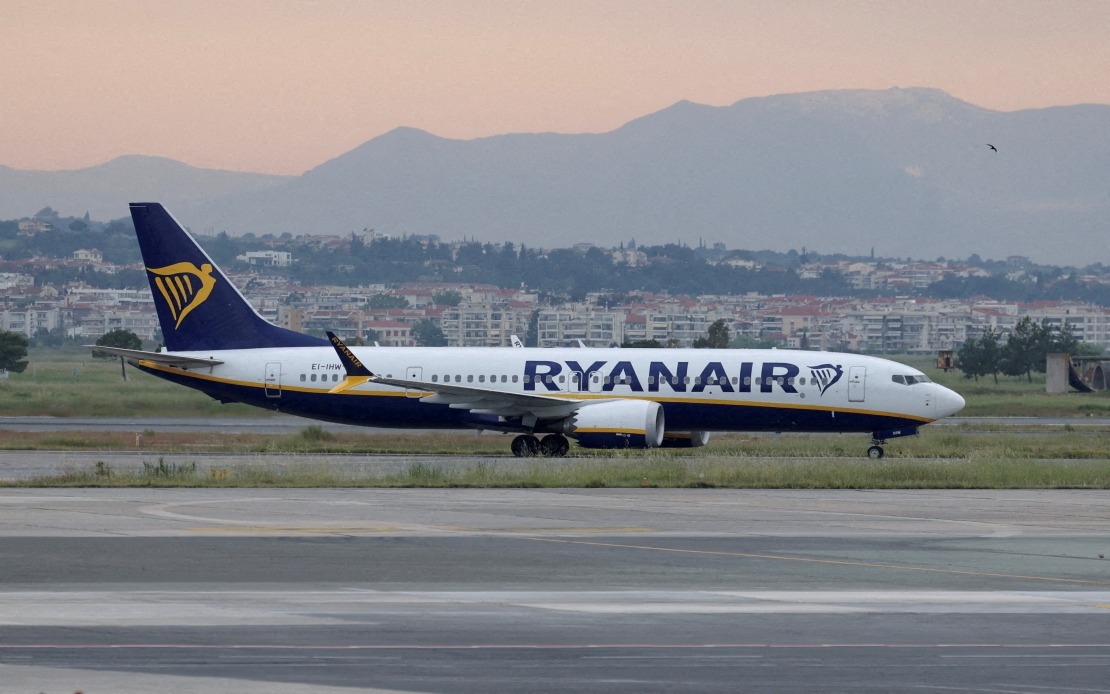
A routine European flight became a scene of terror on Friday when a Ryanair aircraft operating between Thessaloniki and Memmingen experienced a sudden structural failure that sent passengers into panic and triggered an emergency landing. The incident unfolded without warning when a window pane shattered with a loud explosion mid-flight, creating a potentially life-threatening situation for those seated nearby and raising fresh questions about aircraft maintenance standards across the budget carrier's expanding fleet.
The passenger sitting adjacent to the damaged window bore the brunt of the incident's physical consequences. According to eyewitness accounts relayed to Greek broadcaster ERT, the man's upper body—head and shoulders—became partially exposed to the external air pressure and altitude conditions before other travellers managed to act. The rapid sequence of events meant that the passenger who sustained injuries during the incident had little time to comprehend what was occurring before fellow travellers mobilised to pull him back to safety inside the cabin, preventing what could have escalated into a fatality.
The breakdown in the cabin structure triggered the standard safety response from the aircraft's systems. Oxygen masks descended automatically throughout the passenger compartment as the plane's environmental control systems responded to the sudden pressure change. Footage uploaded to social media platforms captured the moment of chaos, with multiple witnesses describing scenes of screaming and confusion as passengers attempted to comprehend the emergency unfolding around them. The psychological impact on those aboard proved as significant as the physical danger, with the combination of the violent noise, the visible damage, and the automatic safety equipment deployment creating an overwhelming sensory experience.
The flight crew responded swiftly to the emergency, with the pilot making the critical decision to abort the journey to Memmingen and execute an immediate return to Thessaloniki Airport. This decision prioritised passenger safety over schedule adherence—a standard protocol in aviation emergencies. The return journey, covering the same distance that the aircraft had travelled away from the airport shortly after take-off, required approximately twenty minutes to complete. During this period, crew members worked to reassure passengers and manage the situation in the cabin while the aircraft descended and prepared for landing.
Airport emergency services met the aircraft upon arrival at Thessaloniki, where the injured Serbian passenger received immediate medical attention. He was transported by ambulance to a hospital in the city for treatment and evaluation of the injuries sustained during the incident. Medical professionals needed to assess both the visible trauma and potential internal injuries resulting from the sudden decompression and physical trauma. The passenger's nationality and background became less relevant than the universal concern for his recovery and the documentation of his medical condition for the ongoing investigation.
The incident falls within a broader context of aviation safety concerns that extend across Southeast Asia and Europe alike. Budget carriers operating across multiple jurisdictions must maintain consistent maintenance standards, yet the pressure to minimise operational costs occasionally creates tension with the rigorous upkeep that modern aircraft demand. Window failures represent a particularly concerning category of structural problems because they can develop gradually through microscopic cracks and fatigue, or strike suddenly with minimal warning. The transparency materials used in aircraft windows must withstand extreme pressure differentials, temperature fluctuations, and cumulative stress from thousands of flight cycles.
Ryanair, Europe's largest budget airline by passenger volume, has not yet released an official statement regarding the incident or preliminary findings about the cause of the window failure. The airline's silence reflects standard practice during active investigations, where carriers typically avoid public comment until facts are established. However, passengers and aviation observers await clarity on whether this represents an isolated manufacturing defect, a maintenance oversight, or a broader pattern of concerns affecting the airline's fleet operations. For Malaysian travellers who frequently utilise European carriers for business and leisure travel, incidents of this nature naturally prompt reassessment of route selection and carrier preferences.
The relevant Greek aviation authorities have initiated a formal investigation into the structural failure, with initial findings expected to provide insight into the window's manufacturing date, maintenance history, and the sequence of events leading to failure. Such investigations typically examine whether the pane was original to the aircraft or a replacement, when it was last inspected, and what condition inspectors documented during routine checks. The investigation will also determine whether the failure resulted from a manufacturing defect, impact damage, or accumulated stress damage that should have been detected during maintenance.
From a regulatory perspective, the incident highlights the importance of rigorous oversight of budget carriers operating across European airspace. While Ryanair maintains safety records comparable to other major carriers, incidents such as window failures generate public concern and media attention that can influence passenger confidence. The European Union Aviation Safety Agency, which oversees air operations across EU member states and associated countries, may utilise this incident to review window maintenance protocols across its affiliated carriers. Greece, as an EU member state, ensures that Ryanair operations originating from Thessaloniki comply with these stringent standards.
For the broader flying public, particularly in Malaysia and Southeast Asia where increasing numbers of travellers utilise European routes, the incident serves as a reminder of aviation's inherent risks and the multiple safety systems designed to prevent catastrophic outcomes. Modern aircraft are engineered with redundancy in critical systems, meaning that a window failure, while frightening and potentially dangerous to individual passengers, does not typically threaten the structural integrity of the entire aircraft. The fact that crew and passengers managed to prevent a worse outcome underscores both the robustness of aircraft design and the crucial role of human response in emergency situations.
The investigation's conclusions will be monitored closely by aviation safety professionals, insurance companies, and regulatory bodies worldwide. Should the investigation reveal systemic issues with window maintenance or manufacturing, carriers across all regions may be required to implement enhanced inspection protocols. Until the investigation concludes, Ryanair passengers can expect heightened scrutiny of the airline's maintenance practices, and the carrier will likely face pressure to demonstrate its commitment to safety despite the commercial pressures inherent in low-cost aviation. The incident ultimately reinforces that budget operations and passenger safety need not be mutually exclusive, but require unwavering commitment to proper maintenance and rigorous oversight.

