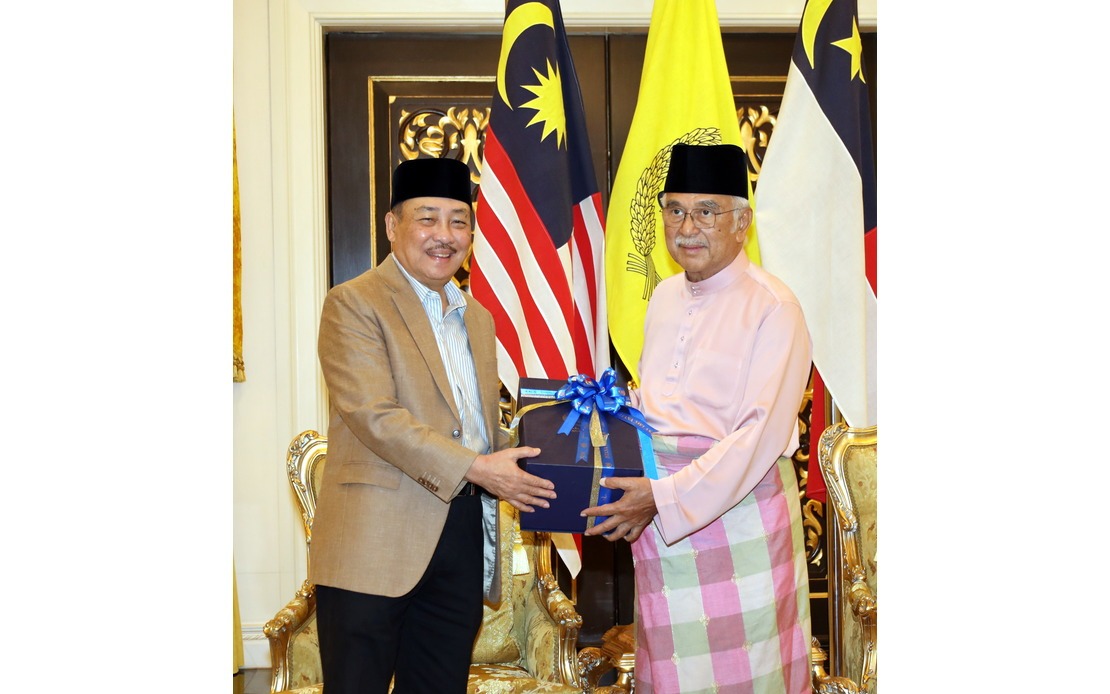
Sabah Chief Minister Datuk Seri Hajiji Noor undertook a diplomatic visit to Melaka on August 14, calling on Yang Dipertua Negeri Tun Dr Mohd Ali Mohd Rustam at Istana Melaka in Bukit Beruang. The meeting represented an opportunity to deepen institutional connections between the two states at a time when regional cooperation remains central to Malaysia's development agenda. Such high-level courtesy calls serve as important diplomatic channels through which state leaders align their development priorities and explore avenues for collaborative advancement.
Hajiji arrived at the istana at approximately 3.35 pm, accompanied by a delegation that included senior cabinet members and legislative representatives. The presence of multiple ministers underscored the significance the Sabah administration attached to the engagement. Rubin Balang, the Rural Development Minister, Datuk Jamawi Jaafar, overseeing Agriculture, Fisheries and Food Industry, and Datuk Mohd Razali Mohd Razi, a nominated member of the Sabah State Legislative Assembly, joined the Chief Minister, reflecting the breadth of sectoral interests involved in the discussion.
During their substantive discussions, both leaders explored matters of mutual concern affecting Sabah and Melaka's development trajectories. While the formal statement maintained discretion about specific agenda items, such high-level exchanges typically encompass trade and investment opportunities, infrastructure projects with cross-state implications, and coordination on federal-state policy matters. The agricultural and fisheries portfolios represented among the delegates suggest these economic sectors featured prominently in the conversation, particularly given Malaysia's emphasis on strengthening domestic production and food security.
For Malaysian interstate diplomacy, such visits fulfill an essential function beyond ceremonial pleasantries. They create platforms for administrative cooperation that can yield tangible outcomes in areas ranging from logistics and supply chains to skills development and knowledge transfer. Melaka's position as a maritime and manufacturing hub intersects with Sabah's resource-rich economy, creating natural complementarities that officials can leverage to mutual benefit. By establishing regular high-level contact, state leaders signal commitment to transcending administrative silos that sometimes inhibit efficient resource allocation across Malaysia's federation.
The broader context of this visit reflects the Malaysian political system's emphasis on strengthening federalism and provincial autonomy. As states increasingly assert themselves in economic development and social policy, chief ministers have become more active in building interstate networks. These connections help ensure that federal policies align with state-level realities and that resources flow efficiently to regions most capable of productive utilization. Hajiji's visit to Melaka exemplifies this trend of proactive intergovernmental engagement.
From a Southeast Asian perspective, Malaysia's internal coordination mechanisms gain significance as the nation pursues regional integration objectives. When states function cohesively around shared national goals, the federation strengthens its capacity to engage with neighbouring countries and leverage its position within ASEAN frameworks. Sabah's geographic position on the island of Borneo renders its political stability and economic advancement matters of regional consequence. Similarly, Melaka's historical importance as a regional trading hub means its prosperity contributes to broader economic dynamism in the peninsula.
The delegation composition also reveals sectoral priorities in Sabah's current administration. The inclusion of the Rural Development Minister suggests ongoing efforts to modernise rural communities and improve infrastructure connectivity. Agricultural and fisheries representation reflects recognition that these primary sectors remain crucial to rural livelihoods and food security, even as Malaysia pursues industrial advancement. Such balanced representation in diplomatic missions indicates that state leadership views economic development through a multi-dimensional lens encompassing both traditional and emerging sectors.
Tun Mohd Ali's hospitality, evidenced through the afternoon tea reception, maintained the courteous protocol essential to formal state visits. These ceremonial dimensions, while sometimes overlooked, facilitate the personal relationships through which officials develop trust and understanding. In Malaysian political culture, personal rapport often precedes and undergirds official cooperation. By investing in such interactions, leaders create interpersonal foundations upon which more substantive collaborative initiatives can subsequently develop.
Looking forward, this visit may presage concrete collaborative projects between the two states. Earlier state visits by Malaysian leaders have frequently resulted in memorandums of understanding or joint working groups targeting specific development objectives. Whether regarding vocational training partnerships, tourism promotion, or supply chain optimisation, such tangible outcomes represent the true measure of successful diplomatic engagement. For Malaysian readers, such interstate cooperation ultimately translates into improved services, expanded economic opportunities, and more efficient governance.
The timing of Hajiji's visit aligns with Malaysia's broader push toward balanced regional development. Federal policies increasingly emphasise strengthening economic corridors that link different regions, enabling resources and opportunities to distribute more equitably across the federation. Sabah and Melaka, despite their distinct geographic and economic profiles, both benefit from initiatives that enhance connectivity and facilitate knowledge exchange. These informal diplomatic channels complement formal federal structures, ensuring that state leaders remain aligned on national priorities while advocating for regional concerns.
Ultimately, the courtesy call exemplifies how Malaysian federalism operates in practice. Rather than operating as isolated administrative units, states function as interdependent components within a broader system. Leaders like Hajiji and Tun Mohd Ali recognise that their respective jurisdictions flourish most when coordinated effectively with counterparts elsewhere in Malaysia. Such visits reaffirm this relational understanding and demonstrate commitment to cooperative governance that transcends parochial interests.

