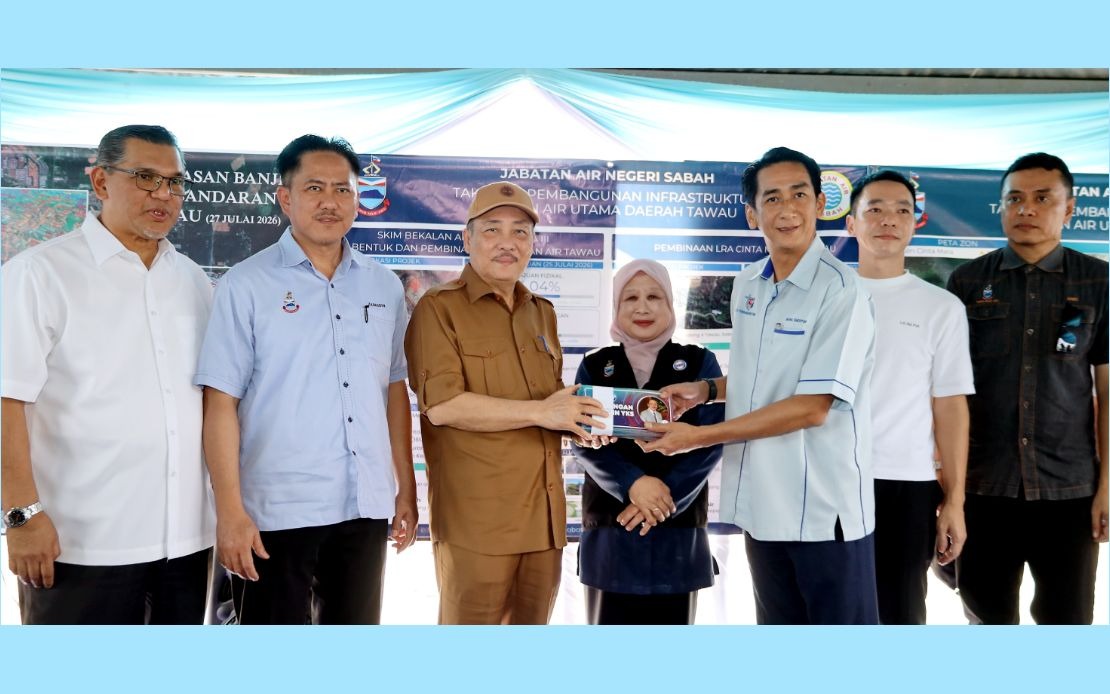
Sabah Chief Minister Datuk Seri Hajiji handed over emergency assistance worth RM30,600 from Yayasan Kebajikan Sabah to support residents affected by recent flooding in Tawau. The distribution, channelled through Tawau Municipal Council president Mohd Shoffian Mohd Said, targeted 102 heads of household, each receiving RM300 to help alleviate immediate financial hardship caused by the disaster.
The flooding that struck Tawau on July 25 displaced significant portions of the community, forcing authorities to evacuate 362 people to temporary shelter at Dewan Serbaguna Kompleks Sukan Tawau. The rapid mobilisation of emergency response services prevented greater loss of life and property, though residents faced considerable disruption to their livelihoods and homes. The monetary assistance from the state foundation represents one of the first concrete relief measures channelled directly to affected families in the immediate aftermath of the disaster.
In his statement, Chief Minister Hajiji acknowledged the collective effort mobilised during the crisis response. He specifically commended the Civil Defence Force, Royal Malaysia Police, and Fire and Rescue Department for their frontline operations during the evacuation and rescue phases. The recognition extended to the Health Ministry, which coordinated medical response at relief centres, and the Tawau disaster management committee that coordinated response activities across multiple agencies.
The role of interagency cooperation proved crucial in managing the scale and complexity of the flooding response. Tawau's location along the Sundai River means flood risk during monsoon seasons poses recurring challenges to residents and infrastructure. The coordination demonstrated during this July incident reflects lessons learned from previous flooding events in the region, where poor communication between agencies had sometimes delayed assistance to stranded residents.
For Malaysian readers in flood-prone areas, the Tawau response offers insights into how state-level initiatives can complement federal disaster management mechanisms. Yayasan Kebajikan Sabah's rapid deployment of funds shows how charitable foundations tied to state governments can provide swift assistance while bureaucratic processes for larger federal relief programmes work through established channels. The RM300 per household figure, while modest, addresses immediate needs such as temporary shelter materials, food supplies, and basic medicines during the critical early recovery phase.
The broader context of Southeast Asian flooding patterns suggests Tawau's experience reflects region-wide vulnerabilities. Malaysia's equatorial and tropical monsoon climate creates seasonal flood risks across Sabah, Sarawak, and Peninsular Malaysia. Communities in lower-lying urban areas like parts of Tawau face particular exposure, as rapid urbanisation has reduced natural water absorption and increased surface runoff during heavy rainfall. Climate scientists have increasingly linked changing precipitation patterns to broader climate dynamics, though seasonal flooding remains an established feature of the region's hydrology.
Tawau's economy, heavily dependent on agriculture and small-scale trading, faces tangible setbacks from flooding events. When 362 residents required evacuation and over 100 households suffered direct impact, the disruption extended beyond immediate physical damage to encompass lost working days, damaged merchandise for traders, and contamination of agricultural plots. The RM300 assistance, deployed quickly by state authorities, represents recognition that early liquidity provision helps households stabilise their situations faster than waiting for longer-term reconstruction programmes.
The recognition of civil servants and emergency personnel in Chief Minister Hajiji's statement reflects an important principle in disaster management: sustained public acknowledgment of frontline workers' contributions builds institutional memory and encourages professional excellence across agencies. In Sabah's context, where geographic challenges—including coastal areas and riverine regions—create persistent disaster risks, maintaining motivation among responders remains strategically important for long-term resilience.
Moving forward, Tawau residents and officials face the challenge of implementing preventive measures alongside responsive capacity. Early warning systems, improved drainage infrastructure, and updated building codes in flood-susceptible zones represent medium-term strategies that complement immediate relief. The involvement of multiple government agencies and the coordination demonstrated during this incident suggests an opportunity for authorities to consolidate lessons into enhanced preparedness protocols.
For the broader Malaysian context, Sabah's experience underscores the importance of adequately resourced state-level disaster management entities and charitable foundations that can mobilise funds rapidly without waiting for centralised approval processes. As climate variability increases rainfall intensity in certain regions during monsoon periods, communities benefit from having layered response mechanisms operating at state, municipal, and federal levels simultaneously. The swift action by Yayasan Kebajikan Sabah exemplifies how this layered approach, when functioning effectively, can reach vulnerable populations within days rather than weeks.

