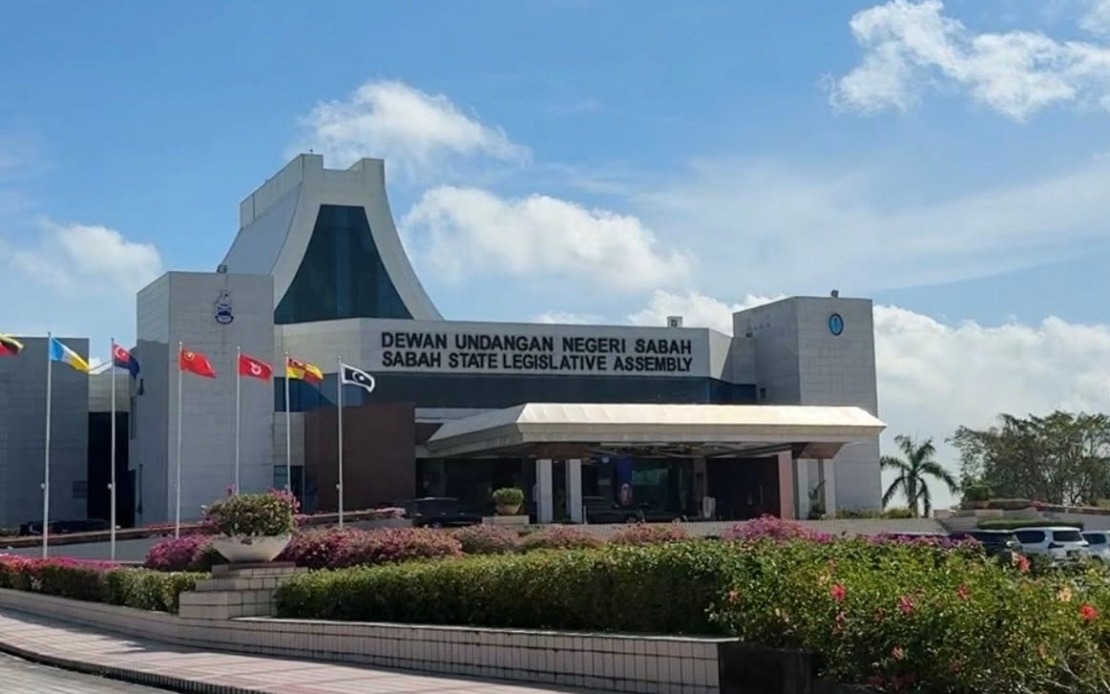
The Sabah Legislative Assembly has cleared the way for sweeping reforms to how Muslim estates are administered and how native customary disputes are resolved, passing both the Muslim Succession Bill 2026 and the Native Courts Bill 2026 in a single sitting on July 22. The dual approval represents a pivotal moment for legal modernisation in Malaysia's second-largest state, addressing what officials describe as longstanding gaps in legislative coverage and outdated procedural mechanisms that no longer reflect contemporary judicial standards or community expectations.
Datuk Dr Mohd Arifin Arif, the state's Local Government and Housing Minister who also oversees Islamic Affairs, steered both bills through assembly debate. The Muslim Succession Bill 2026 underwent scrutiny from five assemblymen during its passage, while the considerably more complex Native Courts Bill 2026 drew participation from twelve legislators before securing approval. Assembly Speaker Datuk Seri M Kadzim Yahya presided over the first bill's adoption, with Deputy Speaker Datuk Richard Wong We Kong overseeing the Native Courts debate.
The Muslim Succession Bill 2026 addresses what Arif characterised as a critical absence in Malaysia's legal architecture: legislation specifically designed to govern the administration of Muslim estates under Syariah Court authority. This first-of-its-kind framework aims to establish systematic procedures where currently relatively fragmented approaches exist. By creating standardised mechanisms for inheritance distribution, the legislation seeks to prevent disputes between heirs, protect beneficiaries' entitlements, and ensure that assets pass to rightful recipients in accordance with Islamic legal principles rather than through ad-hoc arrangements that have historically characterised estate settlement.
Arif outlined four foundational pillars supporting the bill's enactment. The legislation introduces comprehensive legal parameters for Muslim inheritance administration, establishing clear hierarchies of heir entitlement and procedural certainty. It simultaneously protects multiple stakeholders—not merely heirs but creditors and other interested parties whose claims against estates require orderly resolution. The bill mandates that estate administration adheres strictly to syariah principles, eliminating potential conflicts between common law practices and Islamic jurisprudence. Crucially, it incorporates compliance mechanisms and enforcement provisions designed to prevent asset concealment, unauthorised disposal, or misappropriation by executors or administrators, addressing concerns about fiduciary breaches that have occasionally occurred in informal settings.
The Native Courts Bill 2026 tackles an equally significant but distinct challenge: the modernisation of Sabah's customary justice system without diluting its cultural foundations. The existing legislative framework, which has remained substantively unchanged since 1992, reflects judicial philosophies and procedural assumptions developed over three decades ago. Arif argued that three decades of legal evolution, changing community demographics, and shifts in what constitutes effective dispute resolution necessitate comprehensive renewal. The new enactment preserves the identity and distinctiveness of native customs while equipping the system with contemporary structural and procedural refinements.
Central to the Native Courts Bill 2026 is a restructured judicial hierarchy introducing three distinct court tiers: the Native District Court handling less complex matters, the Native High Court addressing intermediate disputes, and the Native Court of Appeal providing appellate review. This tiered architecture provides litigants with clearer pathways through the system and creates space for cases to progress logically according to their complexity and significance. Such stratification also distributes judicial workload more rationally than the previous framework allowed, potentially reducing delays and enabling judges to specialise in handling matters appropriate to their tier's mandate.
A transformative element embedded within the bill concerns judicial appointments. Rather than relying primarily on administrative position—a system where individuals gained judicial authority through bureaucratic advancement rather than demonstrated legal or customary expertise—appointments will henceforth be assessed by a newly established Native Judicial Appointments Advisory Committee. This body will evaluate candidates across multiple dimensions: their comprehension of customary law substantive content, their judicial temperament and integrity, their relevant experience, their qualifications, and their capacity to discharge judicial duties impartially. By divorcing judicial authority from administrative rank and anchoring it instead to demonstrated capability, the bill aims to elevate the system's professionalism and credibility among communities relying on native courts.
For Malaysian readers, particularly those in Sabah, these reforms carry immediate practical implications. The Muslim Succession Bill 2026 addresses a longstanding lacuna affecting thousands of families annually, establishing predictable rules for estate settlement that have been conspicuously absent. Families navigating contested inheritances can expect clearer legal guidance and more formalised processes. The Native Courts Bill 2026 similarly impacts indigenous communities—principally Kadazan-Dusun, Bajau, and Murut populations—who depend on customary courts for resolving land disputes, family matters, and communal conflicts. Enhanced judicial professionalism and structural clarity should strengthen public confidence in customary institutions while respecting their cultural significance.
Regionally, Sabah's legislative initiatives reflect broader Southeast Asian trends toward recalibrating relationships between formal legal systems and indigenous or religious governance frameworks. Rather than displacing customary institutions or Syariah courts, these bills strengthen and systematise them, suggesting that modernisation and cultural preservation need not be mutually exclusive. This model may offer templates for other Malaysian states and neighbouring jurisdictions wrestling with similar challenges around maintaining traditional institutions while meeting contemporary judicial expectations.
The passage of these bills through substantial parliamentary debate—ten deliberations combined—indicates that legislators treated both measures seriously, subjecting them to scrutiny rather than rubber-stamping proposals. The fact that twelve assemblymen engaged with the Native Courts Bill demonstrates stakeholder engagement, particularly around customary law where diverse communities hold distinct perspectives. Going forward, implementation will prove critical; legal frameworks require administrative infrastructure, training, and resources to function effectively. How Sabah's government funds court operations, recruits and trains judges, and manages the transition from old to new systems will determine whether these legislative reforms translate into tangible improvements for citizens.

