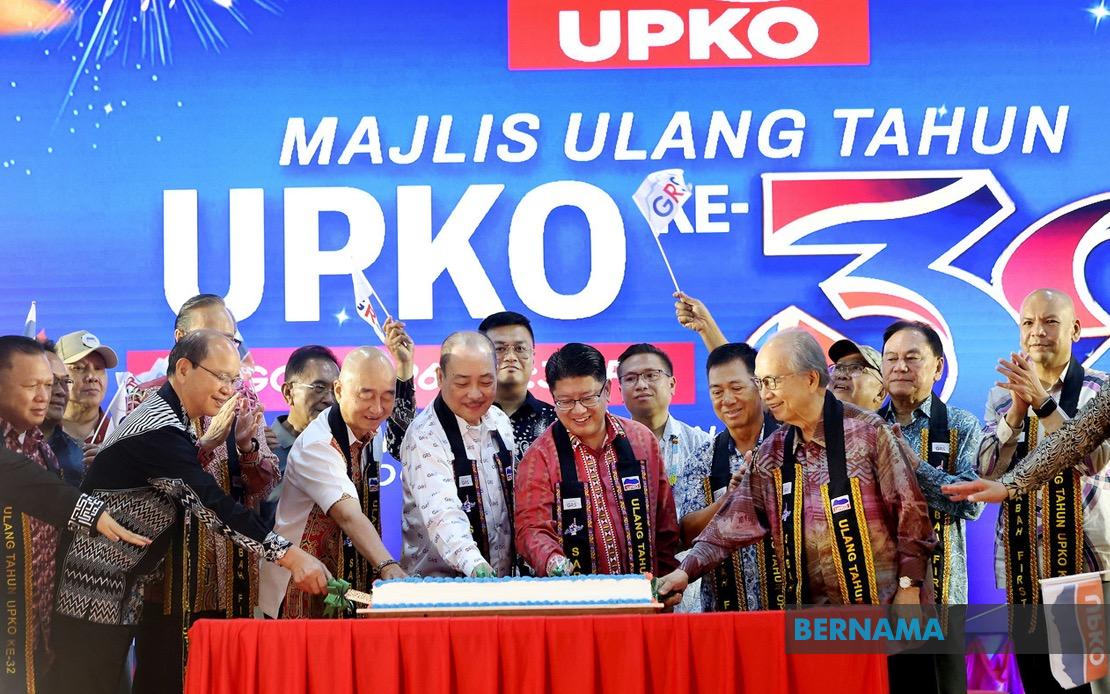
Sabah's Chief Minister Datuk Seri Hajiji Noor has committed to returning all revenue the state receives from federal allocations directly to the people through targeted incentives, welfare support and development initiatives. Speaking at the 32nd anniversary celebration of the United Progressive Kinabalu Organisation (UPKO) and the opening of its 17th Triennial Delegates Conference in Kota Kinabalu, Hajiji outlined how the state government intends to deploy funds to address longstanding infrastructure deficits and improve living standards across the region.
The commitment comes on the heels of a significant financial boost from the federal government. Prime Minister Datuk Seri Anwar Ibrahim's administration has raised the interim special grant payment to Sabah to RM1.5 billion annually, a decision welcomed by the state leadership. The increase represents a tangible acknowledgment of Sabah's fiscal needs and its place in the federation's development priorities. Of this allocation, Sabah has already received RM600 million, disbursed on June 12, with the remainder expected to flow through the remainder of the fiscal year.
The Chief Minister indicated that the enhanced financial resources would be concentrated on core infrastructure requirements that have long constrained development across the state. Road networks and bridge construction feature prominently in the spending plans, with Hajiji emphasising the construction of paved roads and concrete bridges as priorities. Such infrastructure improvements carry particular significance for Sabah, where vast distances, challenging terrain and limited connectivity have historically hindered economic development and service delivery to remote communities. Better roads and bridges would reduce transportation costs, improve market access for agricultural producers and facilitate movement of goods and people.
Water and electricity supply improvements also feature centrally in the deployment strategy. These utilities remain unevenly distributed across Sabah, with rural and interior regions facing persistent shortages and service interruptions. Expanding and upgrading these basic services would directly improve quality of life while also supporting industrial development and attracting investment to underutilised regions of the state. Access to reliable utilities is a fundamental prerequisite for health, education and economic opportunity, making this allocation strategically important for human development outcomes.
Beyond conventional infrastructure, the state government plans to advance social welfare programmes that directly address household vulnerability. The Rumah Mesra Sabah Maju Jaya (SMJ) housing initiative will receive funding to construct additional units, targeting improved living conditions for lower-income families. This programme represents a direct intervention in housing affordability, an acute challenge in both urban and rural Sabah. The Sentuhan Kasih Rakyat (SYUKUR) assistance programme, meanwhile, appears designed to provide targeted support to disadvantaged segments of the population, functioning as a safety net during economic difficulties.
The financial commitment reflects a broader philosophy that federal transfers should directly benefit state residents rather than remaining in government coffers. This positioning aligns with broader Malaysian federalism debates about resource distribution and accountability, particularly acute in states like Sabah which have historically felt marginalised in federal allocation formulas. By explicitly committing to spending federal grants on visible, tangible benefits, Hajiji addresses political expectations while demonstrating fiscal stewardship.
Sabah's own revenue generation capacity has shown resilience despite global and domestic headwinds. The state government has sustained annual revenue collections at RM7 billion since 2022, a steady baseline that demonstrates consistent fiscal performance. Projections for the current year suggest collections could reach RM8 billion, representing meaningful growth that would expand the state's discretionary spending room. This expanding domestic revenue base, combined with enhanced federal transfers, provides Sabah with increasing financial flexibility for developmental ambitions.
The state's economic fundamentals remain a subject of official optimism. According to the Chief Minister, Sabah continues strengthening its economic resilience despite facing headwinds from both domestic policy challenges and volatile global conditions affecting commodity prices and trade. This resilience has evidently attracted investor confidence, with officials promoting Sabah as a strategic investment destination. Such positioning is crucial for a state whose economy traditionally relied heavily on natural resource extraction, where diversification into manufacturing, tourism and services remains an ongoing imperative.
For Malaysian policymakers and observers, Sabah's experience illustrates the complex dynamics of fiscal federalism in a diverse, geographically dispersed nation. The state's vast landmass, dispersed population and infrastructure deficits create elevated development costs compared to more densely settled regions. Federal grant mechanisms attempt to address these structural challenges, yet tensions frequently arise regarding adequacy of allocations and flexibility in deployment. Hajiji's framing of federal transfers as community-directed investment rather than government revenue advances a narrative that may resonate with constituents while also implicitly acknowledging historical concerns about equitable resource distribution.
The initiatives outlined carry implications extending beyond Sabah's borders. As a state in Malaysia's eastern region, Sabah's development trajectory influences broader Southeast Asian economic geography and regional connectivity. Infrastructure improvements, particularly transportation links, hold potential for enhancing cross-border trade and investment flows throughout the region. Improved utilities and services could catalyse industries seeking reliable operational environments, positioning Sabah more competitively within the broader association of Southeast Asian nations seeking to attract investment and build regional supply chains.
The commitment also reflects changing political dynamics within Sabah itself. The state's political landscape has undergone significant realignment in recent years, with federal government support representing both validation of state leadership and implicit bargaining over development priorities. By publicly detailing how federal revenues will benefit residents, Hajiji establishes benchmarks against which his administration's performance will be measured, creating accountability structures that ultimately serve both good governance objectives and political sustainability.

