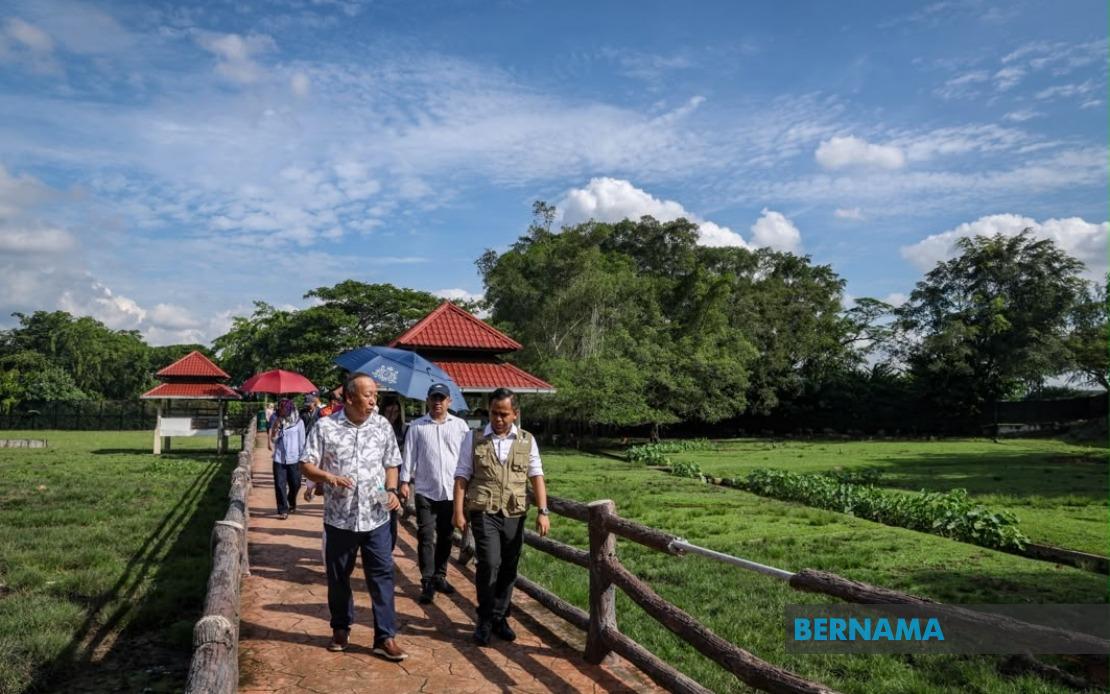
The Sabah branch of UMNO has committed substantial organisational resources to bolster Barisan Nasional's campaign machinery for the Johor state election, leveraging its existing relationships with residents who have relocated from the East Malaysian state. Datuk Jafry Ariffin, chairman of Sabah UMNO's liaison committee, announced the party's deployment strategy during a visit to the Johor Zoo in Johor Bahru on June 18, emphasising that the party's focus would centre on constituencies containing significant Sabahan migrant communities.
The specific electoral battlegrounds identified for Sabah UMNO's intervention are the Permas and Johor Jaya state assembly seats within the broader Pasir Gudang parliamentary constituency. According to party records, approximately 3,000 registered voters originating from Sabah currently reside in Permas, whilst a further 2,000 are based in Johor Jaya. These figures underscore a demographic concentration substantial enough to potentially influence electoral outcomes in these closely contested areas, making targeted mobilisation of this voter cohort a strategic priority for the coalition.
Sabah UMNO's assignment to these constituencies builds upon established institutional knowledge from the previous state election cycle. Jafry noted that the party had undertaken identical responsibilities during the 2022 Johor state election campaign, creating institutional continuity and allowing the party to deploy tested operational frameworks. This organisational memory represents a competitive advantage, as campaign teams familiar with local geography, voter concerns, and community networks can execute more effective outreach without the learning curve that would face entirely new teams.
The strategic deployment reflects a broader approach within Barisan Nasional to maximise electoral support through specialised community mobilisation. Rather than treating all voters identically, the coalition has developed targeted strategies tailored to specific demographic groups. For East Malaysians residing in Peninsular Malaysia—a growing population as economic opportunities have drawn migration from Sabah and Sarawak—maintaining party machinery dedicated to these communities ensures their concerns and interests receive adequate representation within campaign messaging.
Jafry, who concurrently serves as Sabah Minister of Tourism, Culture and Environment, indicated that preliminary groundwork has commenced on a modest scale. These early preparations encompass organisational consolidation, volunteer coordination, and preliminary community engagement activities. However, he projected that the campaign intensity would escalate significantly following the Election Commission's nomination day on June 27, with full-scale operations rolling out across the campaign period leading to polling on July 11.
The Johor state legislature comprises 56 seats contested across the electoral cycle. Before the assembly's dissolution on June 1, Barisan Nasional commanded 40 seats, establishing the party as the dominant political force. Pakatan Harapan held 12 seats, Perikatan Nasional occupied three, whilst MUDA retained one seat. This existing seat distribution provides BN with substantial incumbent advantages, though the competitive nature of the election means retaining marginal constituencies becomes critical to maintaining majority control.
The timing of Sabah UMNO's mobilisation speaks to the competitive pressures facing Barisan Nasional in Johor, a historically significant state for the coalition. The party's willingness to allocate resources from a separate state branch underscores recognition that victory margins in certain constituencies may prove decisive for overall electoral success. By concentrating effort on constituencies with concentrated Sabahan populations, BN reduces geographic dispersal of resources and targets communities where cultural familiarity and established networks provide organisational advantages.
Migrant voting populations from East Malaysia represent a distinctive electoral consideration throughout Peninsular Malaysia. Unlike voters with multigenerational roots in particular constituencies, Sabahan and Sarawakian residents often maintain distinct identity markers and community networks centred on regional origin. Political parties that effectively mobilise these communities through regionally-specific machinery frequently achieve stronger performance among these cohorts than parties deploying generic national campaign strategies. Sabah UMNO's specialised approach reflects this political reality.
The deployment also carries implications beyond immediate electoral mathematics. Effective outreach to East Malaysian communities signals broader recognition of their significance within Malaysia's electoral landscape and political economy. As migration patterns continue evolving and East Malaysian populations expand in key Peninsular Malaysian constituencies, political parties demonstrating sustained commitment to these communities through dedicated machinery build long-term political capital and community goodwill. Sabah UMNO's continued involvement in Peninsular Malaysian elections contributes to multi-state political networks that strengthen overall coalition cohesion.
Looking toward July 11, the convergence of multiple campaign machinery streams—including Sabah UMNO's East Malaysian mobilisation alongside mainstream BN operations—will determine whether the coalition successfully retains control of Johor. The state election carries symbolic importance beyond its 56 seats, as Johor's outcome potentially influences broader perceptions of Barisan Nasional's political viability and electoral momentum entering subsequent contests. Sabah UMNO's committed participation reflects awareness of these elevated stakes and the party's investment in BN's continued dominance throughout Malaysia's electoral landscape.