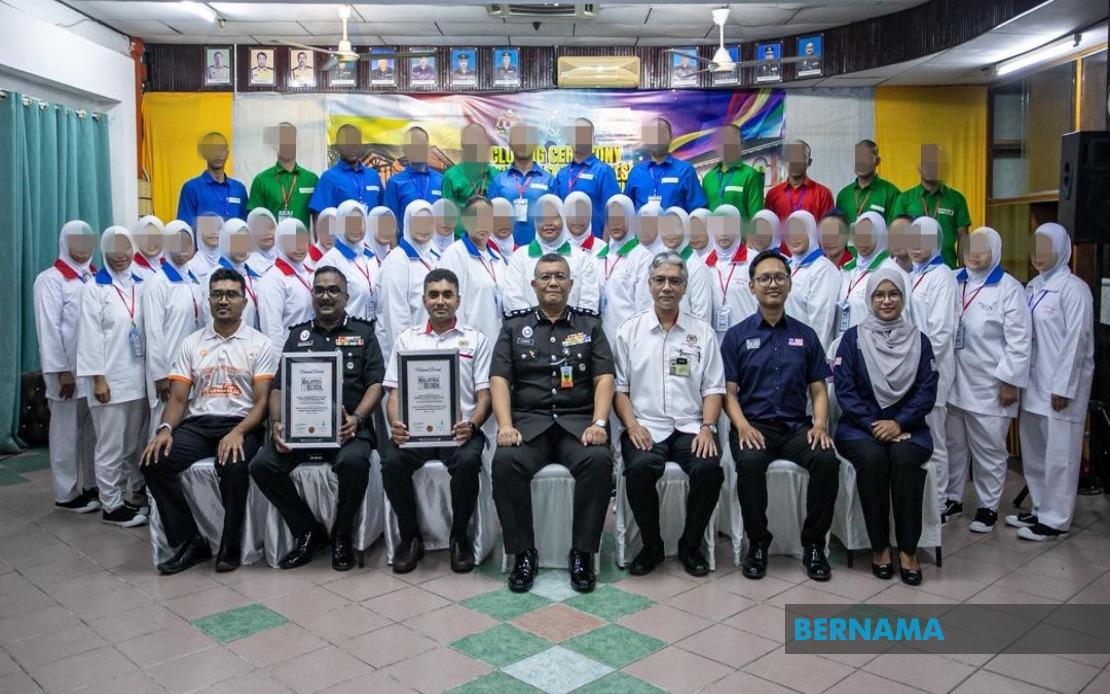
Home Minister Datuk Seri Saifuddin Nasution Ismail has celebrated a landmark achievement by the Malaysian Prisons Department, which secured recognition from the Malaysia Book of Records for pioneering a specialized training initiative. The Batu Gajah Correctional Centre organised a comprehensive Basic Life Support and Automated External Defibrillator course that engaged 42 inmates, marking a notable milestone in the nation's correctional landscape.
The recognition underscores a fundamental shift in how Malaysia's penal system conceptualizes its role within society. Rather than functioning solely as a punitive mechanism, the Home Minister emphasized that modern correctional institutions serve as crucial rehabilitation platforms where individuals receive opportunities to reconstruct their lives and reintegrate into communities. This philosophical reorientation reflects evolving international best practices in criminal justice, where emphasis on offender reformation has increasingly gained traction over purely retributive approaches.
Through structured programmes such as the life-saving training course, incarcerated individuals acquire tangible, marketable competencies that enhance their employability prospects upon release. Beyond the immediate practical benefit of mastering critical medical interventions, participants internalize deeper values that extend far beyond technical proficiency. The curriculum deliberately cultivates humanitarian principles, instils discipline, reinforces personal accountability, and strengthens self-assurance—all foundational elements necessary for successful social reintegration.
Saifuddin articulated that the Prisons Department's core mandate transcends punishment, operating instead as an institution fundamentally committed to transformation. The philosophy driving contemporary correctional policy acknowledges that rehabilitation investments yield measurable societal dividends by reducing recidivism rates and enabling formerly incarcerated individuals to become economically productive and law-abiding community members. This approach resonates with evidence-based criminology research demonstrating that programmes combining skills training with values education substantially improve long-term outcomes for programme participants.
The government's aspiration, according to the Home Minister, centers on ensuring that every individual completing their sentence possesses requisite competencies, internalized values, and practical capabilities to contribute meaningfully to familial structures, wider communities, and the nation itself. This holistic framework recognizes that successful reintegration depends not merely on securing employment but on fostering genuine social belonging and purpose among formerly marginalized populations.
Saifuddin's endorsement of expanded implementation reflects ministerial commitment to scaling similar high-impact initiatives throughout Malaysia's correctional network. The administration perceives such programmes as strategic investments in public welfare, acknowledging that rehabilitation effectiveness ultimately determines community safety and social stability. By equipping individuals with life-saving competencies during incarceration, the system simultaneously serves humanitarian purposes while preparing productive contributors to wider society.
The Batu Gajah achievement carries particular significance for Malaysia's regional standing. Southeast Asian correctional systems increasingly face scrutiny regarding rehabilitation standards and human rights compliance. Malaysia's documented commitment to evidence-based rehabilitation programming, as evidenced by the MBOR recognition, positions the nation as a progressive voice advocating for dignified, transformative approaches to criminal justice within the region.
Implementing structured skills training across correctional facilities requires substantial resource allocation, institutional coordination, and staff expertise. The fact that Batu Gajah successfully mobilized these elements to train 42 inmates in specialized life-saving protocols demonstrates operational capability and organizational commitment. Scaling such programmes demands systematic expansion of training infrastructure, qualified facilitators, and sustained budgetary support throughout the Prisons Department.
The rehabilitation agenda carries implications extending beyond individual transformation. Communities benefit when formerly incarcerated persons possess marketable qualifications, stable employment, and renewed social connections. This reduces likelihood of reoffending while simultaneously alleviating criminal justice system pressures and associated detention costs. Evidence from international jurisdictions implementing comprehensive rehabilitation frameworks consistently demonstrates improved public safety outcomes alongside reduced expenditure on incarceration.
As Malaysia continues developing its correctional philosophy, initiatives like the Batu Gajah Basic Life Support programme exemplify how institutional innovation can harmonize humanitarian objectives with practical competency development. The Malaysia Book of Records recognition provides public validation for such efforts, potentially encouraging broader community acceptance of rehabilitative approaches and supporting continued ministerial emphasis on transformation-oriented correctional practices.

