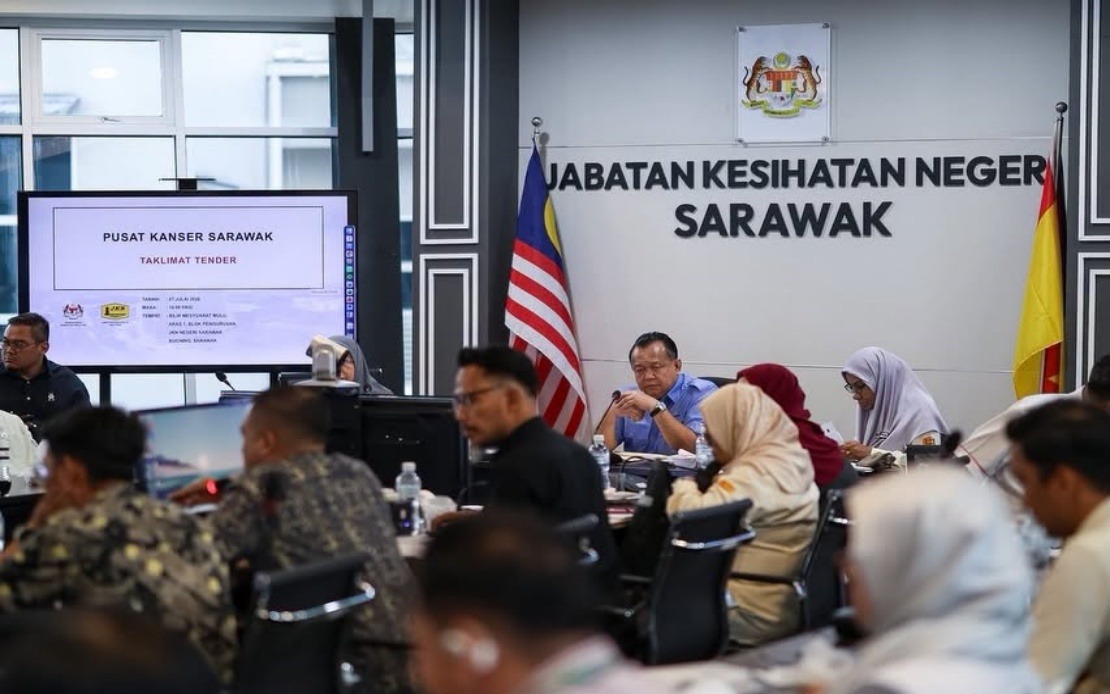
Sarawak's ambitious cancer centre development in Kota Samarahan has reached a critical juncture in its delivery timeline. Works Minister Datuk Seri Alexander Nanta Linggi confirmed during a site visit in Kuching that construction activities are poised to commence in January 2027, contingent on the Letter of Acceptance being awarded to the successful contractor by the start of that month. The announcement marks steady progress for a healthcare infrastructure project that holds significant implications for cancer treatment accessibility across East Malaysia and the broader region.
The project is currently navigating the design-and-build procurement phase, a contracting model that combines architectural and engineering design with construction delivery under a single entity. This approach offers potential efficiency gains but also requires robust oversight to ensure quality standards. Ten contractors have successfully navigated the pre-qualification stage and received detailed briefings on the project scope, positioning them to submit comprehensive proposals outlining their design vision, construction methodology, and cost estimates.
The tender process incorporates a three-month window for prospective bidders to prepare and refine their submissions. This timeline provides contractors adequate opportunity to conduct site assessments, engage specialist consultants, and develop costed schedules. Nanta indicated that proposal evaluation would follow submission, with the expectation that the assessment phase completes swiftly enough to facilitate the January 2027 Letter of Acceptance. This sequencing is critical, as any delays in contractor appointment would compress the already-ambitious construction window.
Once appointed, the successful contractor faces a demanding five-year delivery mandate covering both design completion and full construction. This 60-month schedule requires disciplined project management, particularly given the specialised nature of cancer treatment facilities, which demand compliance with stringent Health Ministry specifications alongside contemporary healthcare facility standards. The design phase cannot proceed simultaneously with site preparation on equal footing; detailed architectural and engineering drawings must reach a specified maturity before major construction mobilisation commences.
Following the completion of the primary construction phase, a two-year Defects Liability Period provides oversight of the contractor's remedial obligations. During this window, any defects, design shortcomings, or performance failures must be rectified at the contractor's expense, protecting the government's investment and ensuring the facility meets operational standards before handover to the Ministry of Health.
The cancer centre will occupy a 10.9-hectare site adjacent to the existing Sarawak Heart Centre, leveraging shared infrastructure and support services. This co-location strategy permits operational efficiencies—shared emergency departments, diagnostic imaging, pathology services, and administrative functions can serve both cardiology and oncology patient populations. The 310-bed capacity configuration signals a facility designed to handle both routine cancer treatment and complex cases requiring extended inpatient stays, alongside substantial ambulatory and day-care services.
The facility's service model encompasses both outpatient and inpatient operations, acknowledging that cancer care spans chemotherapy infusions, radiation therapy, surgical interventions, and supportive care. Outpatient capacity is particularly important given that modern oncology increasingly emphasises ambulatory treatment protocols, reducing hospitalisation duration for eligible patients. This design philosophy should enable the centre to treat substantially more patients annually than inpatient bed numbers alone would suggest.
The project budget exceeds RM1 billion, a substantial investment reflecting the complexity of specialised medical infrastructure. The Sarawak state government has earmarked this sum for the project with an understanding that funds will be reimbursed through a predetermined cost-sharing mechanism, likely involving federal government contributions. This financial arrangement is noteworthy because it demonstrates state-level commitment to healthcare infrastructure despite competing budgetary demands.
For Malaysian and Southeast Asian readers, the Sarawak Cancer Centre represents a significant addition to regional oncology capacity. East Malaysia currently faces considerable disparities in tertiary healthcare accessibility compared to western peninsular regions. This facility would dramatically reduce patient travel burdens, enabling residents across Sarawak and neighbouring jurisdictions to access advanced cancer treatment without requiring interstate or international medical tourism. Early detection and timely treatment outcomes improve when patients need not undertake lengthy journeys for care.
The design specifications mandate alignment with Health Ministry requirements while incorporating modern architectural and clinical design principles. Modern cancer centres increasingly emphasise patient-centric design—natural lighting in treatment areas, wayfinding clarity, family amenities, and psychological support spaces. Balancing regulatory compliance with contemporary best-practice design represents a significant technical and project management challenge that will influence the facility's operational effectiveness beyond mere technical specifications.
The January 2027 commencement target positions the facility for potential opening during the early 2030s, assuming the five-year construction timeline runs without major disruptions. Inflation management, supply chain disruptions, and skilled workforce availability will prove critical to meeting schedules and budgets. Given that this project involves specialised medical equipment sourcing and installation, international procurement coordination will substantially influence implementation success.
The cancer centre forms part of Sarawak's broader healthcare modernisation agenda, complementing recent investments in cardiac care and reflecting state recognition that chronic disease burdens demand proportionate infrastructure responses. As Malaysia's population ages and cancer incidence continues rising across Southeast Asia, strategically positioned tertiary treatment centres become increasingly essential. This project represents a meaningful commitment to ensuring that geographic location does not condemn patients to inferior cancer outcomes.

