The Malaysian government is accelerating infrastructure efforts in Sarawak to tackle mounting environmental challenges that threaten coastal and riverine communities. Deputy Prime Minister Datuk Seri Fadillah Yusof announced that 52 projects under the Cakna MADANI Programme have received approval this year, with a combined value of RM9.46 million dedicated specifically to combating erosion and reducing flood vulnerability across the state. This initiative reflects growing recognition of climate-related risks affecting Malaysia's eastern flank, where seasonal flooding and riverbank degradation have become increasingly severe.
The portfolio of 52 approved initiatives displays varying stages of implementation maturity. Twelve schemes have already been completed, demonstrating rapid project delivery capability within the programme framework. A further 13 installations are currently underway at construction sites throughout Sarawak, while the remaining 27 projects are preparing for commencement, indicating a structured pipeline of future work. This phased approach allows for learning and refinement between successive phases, potentially improving execution quality and cost efficiency in later stages.
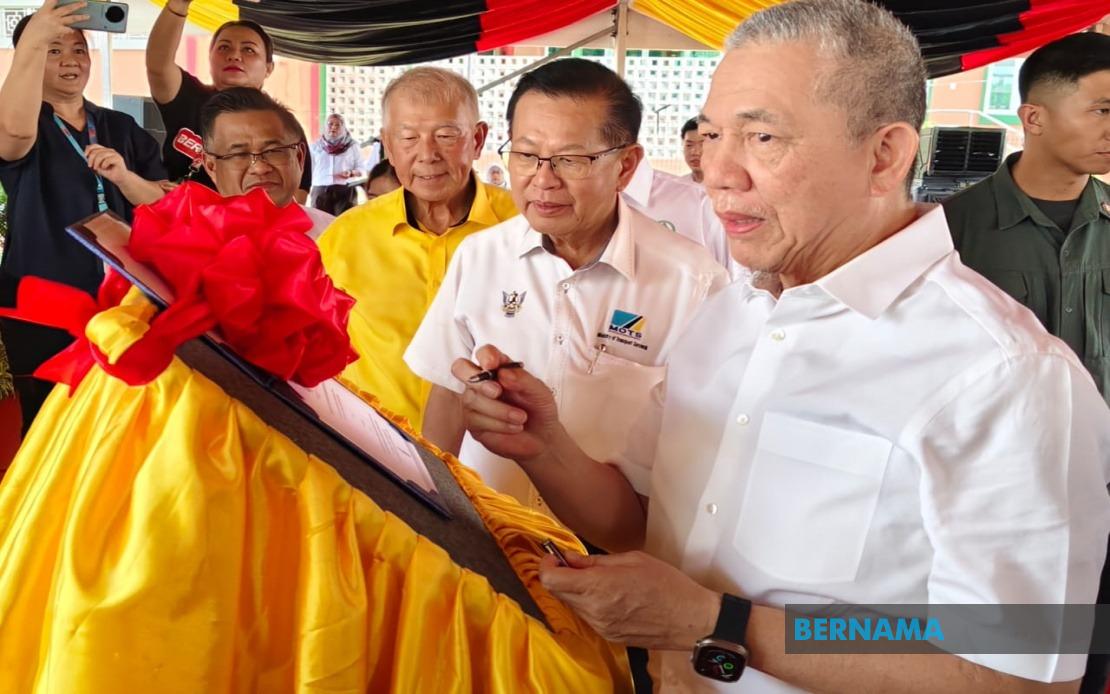
During a site visit in Miri, Fadillah inspected a riverbank stabilisation initiative at the Tab Cinaq Cemetery, one of three Cakna MADANI undertakings in the district. The RM134,682 project illustrates the granular focus of these interventions on protecting vulnerable local assets. Construction commenced in May with anticipated completion scheduled for November, and involves erecting a 50-metre retaining wall designed to anchor the riverbank and prevent further erosion while safeguarding both the cemetery itself and surrounding infrastructure from inundation risks. Such targeted projects address immediate community needs while forming part of a larger strategic response.
Beyond the immediate Cakna MADANI portfolio, Fadillah, who also holds the Energy Transition and Water Transformation ministerial portfolio, highlighted a substantially larger suite of flood mitigation initiatives. Twenty-nine major flood control projects have received approval across Sarawak, representing a long-term commitment to infrastructure resilience. The aggregate investment across these schemes reaches RM3.834 billion, dwarfing the Cakna MADANI allocation and signalling that environmental risk reduction ranks among the government's capital expenditure priorities in the state. This encompasses the Flood Mitigation Plan (RTB), High Priority Flood Mitigation (TBBT) initiatives, coastal erosion abatement programmes, and riverine conservation activities.
The composition of this larger programme reveals a mix of established and emerging priorities. Of the 29 major projects, 18 represent continuations of existing schemes with a combined budget of RM3.567 billion, reflecting multi-year commitments that demand sustained funding and political will. The remaining 11 projects are newly greenlit, collectively budgeted at RM267 million, indicating that the government continues identifying fresh intervention sites as understanding of vulnerability patterns improves. This combination of steady-state operations and new launches suggests a maturing approach to flood and erosion management in Sarawak.
The RTB Sungai Miri exemplifies the continuation category and carries particular significance for residents in Miri Division. Valued at RM31 million, this initiative commenced construction in October 2023 and has achieved physical progress of 58.11 per cent at the time of the announcement. The projected completion date is November 2026, implying approximately three years of construction activity. Projects of this scale typically involve substantial earthworks, hydrological restructuring, and engineering interventions that reshape riverine landscapes to enhance drainage capacity and reduce inundation frequency. The mid-project status indicates that any lessons learned during early phases can inform approaches in subsequent years.
These initiatives carry significance extending well beyond Miri or even Sarawak's borders. The northeastern region of Peninsular Malaysia, Sabah, and Sarawak constitute Malaysia's climate vulnerability hotspots, facing intensified monsoon patterns and unpredictable precipitation events. Sarawak's geomorphology—characterised by extensive river systems, coastal lowlands, and peat deposits—amplifies exposure to both riverine and tidal flooding. The government's capital allocation suggests acknowledgment that adaptation spending is essential rather than optional if the state is to maintain economic productivity and protect asset bases.
For Malaysian readers across the country, Sarawak's experience offers instructive parallels. Many Peninsular states confront comparable challenges regarding erosion and seasonal inundation. The Cakna MADANI approach—combining small-scale, community-proximate projects with megaprojects targeting entire river basins—represents a replicable template. The transparency regarding project stages and budgets also contrasts with historical practices where infrastructure spending often lacked public visibility, potentially building citizen confidence in government competence on environmental matters.
The scale of financial commitment raises fiscal questions relevant to Malaysia's broader development trajectory. With RM3.834 billion committed to flood mitigation alone in one state, national spending across all 13 federal territories and states may aggregate to levels requiring explicit budgetary trade-offs. Whether such allocations displace spending on education, healthcare, or economic development remains a legitimate policy debate. Nevertheless, flood damage incurs enormous economic costs—both through immediate destruction and through longer-term productivity losses—making prevention arguably more economical than reactive remediation.
Implementation risk deserves consideration. Project delivery in Sarawak faces logistical complexities arising from dispersed geography, limited road networks, and seasonal weather constraints. The fact that only 12 of 52 Cakna MADANI initiatives have reached completion suggests that construction timelines may be ambitious. Nonetheless, the data indicates forward momentum, with more than half the pipeline either completed or under active construction. Cost overruns and schedule slippages are endemic to Malaysian infrastructure projects, so actual outcomes may diverge from current projections.
The announcement also reflects political dynamics within Sarawak's governance structure. As a state with substantial federal autonomy and significant petroleum revenues, Sarawak exercises considerable leverage in central government allocations. The quantum of funding secured suggests effective advocacy by state leadership, whether through Chief Minister Abang Johari Openg's administration or through federal arrangements. For other states with less political leverage, securing comparable per-capita infrastructure investment may prove more challenging, potentially widening regional disparities in climate resilience.
Moving forward, the success of these initiatives depends not merely on construction completion but on proper asset maintenance and adaptive management. Erosion and flood dynamics evolve as climate patterns shift and land use changes accumulate. Infrastructure designed to historical hydrological specifications may prove inadequate within two decades. Therefore, complementary investments in monitoring systems, early warning capabilities, and emergency response capacity should accompany physical works. Sarawak's government would benefit from institutionalising knowledge capture regarding project performance to refine future designs and operational protocols.

