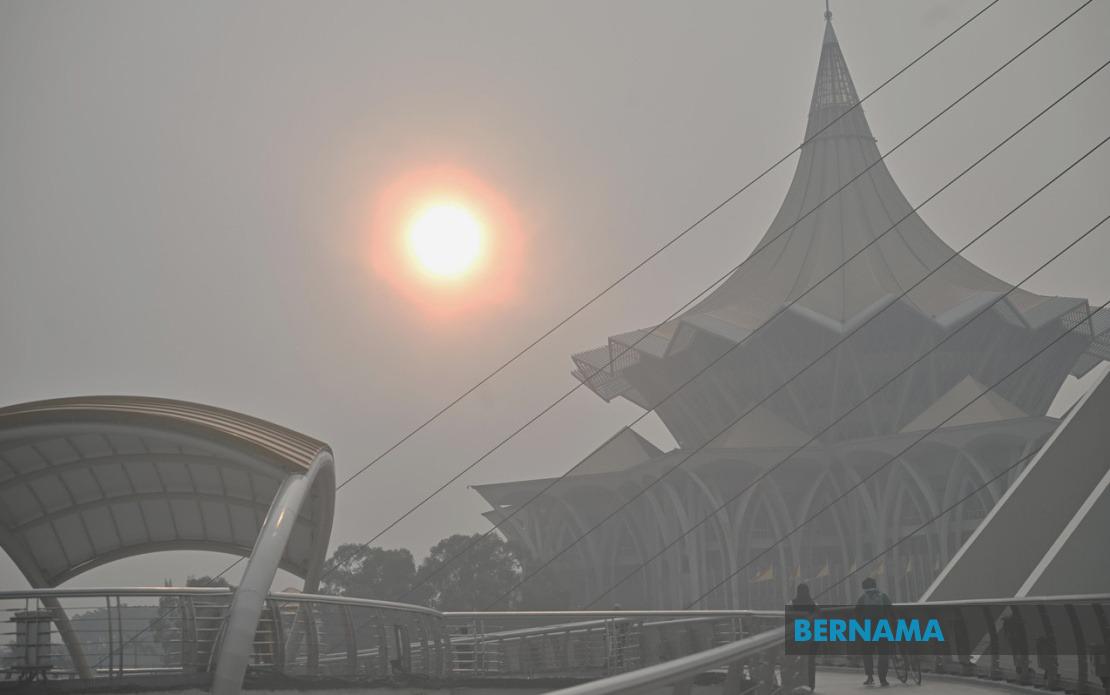
The Sarawak Education Department has suspended teaching at 591 schools across the state for two consecutive days, affecting a combined enrolment of nearly 200,000 pupils and secondary students. The closure, which commenced on August 20, stems from unusually hot and arid weather patterns gripping multiple regions throughout Sarawak. This measure reflects growing governmental concern about the health and safety implications of prolonged exposure to such conditions for the student population.
The scale of the shutdown underscores the breadth of the weather crisis affecting the state. Primary schools account for 509 of the closures, with approximately 107,590 younger students displaced from their regular routines. Secondary education has been equally impacted, with 82 institutions closing their doors to roughly 89,733 teenagers. These figures represent a substantial proportion of Sarawak's school-age population, highlighting how extensive the adverse weather footprint has become across multiple demographic zones.
Ten District Education Offices, the administrative backbone of Sarawak's education system, coordinated the closure across their jurisdictions. The affected areas span the Kuching metropolitan zone and extend outward to encompass Padawan, Bau, Lundu, Samarahan, Simunjan, Serian, Sri Aman, Lubok Antu and Betong. This geographic dispersal demonstrates that the weather phenomenon is not concentrated in a single locality but rather represents a widespread systemic challenge threatening educational continuity across substantial portions of the state.
The decision to suspend classes reflects broader concerns articulated by the Sarawak State Disaster Management Committee, which has assumed a heightened monitoring posture in response to escalating environmental risks. Officials have identified multiple interconnected hazards flowing from the sustained heat and moisture deficit, including dramatically elevated fire danger affecting forested terrain and peatland ecosystems. The committee has emphasised that its surveillance protocols extend beyond immediate fire prevention to encompass atmospheric quality degradation and potential strain on water supply infrastructure throughout Sarawak.
Air quality deterioration has emerged as a particularly acute concern in populated zones. By early afternoon on August 20, nine distinct locations were recording unhealthy Air Pollutant Index readings, signalling dangerously elevated concentrations of particulates and other atmospheric contaminants. Kuching recorded an API value of 191, while Serian reached 195, and Lubok Antu matched Kuching's level. Samarahan stood at 175, Sri Aman at 178, Sarikei at 154, Sibu at 108, Lundu at 180, and Tebedu at 169. These readings reflect a pattern of air pollution concentrated primarily in the southwestern and central regions, corresponding closely with the school closure zones.
The health ramifications of such pollutant concentrations demand serious consideration, particularly for younger individuals whose respiratory systems remain developmentally vulnerable. Sustained exposure to unhealthy air quality can precipitate acute respiratory episodes, exacerbate pre-existing conditions such as asthma, and contribute to longer-term pulmonary complications. School closures therefore represent a pragmatic public health intervention, removing children from environments where air quality poses genuine physiological risks during the hours when such exposure would typically be most intense.
The interconnection between weather patterns, fire risk, and air quality forms a cascade of environmental concerns particular to Southeast Asian tropical contexts. Unlike temperate regions where dry spells represent temporary deviations from seasonal norms, prolonged drought conditions in equatorial settings can trigger peatland combustion, which generates disproportionately high smoke concentrations. Sarawak's significant peat deposits make this scenario especially relevant. The fire-to-air-quality nexus thus creates a multiplier effect, where environmental stress in one domain rapidly amplifies challenges across others.
Water supply resilience has emerged as an additional focal point for government attention. The Sarawak State Disaster Management Committee recognises that sustained heat and reduced precipitation place mounting pressure on both surface water availability and groundwater replenishment rates. Given that Sarawak supports a population of over three million inhabitants across dispersed settlements, some relying on piped municipal systems and others on localised water collection and storage, drought-induced supply constraints could rapidly cascade into public health emergencies. Monitoring protocols therefore encompass hydrological indices alongside meteorological and air quality metrics.
The institutional response demonstrates a coordinated multi-agency framework designed to maintain public welfare across intersecting domains. The education department's closure decision operates in tandem with disaster management committee vigilance, creating a layered approach where immediate safeguarding measures complement broader monitoring and mitigation efforts. This synchronisation reflects recognition that environmental crises in contemporary Sarawak demand integrated governmental responses rather than siloed sectoral reactions.
For Malaysian observers beyond Sarawak, this episode illustrates vulnerabilities increasingly prevalent across the region as climate variability intensifies. School closure incidents driven by air quality or extreme heat remain relatively uncommon throughout Malaysia, but growing frequency of drought-fire-smoke cycles suggests such measures may become normalised occurrences during particular seasons. The Sarawak precedent thus offers a policy template potentially applicable to other East Malaysian jurisdictions and conceivably to peninsula states confronting similar environmental pressures. This normalisation itself represents a significant societal shift, reflecting how environmental change is reshaping institutional practices around education and public administration throughout the nation.

