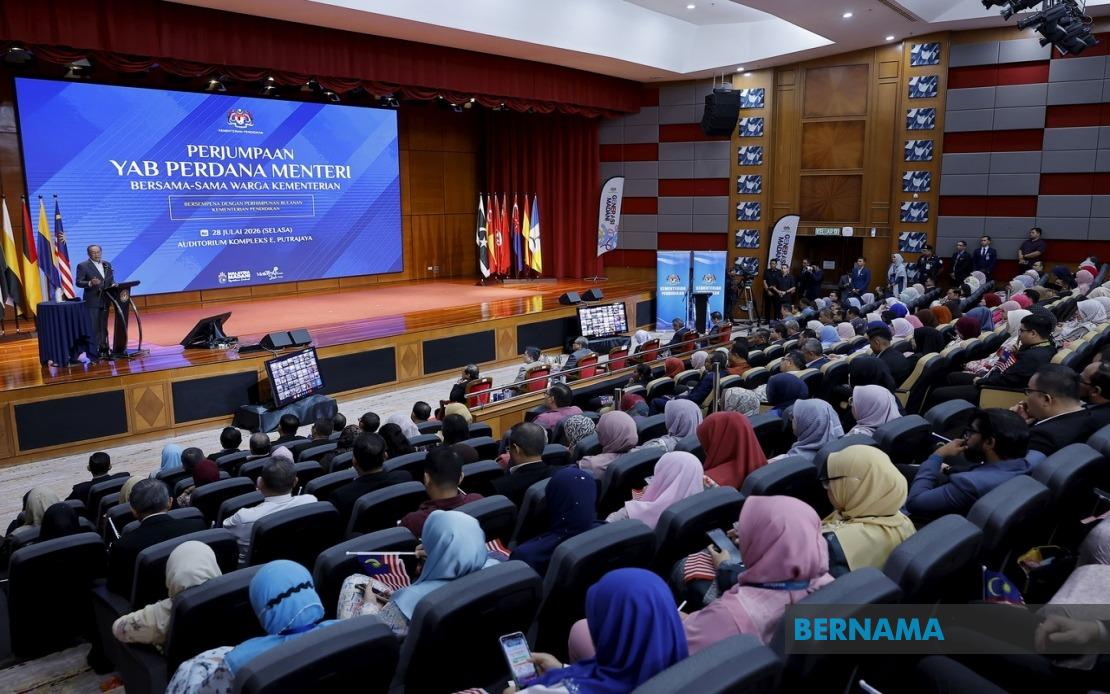
Prime Minister Datuk Seri Anwar Ibrahim has issued a fresh reminder to educational institutions across Malaysia that concealing incidents of bullying and abuse simply to safeguard institutional reputation constitutes a failure of duty and misguided leadership. Speaking at a meeting with Ministry of Education personnel in Putrajaya on July 28, Anwar stressed the imperative for schools to maintain transparency when confronting misconduct, rejecting the counterproductive practice of institutional self-protection through silence.
The gravity of Anwar's intervention reflects a growing concern that Malaysia's schools are prioritizing image management over student welfare. His remarks underscore the consequences of suppressing bullying incidents—what may appear as minor transgressions in their initial stages have a troubling tendency to metastasize into profound injustices if left unaddressed. The Prime Minister articulated this progression with particular force, noting that many instances of violent and cruel behavior originate in smaller acts of bullying that were permitted to fester unchecked. By failing to intervene promptly, schools inadvertently create conditions where escalation becomes inevitable.
Anwar's positioning of early intervention as fundamental to institutional responsibility carries significant implications for how Malaysian schools structure their management practices. Rather than viewing disclosure of bullying cases as an admission of systemic failure, principals and headmasters must recognize such instances as opportunities to demonstrate effective governance and student-centric values. The Prime Minister's framing redefines the narrative: a school's credibility and standing are not diminished by the occurrence of misconduct, but rather by its response—whether transparent and remedial or evasive and negligent.
The cultural shift Anwar is advocating requires substantial changes in how school leadership perceives accountability. Many Malaysian educational administrators have traditionally operated within frameworks where external perception and measurable outcomes—examination results, award recognition, parental satisfaction—dominate institutional priorities. Bullying incidents, when handled quietly or through informal channels, do not register as performance deficiencies in conventional accountability metrics. Anwar's intervention challenges this narrowly utilitarian approach, insisting that the authenticity of a school's mission to educate and protect students cannot be compromised by institutional reputation concerns.
For parents and students, Anwar's statement carries implications for how they should evaluate school choice and engagement. Families seeking educational institutions should recognize that a school's willingness to acknowledge and address bullying transparently signals institutional maturity and genuine commitment to student wellbeing. Conversely, schools that maintain opaque practices regarding misconduct—whether through underreporting, administrative concealment, or reliance on informal resolution mechanisms—are essentially signaling that reputational management trumps student protection in their organizational hierarchy.
The Southeast Asian context amplifies the relevance of Anwar's intervention. Throughout the region, education systems have grappled with similar tensions between aspirational institutional profiles and the messy realities of student conduct. Malaysia's particular challenge involves managing rapid educational expansion, demographic pressures, and diverse socioeconomic circumstances within school communities, all while maintaining standards that attract middle-class investment in the system. These factors can create institutional incentives toward concealment, particularly in elite or high-performing schools where misconduct is deemed inconsistent with established reputations.
Anwar's remarks also reflect evolving international standards regarding child protection and institutional transparency. Malaysia's commitments under various human rights conventions and educational frameworks increasingly demand rigorous reporting of abuse and bullying incidents. By positioning transparency as a leadership expectation, Anwar is aligning national practices with global benchmarks while localizing the argument in terms of Malaysian values and educational philosophy. The appeal to justice and to correcting wrongs at their inception speaks to principles that resonate across Malaysian society regardless of educational background.
The practical implementation of Anwar's directive will require substantive support mechanisms. Schools must have access to trained counselors, reporting protocols that protect student confidentiality while ensuring accountability, and professional development for educators on recognizing and addressing bullying. Without these infrastructure elements, transparency becomes performative—schools may report incidents while lacking capacity to respond effectively. The Ministry of Education will need to ensure that schools are equipped to implement open reporting without becoming overwhelmed by administrative burden.
For students experiencing bullying, Anwar's statement potentially strengthens their position in seeking redress. When institutional leadership at the highest level signals that reporting is expected and encouraged, rather than discouraged, it creates psychological and structural conditions more favorable to disclosure. Students who have previously encountered institutional resistance to reporting bullying may feel emboldened to escalate concerns through official channels, knowing that top leadership supports transparency. This represents a meaningful shift in power dynamics within school communities.
Anwar's intervention also sends signals to the broader teaching profession about leadership expectations. Educators who witness bullying or abuse but have felt constrained by institutional pressure to maintain quiet will now operate with clearer authorization to report incidents formally. The Prime Minister's explicit rejection of reputation-protection rationales removes a significant justification that has historically enabled tacit acceptance of misconduct within schools.
The longer-term success of this policy initiative will depend on sustained reinforcement and systematic monitoring. Single statements, however forceful, rarely produce institutional culture change in education systems characterized by considerable autonomy at the school level. The Ministry of Education will need to develop specific guidelines, track reporting patterns across schools, and provide consequences for institutions that continue to suppress bullying cases. Parents and civil society organizations also have roles in monitoring compliance and holding schools accountable for transparent practices.

