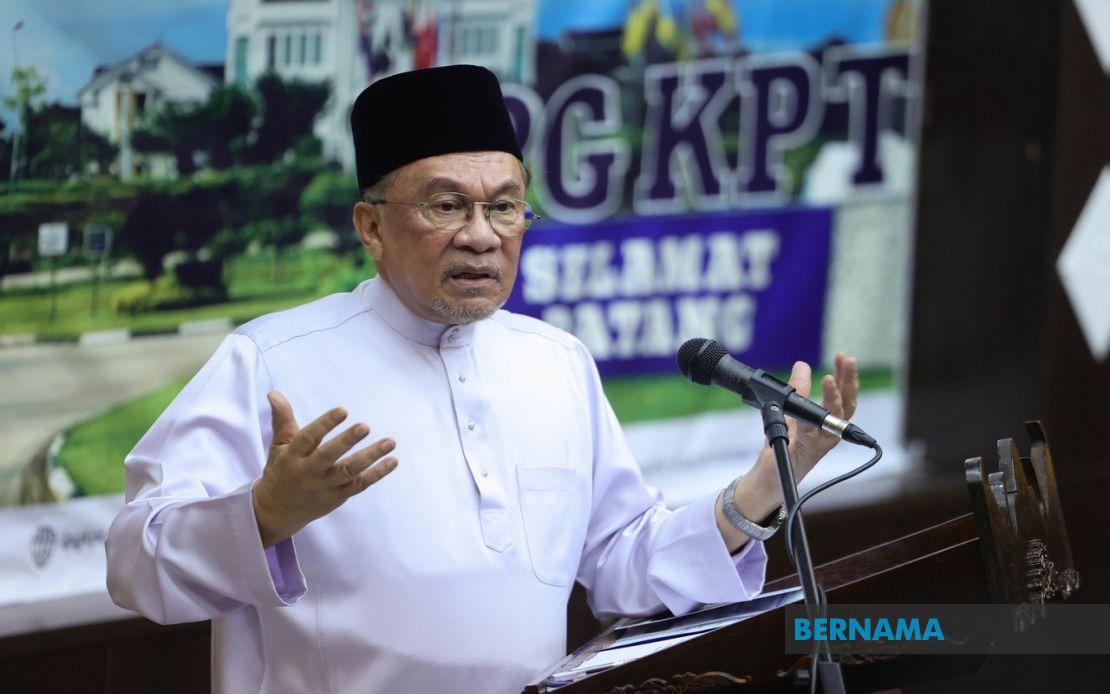
Prime Minister Datuk Seri Anwar Ibrahim has issued a forthright warning to Malaysian schools that concealing bullying incidents to preserve institutional reputation is both ethically wrong and counterproductive to student welfare. Speaking in Nilai on July 17, the Prime Minister underscored that transparency in reporting such cases must take precedence over concerns about how disclosure might affect a school's public image or the professional standing of its leadership.
Anwar framed the issue as a matter of institutional integrity, arguing that reporting bullying should not be construed as a failure of school management. He illustrated his point with a concrete example, suggesting that a principal of a school with 1,000 students who documents two bullying cases is not culpable simply for bringing these matters to light. The wrongdoing, he stressed, lies not in the act of disclosure but in the deliberate suppression of cases coupled with inaction. This distinction is crucial for understanding the Prime Minister's position: the existence of bullying problems within any institution is not necessarily an indictment of that institution's quality or leadership, but the decision to hide such problems certainly is.
The Prime Minister's remarks, delivered with Education Minister Fadhlina Sidek in attendance, reflect broader concerns about institutional culture within Malaysia's education system. Schools face competing pressures—the legitimate desire to maintain academic standards and positive reputations, balanced against the moral obligation to protect vulnerable students from harm. Anwar's intervention suggests that this balance has tilted too far toward reputation management at the expense of student safety, a phenomenon not unique to Malaysia but one that demands urgent recalibration in the local context.
Beyond the immediate issue of transparency, Anwar connected the persistence of bullying to deeper deficiencies in character education. He observed that despite expanded access to religious instruction in schools, bullying remains endemic, indicating that something fundamental is amiss in how schools approach moral formation. This diagnosis points to a gap between curriculum and culture, between what is taught in classrooms and what is practiced in schoolyards and dormitories. The Prime Minister suggested that religious education alone, without being integrated into broader efforts to cultivate empathy and respect, cannot adequately address the root causes of bullying behaviour.
Anwar articulated a vision of education that transcends the conventional metrics by which schools are often judged. Excellence in academic results and technical proficiency, while important, cannot be the sole measure of educational success. He posed a challenging rhetorical question to Malaysian educators: what value does a doctorate or IT expertise hold if the person holding those credentials lacks understanding of human dignity or respect for others? This framing reorients the discussion toward character and values as non-negotiable components of education quality, not optional extras or soft skills.
The Prime Minister's emphasis on teachers as custodians of this broader educational mission carries significant weight. He identified educators as bearing substantial responsibility for ensuring that schools function as venues for genuine learning—environments where students develop not merely intellectual capabilities but also spiritual depth, ethical grounding, and compassion. This characterization elevates the teaching profession beyond content delivery to the realm of moral mentorship, a perspective that has implications for how teachers are trained, supported, and valued within the system.
Parallel to this call for institutional and cultural change, Anwar acknowledged the considerable strengths already present within Malaysia's teaching profession. Rather than adopting a wholly critical tone, he recognised that educators are operating at commendable standards and expressed confidence that ongoing improvements would align with national aspirations to position Malaysian education among the world's best. This balanced approach—recognising current achievements while insisting on further evolution—sets a tone for constructive reform rather than demoralisation.
For Malaysian readers and stakeholders in education, this intervention carries several implications. Parents and students can interpret the Prime Minister's statement as an endorsement of their right to demand institutional accountability when bullying occurs. Schools that have previously opted for discretion over disclosure now face clearer guidance that transparency is the preferred course. Education officials at federal and state levels receive a signal that robust anti-bullying protocols, coupled with mandatory reporting requirements, should be prioritised in policy development.
The broader Southeast Asian context also bears consideration. Many countries in the region grapple with similar tensions between institutional face-saving and student protection, between education systems that prioritise examination results over holistic development. Malaysia's Prime Minister stepping into this space sends a message that education quality ultimately hinges on whether institutions produce graduates who are not merely talented but also ethical and conscientious citizens. This positioning could influence how neighbouring countries approach their own education reforms.
The statement also underscores an important distinction between accountability and blame. Anwar's careful language—distinguishing between reporting and responsibility for outcomes—suggests a mature understanding that schools cannot be expected to eliminate bullying entirely, but can and must be expected to respond openly and effectively when it occurs. This nuance matters because it avoids creating perverse incentives where schools might avoid investigating complaints or deny problems exist in an attempt to escape condemnation.
Moving forward, the practical question becomes how this leadership message translates into operational changes. Will schools receive guidance on mandatory reporting thresholds and procedures? How will whistle-blower protections operate for students and staff who report bullying? What accountability mechanisms will exist to ensure that institutional culture actually shifts from concealment to transparency? These implementation questions will ultimately determine whether the Prime Minister's intervention catalyses genuine systemic reform or remains aspirational rhetoric.
The intervention also invites reflection on why the concealment of bullying has apparently been commonplace enough to warrant a direct prime ministerial statement. The explanation likely involves multiple factors: the intense pressure schools face to maintain competitive standing in league tables, the potential for bullying cases to attract negative media attention, concerns about legal liability, and perhaps a cultural reluctance to admit institutional problems. Understanding these root causes will be essential for designing interventions that effectively change institutional behaviour rather than simply exhorting schools to do better.

