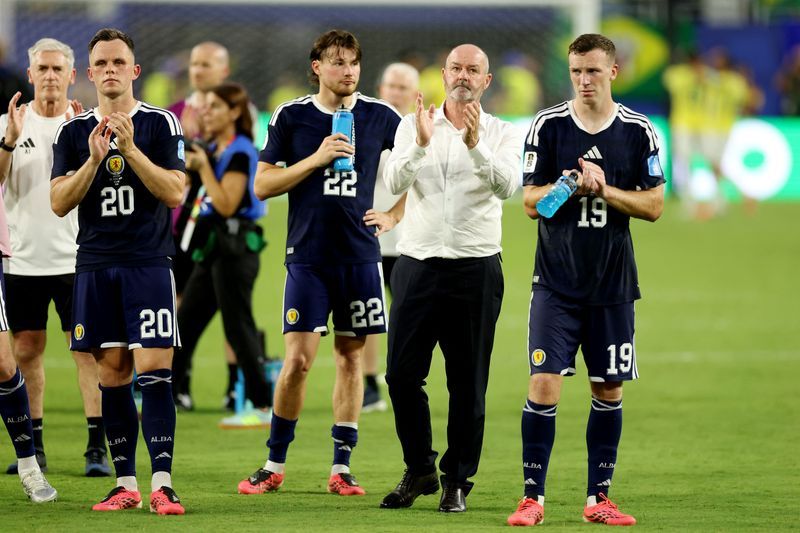
Scotland's first World Cup appearance in 28 years looks destined to end prematurely after they capitulated 3-0 to Brazil in their final Group C encounter on Wednesday, leaving their qualification hopes hanging by the thinnest of threads. Despite accumulating three points from their opening matches, the Scots would need to finish among the eight best third-placed teams across the 12 groups to advance to the knockout rounds—a scenario their manager Steve Clarke seems to have largely dismissed following their capitulation in Miami.
The defeat crystallised months of frustration for Clarke, who appeared less incensed with his players' commitment than disappointed by their inability to execute at the level required on football's grandest stage. Rather than directing anger toward individual performers, the former Chelsea defender conveyed a sense of inevitability about the result, treating it as the natural consequence of fundamental defensive errors that handed Brazil opportunities on a silver platter. His assessment of the match suggested a team undone by their own lapses rather than outclassed by superior opposition across ninety minutes.
Clark articulated precisely where Scotland's vulnerabilities manifested during the encounter. The technical quality and athleticism displayed by Brazil's attacking players exposed defensive frailties that the manager acknowledged were largely self-inflicted. He noted that his side surrendered possession cheaply in dangerous areas and failed to adequately shield their backline, presenting Brazil with chances that such a lethal attacking unit was always likely to punish decisively. The margin of victory reflected not merely Brazil's attacking prowess but Scotland's inability to contain it through disciplined defending.
While Clarke was forthright about Scotland's culpability for the opening two goals, he extended some credit to his goalkeeper Angus Gunn for producing several crucial interventions that could have inflated the scoreline further. The manager also pointed to limited offensive opportunities his team managed to engineer, acknowledging that their attacking play lacked the incisiveness and accuracy required to trouble a Brazil defence. This candid appraisal revealed a side simultaneously outmatched in intensity and undermined by its own technical deficiencies.
For a manager who has invested considerable effort in resurrecting Scottish football's international standing, the encounter served as a sobering reminder of the structural challenges confronting the domestic game. Clarke drew a direct line between Scotland's inability to compete with elite opponents and a systemic problem in youth development and player production at home. The physicality, power, and technical sophistication displayed by both Morocco and Brazil underscored gaps in Scottish football's infrastructure that cannot be remedied through tactical adjustments or motivational speeches alone.
Clark's critique extended beyond Wednesday's performance to encompass broader deficiencies in how Scotland develops young talent. He expressed concern that the country is not sufficiently equipping emerging players with the technical foundation and physical attributes necessary to thrive against world-class opposition. This assessment carries significant weight given his direct experience working with players across multiple age groups and competitive environments. His comments suggest that addressing these issues requires coordinated effort across youth academies, coaching structures, and talent identification systems throughout Scottish football.
The manager's perspective on Scotland's elimination contrasts sharply with the genuine affection he displayed toward the travelling support that has energised their World Cup campaign. Clarke repeatedly emphasised the significance of the Tartan Army's presence in America, recognising that their enthusiasm and ambassadorial conduct have enhanced Scotland's reputation throughout the tournament. However, he also sought to contextualise their contribution within the broader narrative of qualification itself, reminding supporters that they would not be celebrating in the United States without the players' accomplishments during the qualifying campaign.
This delicate balance in Clarke's messaging reveals a manager attempting to validate the supporters' experience while gently challenging a tendency within Scottish football culture to settle for moral victories and participation trophies. He pointedly referenced the alternative scenario where Scotland would be watching the World Cup from their sofas, emphasising that qualification itself represented a meaningful achievement that should not be overshadowed by disappointing tournament performance. His comments carried an implicit suggestion that Scottish fans should recognise the distinction between celebrating tournament participation and accepting inadequate on-pitch performances.
The mathematics of Scotland's elimination remain technically incomplete, with the calculation dependent on results across the remaining group matches. Currently occupying sixth position among third-placed teams, Scotland would need to leapfrog at least two others to secure knockout football. Given that 20 group matches remained to be played at the time of Clarke's assessment, his conviction that they would be overtaken reflects both analytical rigour and resignation to their probable fate. His public pessimism likely reflects private calculations rather than mere emotional reaction to defeat.
Clark's post-match analysis also highlighted the psychological challenge of competing against teams of Brazil's stature, particularly when defending errors compound the difficulty. The gap between Scotland's aspirational football and the execution required against elite opposition remains substantial, a reality that neither tactical innovation nor increased funding can rapidly resolve. The manager's willingness to articulate these systemic problems publicly suggests a recognition that meaningful improvement requires acknowledgement of current limitations rather than rhetorical optimism.
For Malaysian and Southeast Asian football observers, Scotland's struggle offers instructive parallels regarding the developmental pathway required to establish competitive international football programmes. The challenges Clarke identified—youth development structures, technical instruction quality, and player athleticism—mirror concerns facing many regional football associations seeking to elevate their competitive standing. Scotland's experience demonstrates that historical sporting infrastructure and financial resources do not guarantee success against emerging powerhouses, and that sustained systematic development remains essential to close gaps with elite nations.

