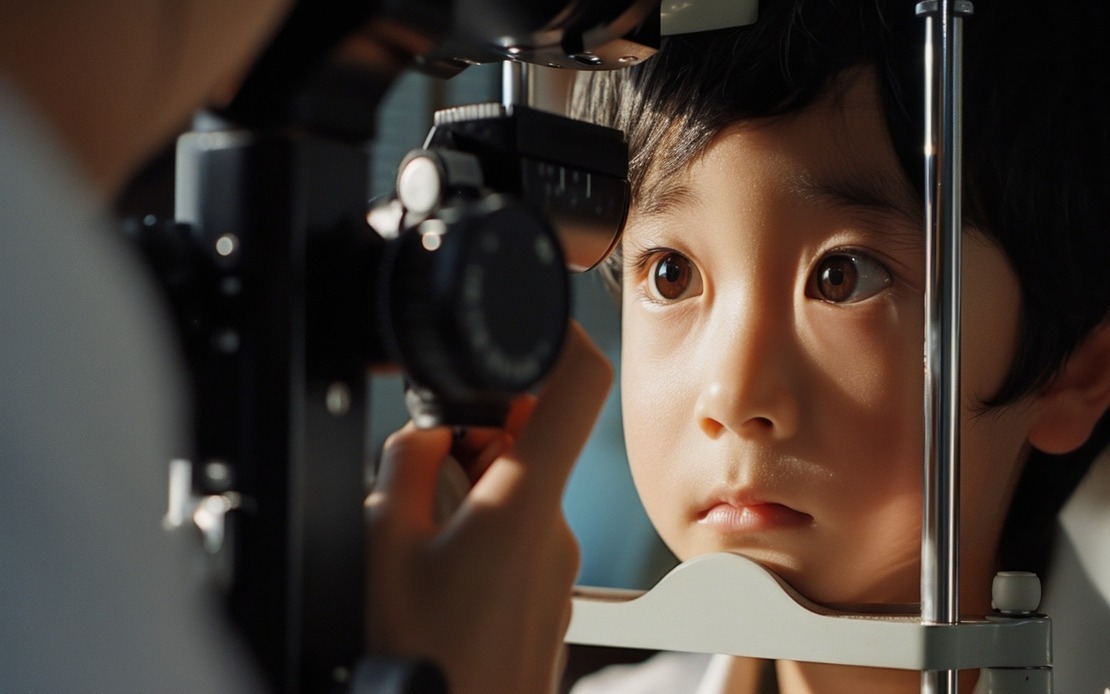
Vision problems affecting millions of Malaysians remain undetected until they damage learning, confidence, or independence—a preventable tragedy that eye specialists say demands urgent public awareness and screening protocols across all age groups. Dr Fazilawati A Qamarruddin, a consultant ophthalmologist and paediatric eye specialist at Sunway Medical Centre in Sunway City, argues that two common but frequently overlooked conditions—strabismus (squinting) and cataracts—underscore the critical gap between available treatment and actual detection rates in Malaysia's diverse population.
Squinting occurs when the eyes become misaligned, with one eye deviating from the focus point of the other. The effect reaches far beyond simple cosmetic concern. This misalignment disrupts the brain's capacity to fuse images into a single three-dimensional view, impairing depth perception and visual acuity. For children, the consequences extend into academic performance and social development; a child struggling with visual coordination difficulties may fall behind peers in learning, while visible squinting can trigger bullying or reduced confidence during formative years. Adults experiencing sudden onset squinting face a more urgent medical alarm, as double vision combined with new-onset eye misalignment may signal serious neurological problems including brain or orbital tumours.
The root causes of squinting vary significantly. Uncorrected refractive errors—myopia, hyperopia, or astigmatism—account for many childhood cases, a reality that makes routine screening before school entry potentially life-changing. Beyond refractive problems, squinting can emerge from nerve damage, neurological deficits following trauma, or structural abnormalities in the eye muscles themselves. In young children, the condition may stem from developmental imbalances that resolve with intervention, while in adults the sudden appearance of strabismus demands rapid medical investigation to exclude sinister underlying causes. Globally, research estimates that between two and four per cent of children have strabismus, a figure that translates into tens of thousands of Malaysian children—many of whom remain undiagnosed until poor school results or obvious physical signs force parental attention.
The consequence of neglecting childhood squinting can be irreversible. Amblyopia, colloquially known as lazy eye, develops when the brain begins systematically preferring the stronger eye while suppressing input from the weaker one. Over months, this neural pattern becomes hardwired; the neglected eye loses functional vision despite being structurally intact. Once established in childhood, amblyopia remains permanent even if the original squinting is later corrected, effectively sentencing the individual to reduced visual capability for life. This cascade from treatable misalignment to permanent vision loss unfolds silently, making the window for intervention—typically before age seven—invaluable and finite.
Dr Fazilawati emphasizes that parents should bring children for professional eye examination by age three, with a second comprehensive screening before primary school entry. Warning signs requiring immediate assessment include head tilting to compensate for eye misalignment, frequent squinting, sitting unusually close to television or classroom boards, and recurring headaches from visual strain or eye fatigue. Early detection followed by corrective glasses or, if necessary, surgical realignment of the eye muscles, can prevent amblyopia entirely and preserve normal vision throughout life. The threshold for action is low; simple observation by an attentive parent can prompt intervention that changes developmental trajectories.
Cataracts represent the second major overlooked condition, one predominantly affecting Malaysia's ageing population but increasingly appearing earlier in high-risk groups. The lens becomes progressively opaque as proteins denature and accumulate, creating a clouding effect that scatters light and progressively dimming vision. Sufferers describe the experience as looking through a frosted window—colors fade, bright light creates uncomfortable glare, and night driving becomes dangerous as oncoming headlights scatter through the cataractous lens creating halos and loss of contrast. While cataracts are statistically most common after age sixty, diabetes accelerates their onset dramatically, as does chronic sun exposure, smoking, or certain medications. In Malaysia's tropical environment with intense ultraviolet radiation, outdoor workers and those without consistent sun protection face higher lifetime risk.
Advances in surgical technique have transformed cataract treatment from a feared procedure requiring extended hospital stay into outpatient day surgery with rapid functional recovery. Modern phacoemulsification uses precisely controlled ultrasound energy to fragment the cloudy lens into microscopic particles that are then suctioned away through a small incision measuring approximately three millimetres. This minimal-incision approach eliminates the need for stitches; the cornea's natural elasticity allows the tiny wound to self-seal within days. Most patients return to light activities within a week and achieve complete visual recovery—including final glasses prescription—within two weeks. The contrast with historical cataract surgery, which required large incisions, extended immobility, and weeks of recovery, is profound and should inform public perception that cataract is a treatable rather than inevitable consequence of ageing.
The modern threat to Malaysian eye health increasingly comes from digital screen exposure, particularly among the young. Extended near work at fixed distance—whether computer screens, smartphones, or tablets—correlates with progression of myopia, especially in children whose eyes are still developing refractive properties. The mechanism involves both direct accommodation stress and potentially altered dopamine signaling in the retina that regulates axial elongation of the eye. Malaysia, like much of Southeast Asia, has experienced rapid increases in childhood myopia prevalence over the past two decades, a shift that parallels increased screen time and reduced outdoor activity. Dr Fazilawati advocates the 20-20-20 rule as a practical intervention: every twenty minutes of near work, pause to view an object approximately six metres distant for twenty seconds, allowing ciliary muscles to relax and reducing cumulative accommodation strain.
Screening protocols must be age-stratified to maximize both detection and resource efficiency. Children require vision assessment before age three to detect strabismus and gross refractive errors, with formal screening before school entry to identify conditions affecting academic readiness. Adults should establish baseline eye examinations at age forty, the point at which presbyopia (age-related loss of accommodation), early cataracts, and other conditions begin appearing in the general population. Those with diabetes face particular urgency; diabetic retinopathy can progress rapidly from asymptomatic early changes to sight-threatening proliferation, yet early detection and treatment achieve high success rates. Annual screening for diabetic patients should be non-negotiable, yet remains inconsistently implemented across Malaysian healthcare settings. Older adults benefit from regular examinations to monitor for glaucoma, age-related macular degeneration, and cataract progression.
The implications for Malaysian public health are substantial. Vision impairment reduces economic productivity, increases falls and injury risk in older adults, and constrains educational achievement in children. Correctable conditions like refractive errors and cataracts contribute disproportionately to preventable blindness in developing health systems. Yet early detection through systematic screening, followed by accessible treatment, prevents the vast majority of these outcomes. The infrastructure exists—ophthalmologists and optometrists are available, screening tests are simple and non-invasive, and treatments are proven and increasingly affordable. What remains lacking is public awareness of the importance of screening before symptoms develop, and systematic integration of eye care into preventive health programmes at community level. Dr Fazilawati's message is ultimately one of empowerment: visual impairment is not an inevitable part of ageing or childhood development, but rather a preventable outcome when individuals and families understand the importance of timely screening.

