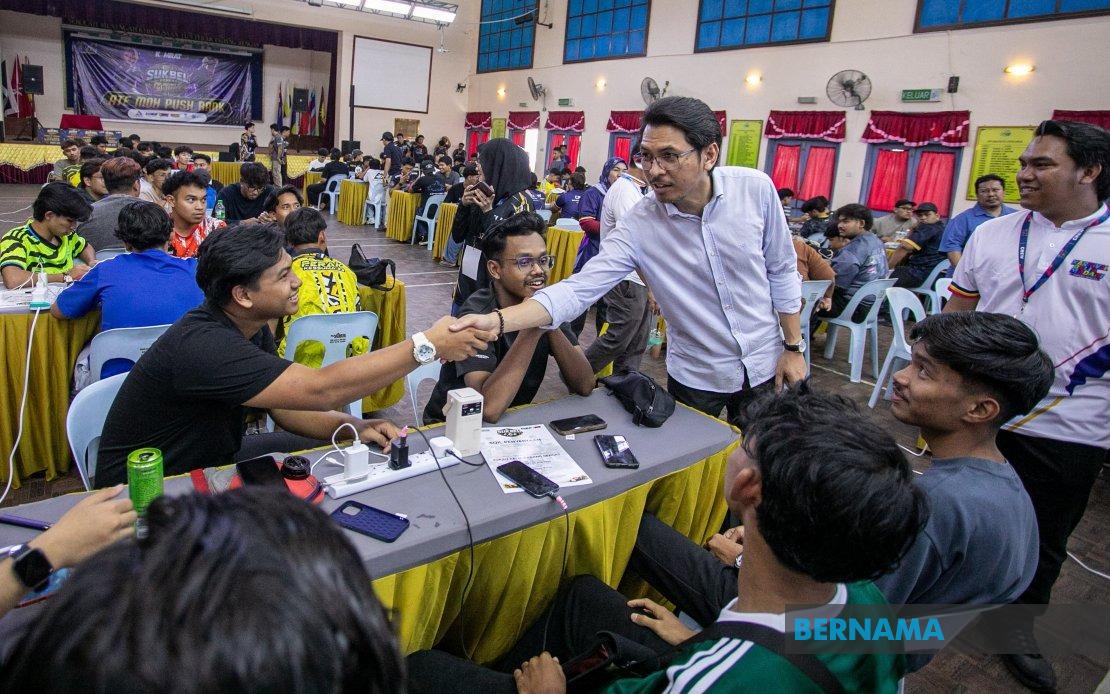
The Sejahtera MADANI programme in Perak is scaling up its operations after securing a RM3 million injection to complement the RM2.3 million already disbursed to approximately 2,000 residents across the state. The expansion signals the government's intention to deepen its reach among vulnerable communities and those seeking economic advancement through targeted assistance that goes beyond simple cash transfers.
Muhammad Kamil Abdul Munim, political secretary to the Finance Minister, announced the fresh allocation during an officiation ceremony at the Lubok Merbau roadshow event in Kuala Kangsar on June 30. His remarks underscored how the additional funding represents a strategic scaling of the initiative's scope, allowing organisers to extend benefits to a broader cohort of qualifying applicants who represent the core constituencies that the MADANI framework seeks to uplift.
The programme's design reflects a multifaceted approach to poverty alleviation and economic mobility that extends well beyond conventional welfare payments. Rather than limiting support to direct monetary transfers, Sejahtera MADANI incorporates complementary interventions aimed at building human and productive capacity. Micro-entrepreneurs gain access to equipment and tools calibrated to enhance operational efficiency, while academically accomplished students receive technology subsidies that facilitate their transition into tertiary education without the burden of technology costs.
At the Padang Rengas parliamentary constituency roadshow, thirteen SPM students who had achieved outstanding examination results were presented with laptops to support their continued studies at university level. Simultaneously, five small-scale business operators received equipment packages designed to strengthen their enterprises and expand income-generating potential. These concrete allocations demonstrated how the programme translates policy intent into tangible household-level benefits.
Muhammad Kamil articulated the government's philosophy behind the targeted distribution approach, emphasising that effective poverty reduction demands precision in identifying beneficiaries and tailoring support mechanisms to their specific circumstances. The RM3 million supplement would enable administrators to maintain this granular focus while reaching additional households in the subsequent implementation phase, particularly among students demonstrating academic excellence and entrepreneurs operating at subsistence or marginal profitability levels.
However, the political secretary's remarks also acknowledged systemic weaknesses that have plagued earlier iterations of community-driven development initiatives. The SejaTi MADANI grant scheme, which permits local communities to identify and prioritise their own development projects, had suffered from implementation failures and inadequate project execution. Muhammad Kamil identified these shortcomings candidly, recognising that despite laudable intentions to empower grassroots decision-making, the devolved model had created oversight gaps.
These revelations about project failures carry significant implications for public fund management in Malaysia's social development architecture. Communities had been entrusted to determine their own priority areas, reflecting a decentralised governance philosophy intended to ensure resources aligned with local needs rather than top-down bureaucratic prescriptions. Yet the resulting implementation record included substantial waste and projects that failed to materialise according to specifications, raising questions about accountability mechanisms and monitoring capacity at the community level.
In response, Muhammad Kamil announced that supervisory arrangements for the Sejahtera MADANI ecosystem would be substantially strengthened moving forward. Closer monitoring protocols would operate throughout project lifecycles, with particular emphasis on preventing fraudulent diversion of funds and eliminating leakages that represent inefficiencies in resource utilisation. While acknowledging that minor implementation challenges are inherent to any large-scale social programme, officials signalled that tolerance for systemic failures or inadequate execution would diminish under the revised framework.
This shift towards tighter oversight reflects a recalibration between competing policy objectives: maintaining the enthusiasm and engagement of local communities in identifying development priorities versus ensuring sufficient central scrutiny to prevent mismanagement and guarantee efficient deployment of public resources. The balance achieved through enhanced monitoring structures may either strengthen implementation credibility or introduce new tensions between decentralised decision-making and centralised accountability requirements.
For Malaysian readers, particularly those in Perak and other states where Sejahtera MADANI operates, the programme's expansion signals continued government commitment to income support and skills development. The RM3 million supplement, while modest in macroeconomic terms, represents meaningful real resources for beneficiary households. Students receiving laptops gain technological access that narrows digital divides, whilst entrepreneurs equipped with productivity tools enhance their competitive positioning in local markets.
The initiative also reflects broader Southeast Asian trends in social safety net design, where governments increasingly combine direct transfer payments with human capital investments and productive asset provision. Countries across the region grapple with similar tensions between extending coverage breadth whilst deepening support intensity, and between community empowerment and centralised programme integrity. Malaysia's experience with Sejahtera MADANI may offer insights applicable to peer nations pursuing comparable inclusive development strategies.
Looking ahead, the credibility of the enhanced Sejahtera MADANI model will depend substantially on execution quality and whether the intensified monitoring regime succeeds in preventing recurrence of the project failures that undermined earlier initiatives. Beneficiaries in Perak and elsewhere will scrutinise whether the additional RM3 million translates into genuine improvements in economic capacity or becomes subject to the same implementation challenges that plagued previous distribution cycles. The government's commitment to rigorous supervision will be tested through on-ground delivery outcomes.

