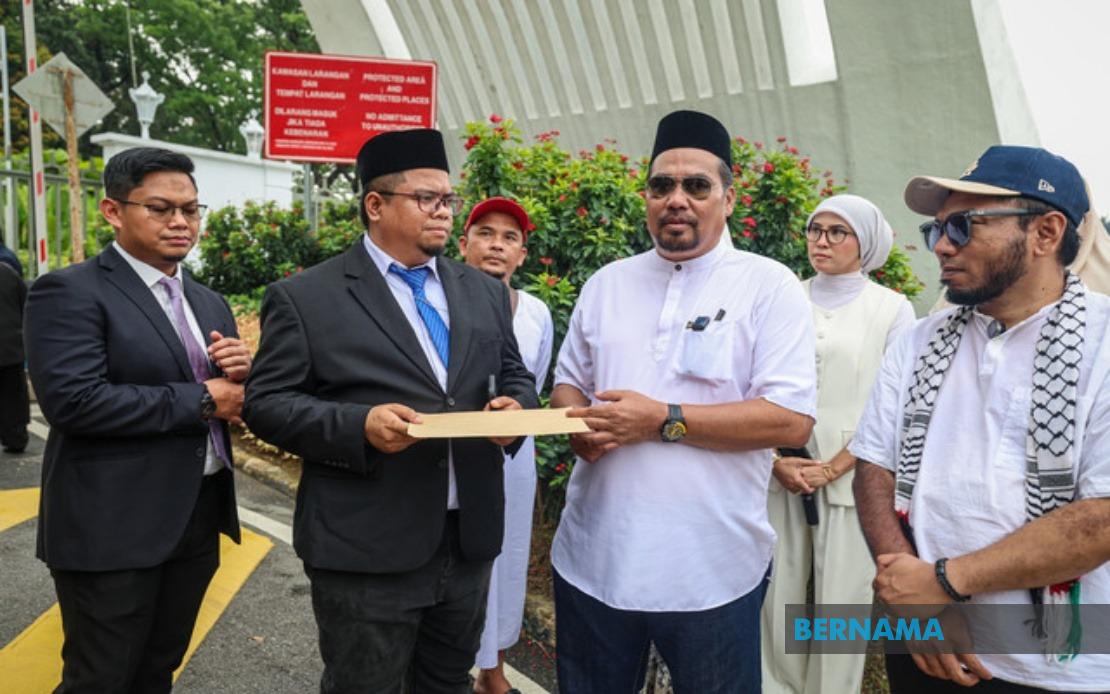
A coalition of social media activists has intensified pressure on Malaysia's government to pursue criminal and administrative action against individuals implicated in the financial mismanagement of Lembaga Tabung Haji, the state-owned Islamic pilgrimage fund that serves millions of Muslim Malaysians. Sekretariat Gerak Gempur Media Sosial Rakyat Malaysia, known as SEKPUR, delivered a formal memorandum to Parliament on August 11, demanding that authorities act decisively in response to findings contained in the Royal Commission of Inquiry report tabled before lawmakers that same day.
The delivery of the memorandum at Parliament's main entrance represented a watershed moment in the ongoing public accountability debate surrounding Tabung Haji's institutional failures. SEKPUR secretary Mohd Yani Alias handed the document to Zairudin Hashim, press secretary to the Minister in the Prime Minister's Department (Religious Affairs), with explicit instructions that it be forwarded to Minister Senator Dr Zulkifli Hasan. The timing coincided with a special parliamentary sitting dedicated to reviewing the minister's briefing on the 211-page RCI report and examining strategies to restore the institution's financial viability.
The RCI report, made public on July 29, laid bare systematic weaknesses in Tabung Haji's governance and operational procedures spanning the period from 2014 to 2020. The comprehensive investigation identified management deficiencies and control failures that contributed to the fund's financial deterioration. Within weeks of the report's publication, Tabung Haji management demonstrated responsiveness by implementing 75 per cent of the 25 recommendations outlined by the commission as of July 30, signalling an effort to demonstrate institutional reform.
SEKPUR's intervention reflects growing civil society impatience with the pace of accountability measures. The activist group made clear that institutional affiliation and political party membership should be irrelevant considerations in determining who faces prosecution. This populist stance resonates with Malaysian public sentiment, which has grown increasingly intolerant of perceived elite impunity in financial scandals. SEKPUR representatives emphasised that Tabung Haji, as an institution entrusted with the accumulated savings and aspirations of the Muslim and Malay community, demands the highest standards of fiduciary responsibility.
Beyond prosecutorial demands, SEKPUR raised substantive concerns about Tabung Haji's long-term financial sustainability and its capacity to deliver meaningful returns to depositors. The memorandum specifically addressed hibah distributions—the religious returns paid to account holders—which have become increasingly uncompetitive relative to conventional savings instruments available in Malaysian financial markets. For many ordinary Malaysians, particularly retirees and middle-income earners, Tabung Haji represents a significant portion of their life savings, making the quality of returns a matter of genuine household financial concern.
The memorandum also highlighted the escalating cost burden associated with performing the hajj pilgrimage, a matter of acute sensitivity in Malaysia where tens of thousands of Muslims queue annually for pilgrimage opportunities. Rising airfares, accommodation expenses, and service charges have rendered hajj increasingly unaffordable for lower and middle-income Malaysians, effectively creating a two-tiered pilgrimage experience where wealth determines access to sacred obligation. SEKPUR linked this cost inflation to Tabung Haji's financial difficulties, suggesting that transparent, accountable management could help stabilise pricing structures.
Another focal point in SEKPUR's submission involved governance of hajj quotas, the annual allocation of pilgrimage slots that Tabung Haji distributes among eligible Malaysian Muslims. Allegations of opaque quota management, favouritism, and administrative irregularities have circulated in public discourse, generating suspicions that political connections and patronage networks influence who secures coveted pilgrimage places. SEKPUR's demand for greater transparency addresses a legitimacy crisis that extends beyond financial accounting into the realm of procedural fairness and institutional trustworthiness.
The RCI's investigation into Tabung Haji operations occupies a broader context of institutional reform sweeping Malaysian government agencies. Following political transitions and electoral upheaval in recent years, Malaysian society has demonstrated heightened expectation that dormant misconduct will be actively investigated and culprits held accountable regardless of seniority or prior political protection. The Tabung Haji inquiry represents one component of this reckoning with institutional dysfunction.
For Malaysian depositors and hajj pilgrims, the practical implications remain uncertain. While the RCI report and subsequent parliamentary briefing provide analytical clarity regarding institutional failures, converting findings into concrete prosecutions, financial restitution, and operational improvements requires sustained political will. SEKPUR's public mobilisation signals that civil society actors intend to sustain pressure, preventing the scandal from fading into bureaucratic obscurity as implementation timelines stretch across months and years.
The special parliamentary sitting reflected institutional acknowledgment that Tabung Haji's difficulties demand high-level political attention. Minister Dr Zulkifli Hasan's detailed briefing provided lawmakers opportunity to interrogate government strategy for financial restoration and governance enhancement. Yet the gap between investigative findings and effective remedial action remains substantial, and organisations like SEKPUR function as accountability mechanisms that maintain public focus on implementation deadlines and prosecutorial progress.
Moving forward, Malaysian observers should monitor whether government authorities initiate criminal investigations, whether administrative disciplinary proceedings commence against identified individuals, and whether Tabung Haji's operational reforms produce tangible improvements in depositor returns and service quality. SEKPUR's memorandum represents an early indicator that public patience with delayed accountability has limits, and that sustained external pressure may be prerequisite to ensuring institutional change extends beyond rhetorical commitment to substantive implementation.

