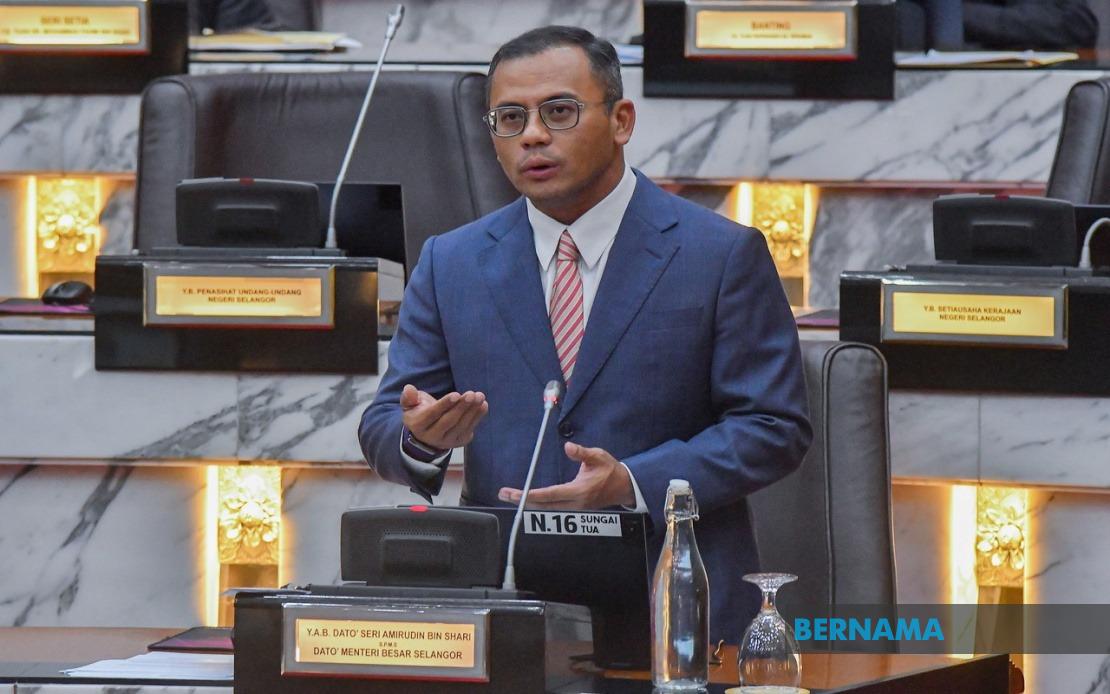
Selangor's top leadership has launched a direct intervention into mounting complaints about poor public transport accessibility across the state, with Menteri Besar Datuk Seri Amirudin Shari ordering local authorities to conduct a comprehensive review of connectivity infrastructure. The directive emerged during state legislative assembly proceedings on June 23, responding to a surge of grievances that have captured public attention on social media platforms including X and Threads, signalling growing frustration among commuters navigating the gap between transit hubs and residential or commercial areas.
The connectivity challenges, particularly affecting the Light Rail Transit Line 3 (LRT3) corridor and surrounding districts, have become sufficiently acute to demand executive attention at the highest level. Amirudin emphasised that the state government stands prepared to deploy additional financial resources to upgrade facilities, ranging from safer pedestrian walkways to more comfortable transit infrastructure, demonstrating commitment to removing barriers that discourage public transport usage. Rather than viewing the improvements as a burden, the state leadership frames enhanced connectivity as instrumental to achieving broader mobility objectives that reduce dependence on private vehicles and ease congestion on Selangor's increasingly strained road network.
The Menteri Besar's remarks carried a pointed critique of local authority responsiveness, suggesting that municipal governments have been reactive rather than proactive in identifying and solving accessibility problems. He stressed that authorities should not await social media campaigns or formal complaints before acting, but rather should cultivate direct channels with municipal councillors and relevant stakeholders to surface emerging issues systematically. This approach reflects a recognition that grassroots engagement often reveals infrastructure gaps that conventional government monitoring mechanisms might miss, particularly in rapidly developing or densely populated areas where transport patterns shift faster than official planning cycles.
Amirudin clarified that the funding commitment should not translate into extravagant expenditure, but rather targeted investment that delivers tangible improvements without bloating project costs. The strategic emphasis on cost-efficiency reflects fiscal discipline while maintaining the ambition to significantly upgrade transit accessibility. This balancing act mirrors broader municipal governance challenges across Southeast Asia, where cities must simultaneously modernise infrastructure and manage constrained budgets amid competing developmental priorities.
The impetus for this intervention originated from concerns raised by Danial Al-Rashid Haron Aminar Rashid, the assemblyman representing Batu Tiga under the Pakatan Harapan coalition, who highlighted the inadequate connections between major transit nodes like LRT3 stations and surrounding neighbourhoods. His decision to escalate the matter during legislative assembly proceedings suggests that community feedback had accumulated sufficient weight to warrant elevated political attention, underscoring how social media amplification can translate localised grievances into policy-level action.
Implementing the review will fall to Ng Sze Han, the state's Investment, Trade and Mobility Committee chairman representing Kinrara, who has been instructed to convene all major public transport operators serving Selangor. This meeting will aim to develop comprehensive service mapping that identifies specific geographical and operational gaps where connectivity falters. By bringing operators into direct dialogue with state authorities, the initiative seeks to move beyond finger-pointing and establish collaborative frameworks for problem-solving, recognising that operators' operational constraints and commercial viability concerns must factor into any comprehensive solution.
The Menteri Besar acknowledged that financial incentives alone cannot solve the underlying connectivity problem if transport operators fail to optimise their service hours and route schedules accordingly. State subsidies can reduce operational costs, but only if paired with genuine operational improvements including extended service hours, better route coverage, and more frequent service in first-mile and last-mile corridors. This observation highlights a persistent tension in Southeast Asian public transport systems, where subsidies sometimes fail to translate into improved service quality because operators lack incentives or capacity to restructure their business models fundamentally.
The connectivity issue strikes at the heart of public transport viability across rapidly urbanising regions in Malaysia. Without seamless links between mass transit infrastructure and surrounding areas, commuters face inconvenient transfers, lengthy walking distances, or unsafe pedestrian environments that encourage them to revert to private vehicles regardless of state-level efforts to promote transit-oriented development. This dynamic has plagued transit systems throughout Southeast Asia, where impressive flagship projects like light rail lines often underperform relative to their investment because weak feeder systems limit their catchment areas.
The Selangor directive reflects growing recognition among policymakers that first-mile and last-mile connectivity represents a critical frontier in transport policy, often overlooked in favour of headline-grabbing rapid transit infrastructure. For Malaysian readers, the initiatives announced here carry implications extending beyond Selangor, potentially influencing how other state governments and the federal transport ministry approach similar accessibility challenges. The episode also demonstrates how social media pressure can effectively elevate local service issues into matters requiring top-level government response, a pattern increasingly evident across Malaysian governance.
Successful implementation will require genuine coordination between municipal authorities responsible for pedestrian infrastructure, state transport regulators managing operator concessions, and transport companies balancing profitability with service coverage mandates. The state government's willingness to commit additional funding suggests serious commitment, though the ultimate test will appear in funding allocation announcements and measurable improvements in service quality and accessibility experienced by commuters over the coming months.

