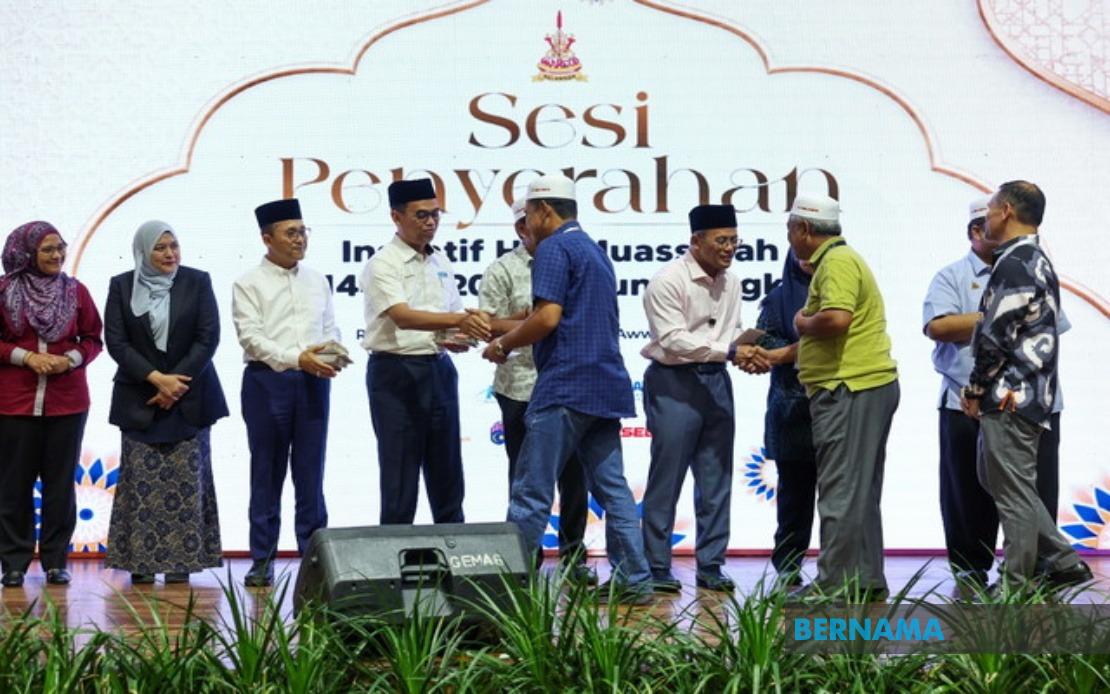
The Selangor state government has made significant progress in delivering its 2026 Muassasah Haj Incentive Programme, with approximately 80 per cent of intended beneficiaries having already received their financial support. According to Menteri Besar Datuk Seri Amirudin Shari, the administration expects to complete disbursement to all 6,000 eligible pilgrims by the end of September, bringing the initiative to full implementation across the state's constituencies.
The assistance programme, backed by a RM9 million allocation from the Selangor Menteri Besar Incorporated Foundation (Yayasan MBI), aims to ease the financial burden on low and middle-income Muslim pilgrims preparing for the sacred Haj journey. Each recipient receives RM1,500 to cover essential expenses such as religious equipment, prescription medications, appropriate clothing for the pilgrimage, and other necessary items that contribute to a meaningful and health-conscious experience during the ritual. For many Malaysian families, these supplementary funds provide crucial relief during a period of substantial out-of-pocket expenditure.
Amirudin outlined the distribution strategy during a presentation ceremony in Dengkil constituency at the Putra Perdana Community Hall in Puchong, where 259 recipients from that area received their allocations. The Selangor leader acknowledged that identifying and contacting the remaining 1,200-plus recipients has required systematic effort, but emphasized the administration's commitment to locating every eligible pilgrim before the September deadline. This methodical approach reflects the state's determination to ensure no deserving applicant is inadvertently overlooked in the allocation process.
The programme carries particular significance for Selangor's Muslim community, as the state is home to one of Malaysia's largest concentrations of middle and working-class families who undertake the Haj. By providing targeted financial assistance in the months preceding departure, Selangor's initiative acknowledges the reality that many pilgrims face competing financial obligations while preparing for one of Islam's five pillars. The support enables families to purchase new ihram garments, arrange vaccinations and medical consultations, acquire appropriate footwear, and secure other practical necessities without compromising other household expenses.
Looking beyond the current cycle, Amirudin articulated an ambitious expansion plan that would nearly double the per-recipient incentive. The state government intends to increase assistance to RM2,000 per pilgrim by 2027 or 2028, contingent on Selangor's fiscal health and broader economic conditions. This scaling aspiration demonstrates the administration's recognition that inflationary pressures and rising service costs warrant enhanced support for future cohorts of pilgrims. However, the Menteri Besar cautioned against firm guarantees, noting that unforeseen financial constraints could necessitate timeline adjustments or programme modifications.
The financial commitment of RM9 million for 6,000 recipients represents a substantial investment in social welfare infrastructure and reflects a policy orientation prioritizing religious observance accessibility across income strata. Malaysia's federal government has historically supported Haj pilgrimage through subsidy mechanisms and loans, but state-level initiatives like Selangor's add complementary layers of assistance that reach populations beyond federal programmes' scope. This multi-tiered approach strengthens the social safety net for pilgrims across the nation.
The ceremonial presentation format employed throughout Selangor's distribution process carries political and cultural significance. By conducting formal handover events in each constituency, the state government creates visible moments of recognition for beneficiaries and demonstrates institutional responsiveness to community spiritual needs. Deputy Housing and Local Government Minister Datuk Aiman Athirah Sabu's participation as Sepang Member of Parliament underscores the intergovernmental coordination underlying the programme's execution, bridging state and federal administrative structures in service delivery.
For Malaysian policymakers and observers, Selangor's Muassasah Haj Incentive serves as an instructive case study in targeted social assistance design. The programme eschews universal subsidies in favour of means-tested support directed toward genuine need, maximizing the poverty-alleviation impact of limited resources. The clear communication of expansion timelines and financial targets also establishes accountability metrics, allowing stakeholders to monitor whether promised enhancements materialize as economic circumstances permit.
The broader implications for Selangor's fiscal planning deserve scrutiny. An increase from RM1,500 to RM2,000 per recipient would require the state to allocate an additional RM3 million annually for the same 6,000-person cohort, assuming annual Haj cycles. This trajectory demands careful calibration against other budgetary priorities and revenue projections. Nevertheless, the government's willingness to signal future enhancement demonstrates confidence in maintaining adequate financial capacity or prioritizing Haj assistance within competing expenditure demands.
Regionally, Malaysia's state-level Haj support mechanisms compare favourably with assistance frameworks in other Southeast Asian Muslim-majority nations. Indonesia, with a substantially larger pilgrim population, operates the Indonesian Haj Financial Management Agency (BPIH), but state-level Haj subsidies remain limited in many provinces. Selangor's direct cash transfer approach offers a replicable model for other Malaysian states seeking to strengthen Haj accessibility among economically vulnerable populations while maintaining fiscal discipline.
As September approaches, successful completion of Selangor's distribution target would affirm the state administration's capacity for large-scale social programme execution. The remaining months will test whether the identification and contact protocols for outstanding recipients function smoothly, and whether processing delays emerge in final-stage payments. Performance against this self-imposed deadline carries implications for public confidence in state-level welfare delivery and the viability of announced future enhancements.

