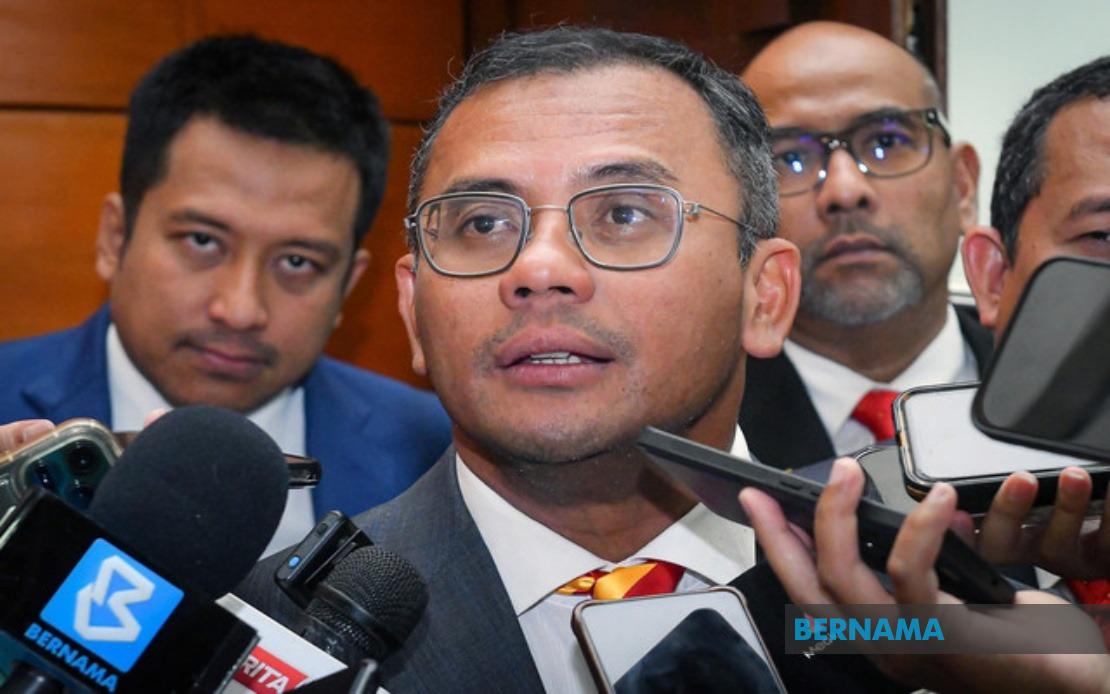
The Selangor state government has committed RM3.5 million towards a new research funding scheme designed to propel the state's economic agenda between now and 2030. The Selangor Development Grant, or SELidik 2026, represents an evolution from the previous Selangor Research Grant and has been structured to align research outputs directly with the state's broader development priorities outlined in the Second Selangor Plan (RS-2). Menteri Besar Datuk Seri Amirudin Shari announced the allocation during a grant handover ceremony at Bangunan Sultan Salahuddin Abdul Aziz Shah, signalling the state administration's determination to weaponise academic research as a tool for strategic economic transformation.
The funding architecture reveals a phased approach intended to deepen institutional engagement with policymaking. Under the initial phase, Selangor's two state-owned universities—Universiti Islam Selangor (UIS) and Universiti Selangor (UNISEL)—will receive RM2.5 million to generate tangible research outputs including modules, applications and prototypes. The remaining RM1 million has been earmarked for other local universities across the state, broadening the research ecosystem beyond the flagship institutions. This distribution strategy appears designed to encourage wider academic participation while maintaining quality control through the lead universities.
The alignment between research funding and the RS-2 agenda represents a strategic departure from previous grant mechanisms. Rather than supporting exploratory or curiosity-driven research, SELidik 2026 demands that all proposed studies directly link to one of six core missions underpinning the economic plan. These missions span economic leadership, balanced district development, liveable communities, human capital development, sustainability and effective governance. By imposing this thematic requirement, the state government ensures that taxpayer-funded research addresses concrete policy challenges rather than generating academic papers destined for journal obscurity.
The Second Selangor Plan itself, unveiled on August 7, charts an ambitious trajectory with a target economic value of RM600 billion through 2030. The plan encompasses 25 distinct development areas and represents the state's blueprint for post-pandemic recovery and structural economic diversification. Selangor, as Malaysia's wealthiest state and primary manufacturing and services hub, operates under different development pressures than other regions. Research findings generated through SELidik will feed directly into the relevant standing committees tasked with formulating and refining state policies, closing the traditional gap between academic discovery and governmental implementation.
The programme's governance structure centres on Yayasan Selangor, the state foundation body that will manage fund distribution and research oversight. This institutional arrangement leverages an existing governance framework rather than creating new bureaucratic layers. The foundation's management role suggests that research quality and relevance will be assessed according to established criteria, though the specific evaluation mechanisms remain undisclosed. By channelling funds through a semi-governmental entity rather than direct ministry allocation, the structure aims to maintain some insulation from short-term political considerations.
Menteri Besar Amirudin indicated that the investment is expected to generate returns beyond academic publication. Economic development opportunities, enhanced institutional standing, and human capital advancement constitute the anticipated benefits. This framing reflects growing global recognition that research investment yields multiplier effects across innovation ecosystems, labour market competitiveness and knowledge-based industries. For Selangor specifically, strengthening research capabilities at state universities could enhance their competitive positioning relative to federal institutions and international counterparts.
The initiative displays flexibility in its expansion pathway. While the second phase will extend eligibility to additional public institutions nationwide, the government has signalled openness to international university participation should surplus funding emerge. This graduated internationalisation approach balances local institution development with access to global research expertise and networks. International collaboration could strengthen research quality while exposing Malaysian students and academics to international standards and methodologies.
Applicant requirements impose meaningful constraints designed to ensure policy relevance. Researchers must be local, and their proposed studies must directly address one of the RS-2's six primary missions while engaging with relevant government departments. These conditions essentially position researcher-government partnerships as the funding model's foundation. Such an arrangement differs markedly from conventional grant schemes where researchers identify problems independently and seek funding support, instead reversing the dynamic to make government priorities the starting point.
Historical research themes provide context for the grant's scope. Previous studies supported through Selangor mechanisms have addressed agriculture, industrial innovation, and development applications. These thematic precedents suggest that SELidik will likely favour applied research with clear policy or commercial endpoints rather than pure theoretical investigation. Agricultural research, for instance, could support efforts to enhance productivity in peri-urban farming communities, while innovation studies might focus on emerging technologies applicable to manufacturing or services sectors.
The research funding allocation must be understood within Malaysia's broader knowledge economy aspirations. States competing for investment and talent increasingly recognise that research infrastructure and academic-government partnerships constitute competitive advantages. By institutionalising the connection between state development planning and university research, Selangor positions itself as a jurisdiction where academic work directly influences policy. This narrative appeals to international investors, international students and top-tier academics considering regional relocation.
For Malaysian universities, the RM3.5 million commitment, while modest by international standards, represents meaningful additional funding in an environment where operational budgets face recurring constraints. The scheme's emphasis on application-oriented outcomes aligns with evolving global expectations that publicly-funded research demonstrate societal impact. Universities participating in SELidik effectively gain mechanisms to demonstrate research relevance to policymakers and taxpayers, potentially strengthening arguments for additional government support.
The wider regional dimension merits consideration. Other Malaysian states may observe SELidik as a model for tighter academic-government integration. Selangor's approach—structured thematic alignment, phased institutional expansion, and explicit linkage to economic blueprints—could inspire emulation. However, variations in state capacity, fiscal resources and institutional maturity may produce different outcomes elsewhere. The scheme's success will ultimately depend on whether research outputs prove genuinely useful to policymakers or instead accumulate as documentation of a well-intentioned initiative.
Moving forward, monitoring mechanisms will determine SELidik's effectiveness. Tracking whether funded research actually influences state policy decisions, whether researchers maintain engagement quality given thematic constraints, and whether the economic value of research outputs justifies investment will provide instructive lessons. The next phase expansion to other public institutions nationwide offers opportunities to assess scalability and adapt the model based on initial implementation experience.

