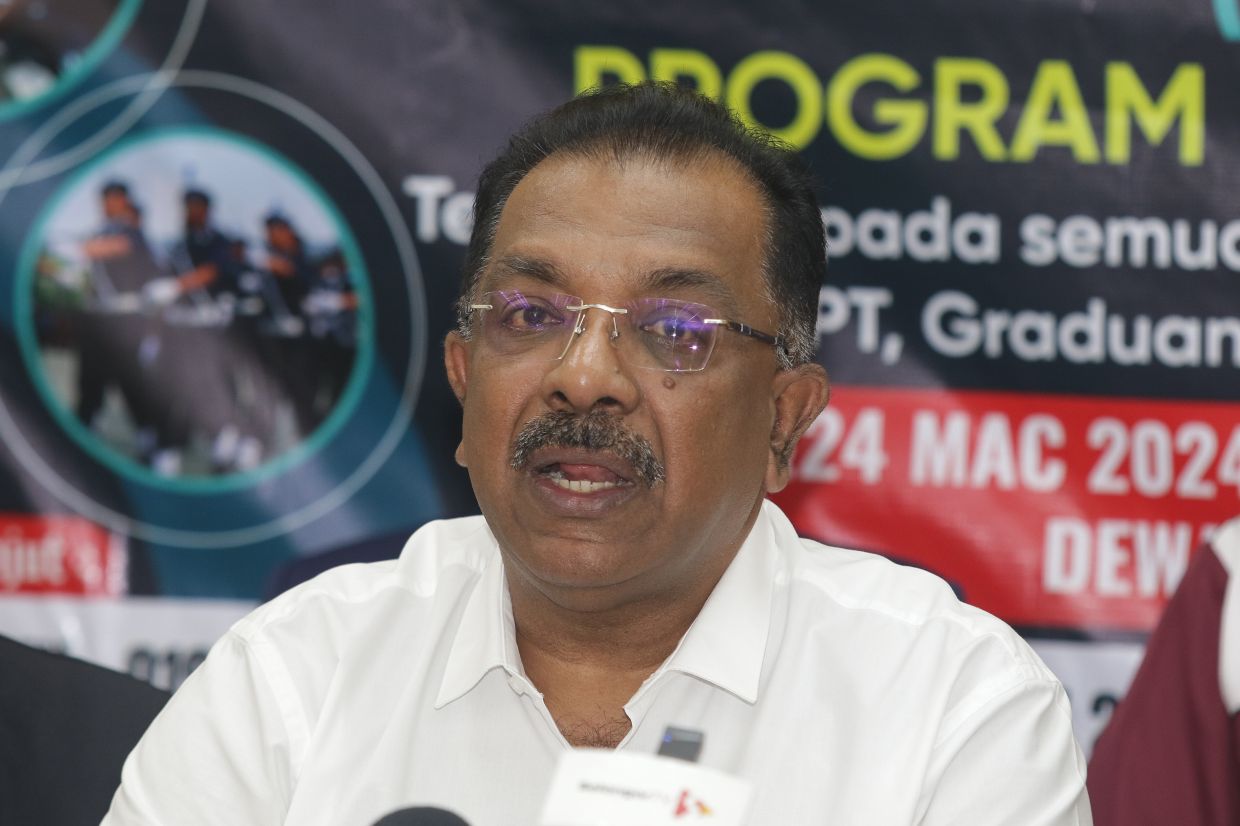
The persistent tension between rapid urban development and the protection of religious heritage in Selangor requires a more systematic and transparent approach, according to Sentosa assemblyman Gunaraj George, who raised the issue during the state assembly sitting in Shah Alam this week. His intervention highlights growing concerns among minority communities about the vulnerability of long-established temples and prayer halls to demolition or relocation as developers transform rural and semi-rural areas into residential and commercial zones.
Gunaraj's call for a structured mechanism reflects a wider challenge facing Selangor and other Malaysian states grappling with how to accommodate rapid urbanisation while safeguarding the religious and cultural sites that serve established communities. The assemblyman stressed that economic progress need not come at the expense of minority religious interests, and that both objectives can be pursued simultaneously through careful planning and stakeholder engagement. His plea underscores recognition at the state assembly level that ad hoc responses to these disputes have often left communities feeling unsupported and temples facing legal jeopardy.
Many temples across Selangor were established generations ago when landowners granted permission for religious structures to serve local devotees. These institutions have since become integral to the fabric of their neighbourhoods, functioning as community gathering spaces beyond their primary religious purpose. However, when developers acquire surrounding land or when administrative boundaries change, the historical legitimacy and community role of these temples are frequently overlooked. Temples that operated transparently for decades suddenly find themselves classified as illegal structures, a classification that ignores their original authorisation and established presence.
The assemblyman's intervention reveals the absence of a coherent framework that could evaluate each temple case on its individual merits, considering historical context, community reliance, and legitimate administrative concerns simultaneously. Currently, decisions appear fragmented across different authorities—land matters may fall under one jurisdiction, planning issues under another, and structural safety under yet another—leaving temples without a clear pathway to resolution. This administrative fragmentation often disadvantages smaller religious communities lacking resources to navigate multiple bureaucratic processes or engage expensive legal counsel.
Gunaraj advocated for a collaborative approach involving state government officials, local authorities, private landowners, property developers, and temple management committees. Such a forum could address the substantive concerns underlying these disputes without defaulting to demolition as the primary solution. Land ownership disputes could be explored for compromise solutions such as lease arrangements or compensation frameworks. Planning violations could be assessed in light of when structures were erected relative to local plan gazetting. Structural safety concerns could be addressed through remedial work rather than wholesale destruction.
The Sentosa assemblyman's framing of the issue as a choice between development and community harmony proved significant, as it rejected the false premise that progress necessarily requires erasing existing places of worship. In rapidly developing regions like Selangor, where property values surge and development pressure intensifies, communities often feel compelled to accept unfavourable outcomes because they lack institutional representation in real estate decisions. A structured mechanism with formal participation rights would shift the balance toward negotiated settlements.
Gunaraj specifically urged authorities to consider the historical and community dimensions of each case before rendering decisions on relocation or demolition. This guidance directly addresses the current practice where temples may be designated for removal simply because they occupy land deemed more valuable for commercial or residential purposes, regardless of their historical standing. A more principled approach would distinguish between temples that genuinely pose public safety risks or violate planning laws in ways that cannot be remedied, and those facing challenges primarily because development economics favour their removal.
The assemblyman's remarks carry particular weight coming from a state-level legislator, as they signal receptiveness within Selangor's political establishment to addressing minority community concerns. His suggestion that Selangor could establish a benchmark for other states reflects awareness that how Malaysia's most developed and urbanised state handles these tensions will likely influence approaches elsewhere. If Selangor develops an inclusive and transparent process, it could become a model for other states managing similar pressures.
For Malaysian Hindu and Buddhist communities, Gunaraj's intervention provides a degree of institutional validation that their concerns warrant serious consideration rather than dismissal as obstructing progress. Many temples have existed longer than modern local governments, and their communities argue they should not be treated as recent encroachments. The structured mechanism he advocates would formalise consideration of this historical perspective within official decision-making processes. It would also provide temples with recourse to challenge administrative actions through a defined process rather than accepting adverse decisions as inevitable.
The absence of such a mechanism currently leaves temples vulnerable to shifting political winds and changing local government priorities. A developer-friendly administration might accelerate temple demolitions to clear land for projects, while a more community-conscious administration might impose temporary moratoriums. Neither scenario serves religious communities, which require stable, predictable rules protecting their long-term interests. A formal, legislated framework with fixed criteria and multi-stakeholder oversight would insulate these decisions from political fluctuation.
Implementing Gunaraj's proposal would require Selangor's state government to establish clear guidelines defining how temples and other non-Muslim places of worship would be assessed during development planning. Such guidelines could include requirements for community consultation, historical documentation, environmental impact consideration, and genuine negotiation before any relocation or demolition decision. They would create space for creative solutions such as accommodating temples within new developments, relocating structures within acceptable proximity, or providing alternative sites of comparable spiritual and community value.
For the broader Malaysian context, Gunaraj's call reflects a maturation of thinking about religious pluralism in an urbanising society. Rather than viewing religious minority sites as obstacles to overcome, his framework treats them as legitimate community assets deserving protection through formal mechanisms. This approach aligns with constitutional protections for religious freedom and with international best practices for heritage and community protection during development projects. It also acknowledges practical reality: temples that serve established communities will not disappear simply because official designation changes, and communities displaced from religious spaces often experience genuine cultural loss with long-term social consequences.
The challenge facing Selangor's administration will be translating Gunaraj's call into concrete institutional arrangements with real enforcement capacity. Without dedicated coordination mechanisms, adequate resourcing, and clear political commitment to the principles he articulated, the structured approach risks becoming merely another layer of bureaucracy without substantive impact on outcomes. However, his public intervention in the state assembly has placed the issue formally on the agenda, creating political space for civil society organisations and affected communities to advocate for implementation of the mechanism he proposed.

