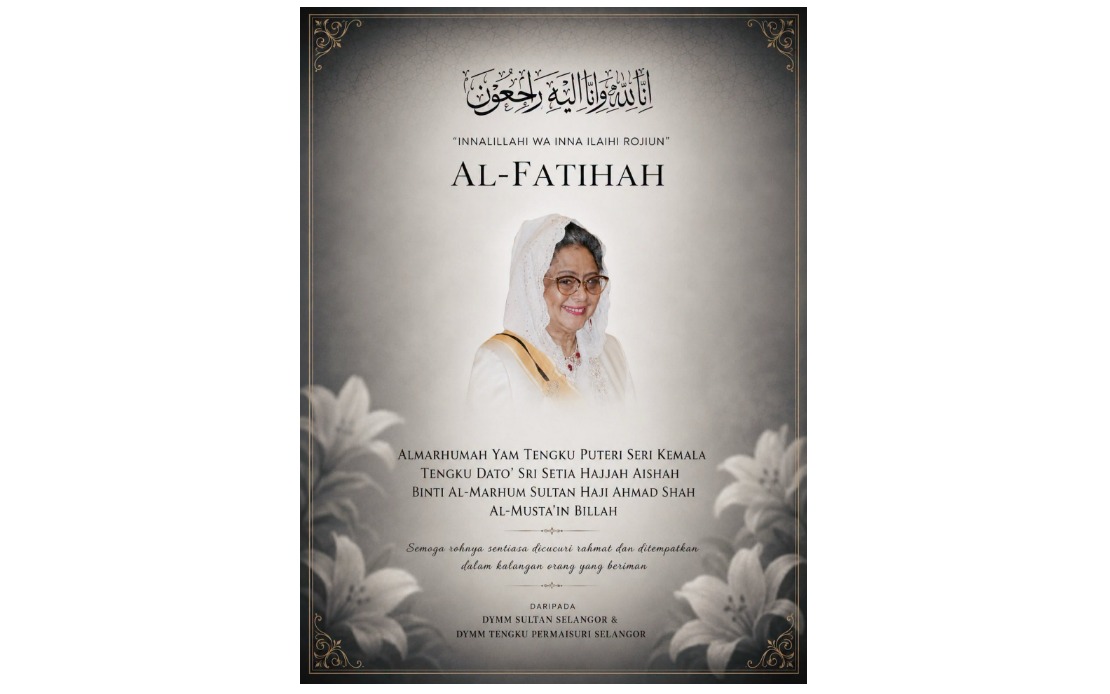
The Sultan of Selangor, Sultan Sharafuddin Idris Shah, along with the Tengku Permaisuri of Selangor, Tengku Permaisuri Norashikin, have extended their formal condolences to the Pahang Sultan, Al-Sultan Abdullah Ri'ayatuddin Al-Mustafa Billah Shah, following the passing of his elder sister, Tengku Puteri Seri Kemala Tengku Datuk Seri Aishah Almarhum Sultan Ahmad Shah, on August 26.
The gesture of sympathy was conveyed through an official statement released by the Selangor Royal Office, underscoring the deep bonds of kinship and mutual respect that characterise relationships between Malaysia's various royal households. In their message, Sultan Sharafuddin and Tengku Permaisuri Norashikin articulated their profound sadness at the loss of the prominent member of the Pahang royal family, recognising both her status within the kingdom's royal hierarchy and the significance of her passing to the Pahang court.
The formal condolence reads: "Their Royal Highnesses express their sadness and sorrow over the passing of Tengku Datuk Seri Aishah and pray that her soul will be showered with Allah SWT's mercy and placed among the faithful. Al-Fatihah." This wording reflects the dignified manner in which Malaysia's royal families mark the passage of senior members, combining expressions of grief with religious invocations appropriate to Islamic custom and royal protocol.
Tengku Puteri Seri Kemala, who held the title of Tengku Datuk Seri Aishah, passed away on the evening of August 26 at a hospital in Kuala Lumpur at 9:15 pm, following what appears to have been a period of declining health. Her death marks the loss of another generation within Malaysia's storied royal dynasties, with particular significance given her position as elder sister to the reigning Sultan of Pahang, one of the federation's most prominent monarchs.
The royal family's arrangements for her final rites reflect both her elevated status and adherence to Pahang's longstanding traditions. Her remains were transported to the Pahang Royal Mausoleum located in Pekan, the state capital, where she was laid to rest with ceremonial honours befitting her royal rank and close kinship to the Sultan. The burial followed Islamic rites conducted according to established royal customs, ensuring her interment maintained the dignity and solemnity appropriate to her station.
Such expressions of condolence between Malaysia's state rulers are routine yet meaningful elements of royal protocol and family obligation. The Malaysian monarchy system, comprising nine hereditary sultans and four appointed royal heads of state, maintains intricate networks of familial and ceremonial relationships. The exchange of sympathies following deaths within royal households serves not merely as formal courtesy but as public affirmation of the mutual bonds linking the federation's various ruling families.
The timing and content of the Selangor palace's statement underscore the interconnected nature of Malaysia's royal institutions. As custodians of both constitutional authority and cultural heritage, the sultans maintain traditions of mutual support during significant family events. Through such gestures, they reinforce the collective identity of Malaysia's monarchy and demonstrate to the public the solidarity that characterises their relationships, transcending the boundaries of individual states.
For Malaysian citizens and observers of royal affairs, such incidents also serve as reminders of the human dimensions underlying formal monarchy. While the sultans exercise significant ceremonial and constitutional roles, they also experience personal loss and family grief comparable to that felt throughout society. The public acknowledgment of these emotions, conducted through the measured language of royal communication, helps maintain the cultural relevance and emotional connection between the institution of monarchy and the nation's citizens.
The Pahang Sultanate, one of Malaysia's longest-established monarchies with roots extending deep into Peninsular history, continues to hold considerable cultural significance beyond its administrative jurisdiction. Losses within the senior generation of such families inevitably attract national attention and generate waves of sympathy across Malaysia's diverse communities. The formal expressions of condolence from fellow sovereigns provide a unifying element during moments of transition within royal circles.

