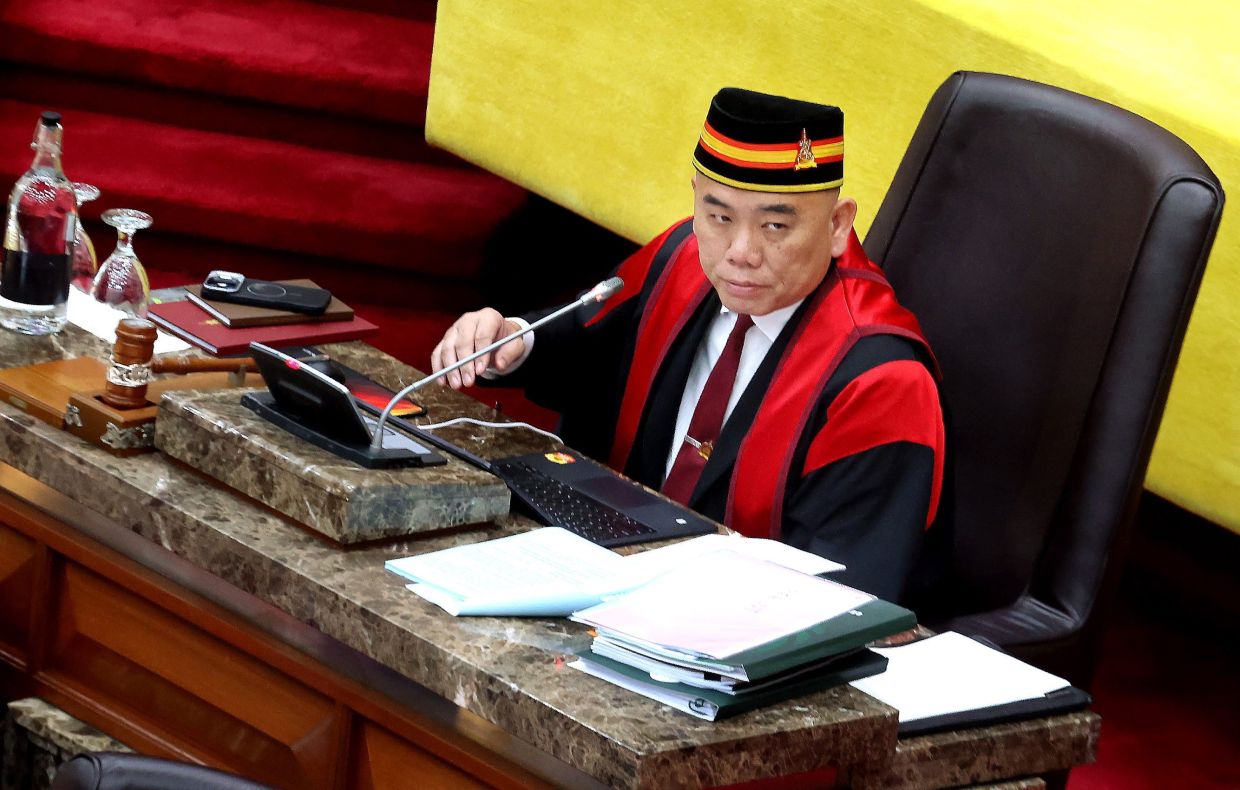
The Selangor state legislature is examining serious allegations involving a state assemblyman's bankruptcy status, according to Speaker Lau Weng San, who confirmed Monday that a comprehensive inquiry is underway but declined to reveal the lawmaker's identity or offer a timeline for conclusions. Speaking during proceedings at Bangunan Dewan Negeri Selangor on August 3, Lau emphasized that the investigation would examine all pertinent evidence across multiple jurisdictional and procedural dimensions before any official determination could be made.
The Speaker's cautious approach reflects the constitutional gravity of such matters in Malaysian state politics. A finding of bankruptcy can trigger serious consequences for elected representatives, fundamentally affecting their eligibility and the democratic representation of their constituents. Lau's insistence on thorough verification before public disclosure suggests the allegations carry sufficient weight to warrant formal scrutiny, yet the investigation's preliminary stage means key facts remain unconfirmed.
While Lau declined to identify the assemblyman in question, he dismissed speculation that the individual might be someone conspicuously absent from Monday's sitting. The Speaker noted that legislators miss assembly sessions for legitimate reasons spanning medical emergencies, official duties, and family circumstances. This clarification indicates that absence from the chamber alone cannot be used as circumstantial evidence of wrongdoing, a distinction important for protecting lawmakers' privacy and preventing unfounded public assumptions.
The investigation's scope extends beyond simple confirmation of bankruptcy status. According to Lau, the probe will encompass "all parties, all constituencies and all other relevant aspects," suggesting it may examine connected individuals, financial networks across different political divisions, and procedural compliance issues. This comprehensive approach acknowledges that bankruptcy allegations often involve complex financial arrangements and multiple stakeholders whose roles must be systematically documented.
Crucially, Lau deferred to the Election Commission regarding potential by-election proceedings, establishing clear institutional boundaries. Under Malaysia's federal system, state speakers exercise legislative authority within their chambers, but electoral matters fall within the Election Commission's purview. This separation of powers means that even if investigations conclusively establish bankruptcy, the formal decision to trigger a by-election rests with a separate constitutional body. The deferral underscores how properly functioning democratic institutions require multiple agencies acting within their respective jurisdictions.
The legal framework governing assemblyman tenure in Selangor provides significant procedural safeguards. According to the Selangor State Constitution, a seat becomes vacant only when a representative fails to attend six consecutive assembly sessions without formal permission. This six-month threshold protects lawmakers from arbitrary removal and ensures that temporary absences, whether medically justified or otherwise legitimate, cannot be weaponized against individual representatives. The constitutional protection reflects broader principles balancing institutional accountability with individual protection against capricious dismissal.
Lau's reference to the precedent of former Batang Kali assemblyman Harumaini Omar illuminates how these procedures function in practice. Omar's seat was declared vacant on February 16, 2023, following sustained non-attendance exceeding six months without authorization. The case demonstrates that while the six-month rule provides substantial protection, it represents not an obstacle to legitimate vacancies but rather a mechanism ensuring that removal follows clear, measurable criteria rather than discretionary judgment. The Omar precedent suggests that if the current inquiry establishes bankrupty, removal procedures would follow similarly transparent protocols.
The distinction between attendance-based vacancy rules and bankruptcy-related disqualification remains significant. An assemblyman might lose eligibility through bankruptcy while maintaining perfect attendance records, or vice versa. These are separate mechanisms reflecting different democratic principles: attendance rules address legislative participation and constituent representation, while bankruptcy disqualification addresses financial integrity and conflicts of interest. The investigation presumably examines which mechanism, if either, applies to the current situation.
Speaker Lau's refusal to project an investigation timeline reflects appropriate institutional caution. Premature announcements risk compromising inquiry integrity, prejudicing potential findings, or exposing the legislature to legal challenge if conclusions rest on incomplete evidence. The Selangor State Legislative Assembly's credibility depends on conducting investigations thoroughly, allowing all parties adequate opportunity for representation, and reaching determinations that withstand judicial scrutiny. Public pressure for rapid resolution must yield to procedural rigor.
For Malaysian political observers, this matter exemplifies how state legislatures navigate sensitive internal governance questions. Unlike federal parliament investigations, which occasionally attract intense national media attention, state-level inquiries often proceed with less public visibility yet equal constitutional importance. The investigation's handling will signal whether Selangor's institutional machinery can investigate serious allegations fairly while protecting individual rights and maintaining public confidence in legislative integrity.
The case also highlights evolving standards regarding financial disclosure and assemblyman conduct. As Malaysian governance develops, expectations grow that elected representatives demonstrate financial transparency and avoid conflicts impairing their legislative judgment. Bankruptcy allegations, though involving individuals rather than systemic issues, reflect broader contemporary debates about the character standards expected from public office holders and the mechanisms through which legislatures enforce such standards.
Ultimately, the Selangor investigation exemplifies democratic institutions functioning according to constitutional prescription, even when individual cases prove uncomfortable for colleagues or constituencies. The systematic progression from allegation through investigation to potential by-election, with multiple institutional actors exercising appropriate functions, represents procedural integrity in action. How thoroughly and fairly this particular inquiry concludes will influence public confidence in Selangor's legislative institution and set precedent for future similar matters.

