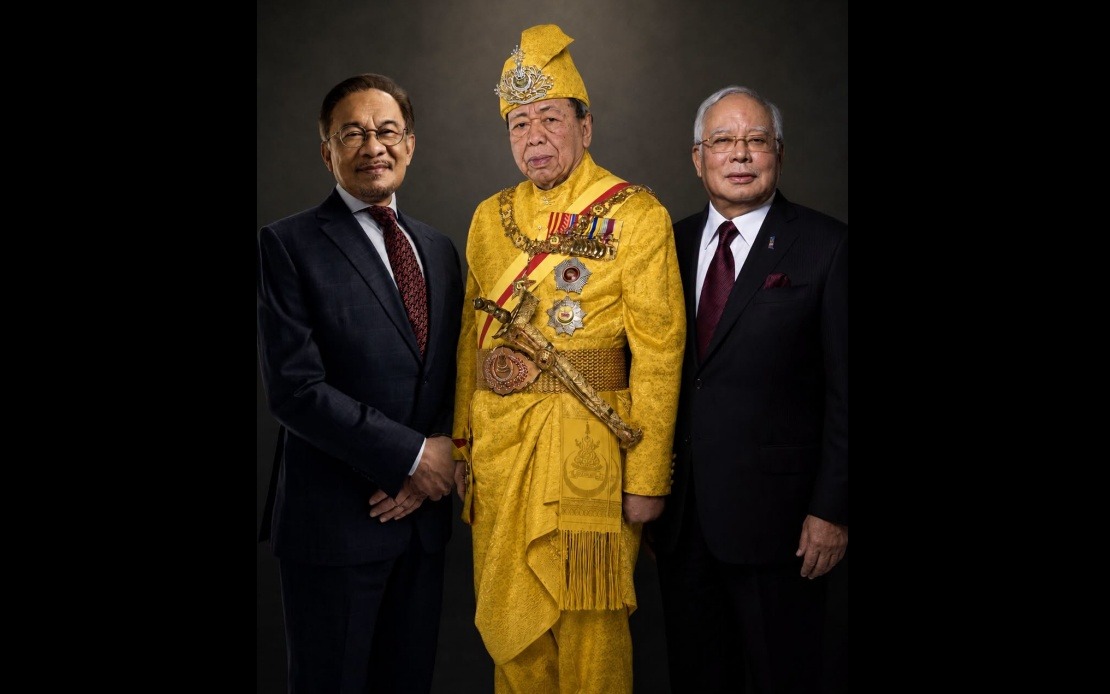
The Sultan of Selangor, Sultan Sharafuddin Idris Shah, has publicly commended Prime Minister Datuk Seri Anwar Ibrahim for shepherding the Shah Alam Line LRT3 project to completion, with the new rail service beginning operations on Monday. The royal endorsement carries symbolic weight in Malaysia's political landscape, signalling institutional support for a major infrastructure achievement that spans multiple electoral cycles and changes of government.
In expressing his appreciation, Sultan Sharafuddin highlighted several specific contributions made by Anwar since assuming the dual roles of Prime Minister and Finance Minister in 2022. Most notably, the Premier directed the reinstatement of five stations along the alignment that had been cancelled during earlier phases of the project, a decision that dramatically expanded the line's utility for commuters across the densely populated Selangor corridor. Additionally, Anwar proposed the development of affordable housing in proximity to LRT3 stations, an initiative aimed at maximising public benefit and improving accessibility for lower-income residents.
The Sultan's statement underscores a critical tension in how infrastructure projects become attributed politically. While acknowledging Anwar's decisive role in reviving and completing LRT3, Sultan Sharafuddin made an explicit point that the project should not be monopolised by any single individual or administration. This measured approach reflects the complex reality that the Shah Alam Line represents decades of planning and advocacy, requiring persistence across governments of different political compositions.
The genesis of the LRT3 concept reveals how public need drives policy. The Sultan recalled that the original impetus stemmed from widespread complaints about Klang's chronic traffic congestion, particularly from households struggling with the time burdens imposed on breadwinners. With only two bridges spanning the Klang River at peak-hour capacity, the area faced genuine infrastructure stress that no amount of toll manipulation could resolve. Sultan Sharafuddin acknowledged the previous administration under Datuk Seri Najib Tun Razak for heeding his call to construct a rail link integrating Klang, Shah Alam and Kuala Lumpur, and noted that Najib's government had also attempted immediate relief by abolishing the Batu Tiga and Sungai Rasau toll plazas in 2018.
However, the project's journey has been severely turbulent. Following the 2018 change of government, implementation stalled for more than 18 months as new administrations reassessed priorities and financial commitments. The subsequent COVID-19 pandemic introduced a further 19-month delay extending to 2021, during which period significant scope reductions were implemented. The number of train coaches was reduced, individual station sizes were contracted, and five stations were eliminated entirely from the original design. These cutbacks reflected both budgetary constraints and changing assumptions about demand patterns during pandemic-disrupted travel behaviours.
What distinguishes Anwar's approach is the reversal of these retrenchments. The restoration of five stations fundamentally altered the line's strategic value by extending coverage to populations initially expected to be bypassed. Rather than accepting the truncated version inherited by his administration, Anwar directed resources toward expanding service reach. This decision carries implications for urban planning across the Klang Valley, potentially stimulating development patterns in previously underserved areas and improving equity in transit access.
The Sultan's assertion that LRT3 was never envisioned as a prestige project deserves scrutiny in the Malaysian context, where megaprojects have historically become entangled with political symbolism. By framing the initiative strictly as a public utility addressing genuine congestion and time-burden problems, Sultan Sharafuddin redirects discourse away from competitive claims of political credit. This rhetorical positioning proves particularly relevant given the multicommunal composition of the project's beneficiary communities and the sensitivities surrounding infrastructure spending in Selangor.
From a regional transport systems perspective, the Shah Alam Line represents a significant addition to Malaysia's urban rail network, though its geometry and coverage patterns reflect compromises between original ambitions and financial realities. The line's integration with existing Light Rail Transit corridors and future connections to the Klang Valley Integrated Transit System will determine whether it achieves the transformative effect anticipated by planners. Prasarana Malaysia Bhd, the operator, faces the sustained maintenance challenge implicit in the Sultan's expressed hope for uninterrupted service quality—a critical factor given that deteriorating service reliability has undermined public confidence in other Malaysian transit systems.
The implications for commuter behaviour and urban development patterns across the Klang Valley remain to be observed. For residents of Shah Alam, Klang and intermediate communities, the LRT3 offers a faster, more predictable alternative to road-based commuting during peak periods. The affordability housing proposals associated with station precincts could catalyse residential intensification, potentially moderating sprawl pressures and supporting more sustainable settlement patterns. These outcomes, however, depend on complementary policies regarding land use zoning, developer incentives and transit-oriented development standards.
Sultan Sharafuddin's emphasis on project continuity across administrations highlights an underappreciated dimension of infrastructure governance—that long-term urban development requires sustained commitment beyond individual political terms. The Shah Alam Line's successful transition from concept through multiple implementation phases reflects institutional capacity within Prasarana and financial persistence by successive governments, despite competing budgetary priorities and periodic crises. Whether this collaborative model can be replicated for other regional infrastructure initiatives remains uncertain, particularly given partisan pressures to claim distinctive ownership of completed projects.
Looking forward, the Sultan expressed hope that the new line will catalyse broader economic development and strengthen connectivity between Kuala Lumpur, Petaling Jaya, Shah Alam and Klang as centres of national growth. This framing positions the LRT3 within a regional development strategy centred on integrated urban systems. However, realising such aspirations requires coordinated planning across multiple jurisdictions, alignment of local land-use policies with transit infrastructure, and sustained investment in complementary services—elements that historically prove challenging in Malaysia's fragmented governance landscape.

