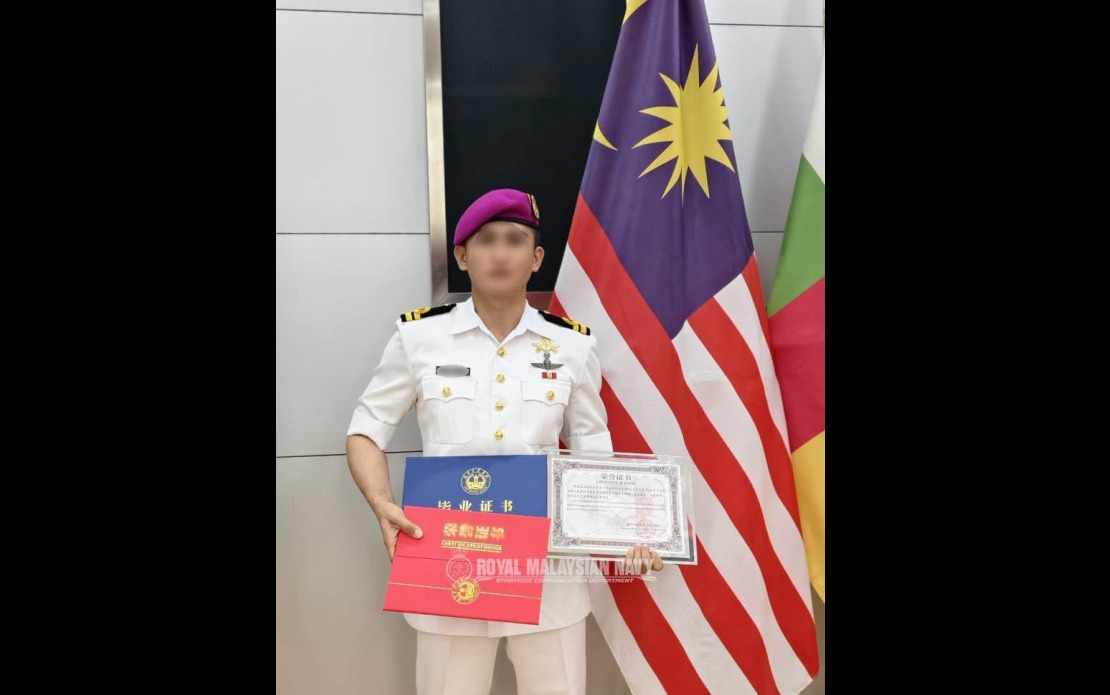
Sultan Sharafuddin Idris Shah, who serves as Captain-in-Chief of the Royal Malaysian Navy, has publicly commended a PASKAL member for his exceptional performance during the Sniper Infantry Course conducted at the PLA Infantry Academy's Shijiazhuang Campus in Hebei, China. The officer's achievement represents a significant milestone for Malaysia's elite naval special forces unit and reinforces the country's growing defence collaborations with regional military powers.
The course, which ran from March 1 to July 31, saw the Malaysian serviceman emerge as the top performer among a diverse cohort of 131 students representing more than 24 countries. Beyond the prestige of the overall ranking, the officer secured the Excellent Student Award, cementing his position as the standout participant in the demanding five-month programme. The recognition underscores the calibre of training that PASKAL personnel undergo and their ability to compete at international military standards.
In addition to the Excellent Student Award, the officer received the Certificate of Honors for Excellent Cadre and was presented with Silver Badge Medals following rigorous course assessments. These accolades collectively signal the depth of his technical competency and disciplinary mastery in sniper operations—a specialisation requiring meticulous precision, patience, and tactical awareness. The multiple recognitions demonstrate that his success was not isolated to a single evaluation metric but reflected consistent excellence throughout the extended training period.
Sultan Sharafuddin's public congratulatory statement carries particular weight given his constitutional role as the naval commander-in-chief. By highlighting the officer's achievement and framing it as a matter of national pride, the Sultan has elevated the accomplishment beyond an individual commendation to a symbolic validation of Malaysia's military excellence on the international stage. His emphasis that the achievement serves as an exemplar for other PASKAL personnel suggests a deliberate intent to inspire higher standards across the special forces unit.
The context of this training programme reflects Malaysia's strategic approach to building advanced military capabilities through partnerships with established defence powers. The People's Liberation Army's Infantry Academy represents a centre of military expertise with extensive experience in specialised combat training. By sending Malaysian personnel to such institutions, the defence establishment gains access to world-class instruction while simultaneously building bilateral military relationships with major regional partners. This exchange mechanism has become increasingly common among Southeast Asian navies seeking to enhance their operational readiness.
PASKAL, formally designated as the Royal Malaysian Navy's Special Naval Forces, occupies a critical role in Malaysia's maritime security architecture. The unit specialises in unconventional warfare, counter-terrorism, and intelligence operations across Malaysia's extensive maritime domain. The sniper capability specifically adds a dimension of precision strike and long-range reconnaissance to the unit's operational toolkit, enhancing its ability to respond to complex security scenarios that conventional naval platforms may struggle to address effectively.
The statement from Sultan Sharafuddin also extended congratulations to RMN Chief Admiral Tan Sri Dr Zulhelmy Ithnain and the broader PASKAL and RMN personnel complement. This inclusive acknowledgment reflects a recognition that individual achievement within military organisations is invariably supported by institutional frameworks, leadership guidance, and collective effort. The commendation of leadership alongside the frontline personnel demonstrates an understanding of the hierarchical systems that enable operational excellence.
For Malaysian defence observers and military analysts, this recognition highlights the competitiveness of the nation's special operations personnel in the global military arena. The fact that a Malaysian officer could achieve first-place standing among participants from 24 countries—many representing defence establishments with substantially larger budgets and longer institutional histories—provides quantifiable evidence of training quality and personnel selection standards. This success story serves as useful counter-narrative to perceptions of capability gaps that sometimes emerge in regional defence discussions.
The international dimension of the sniper course also underscores the increasingly transnational nature of modern military training. Rather than viewing military education as a purely national or bilateral affair, the PLA's decision to host multinational courses reflects recognition that complex security challenges transcend borders and that cooperation in building professional military standards serves broader stability objectives. For Malaysia, participation in such programmes positions the country within networks of international military cooperation that extend beyond traditional bilateral relationships.
The timing of this public recognition—announced in August—coincides with broader Malaysian defence modernisation initiatives and renewed attention to maritime security in Southeast Asian waters. As regional tensions persist and non-traditional security threats evolve, specialised capabilities like sniper proficiency become increasingly valuable. The officer's achievement thus represents not merely an individual honour but a tangible addition to Malaysia's security toolkit at a period when such capabilities receive heightened policy attention.
The implications for PASKAL recruitment and retention should not be overlooked either. Public recognition of officer achievements by the Sultan provides institutional prestige that extends to the entire unit and enhances its attractiveness as a career destination. For a volunteer military service, symbolic validation from the head of state carries weight beyond official ceremony; it signals societal recognition of sacrifice and dedication, factors that influence personnel decisions in professional armed forces.
Moving forward, this achievement will likely feature in Malaysian naval recruiting materials and institutional narratives as evidence of the quality demanded and developed within PASKAL ranks. The international exposure gained through participation in multinational courses also builds professional networks that can facilitate future cooperation and knowledge exchange, benefiting the entire naval special forces community. The officer himself becomes an ambassador of Malaysian military standards within those international networks, a role that may influence how regional and international defence establishments perceive Malaysian capabilities.

