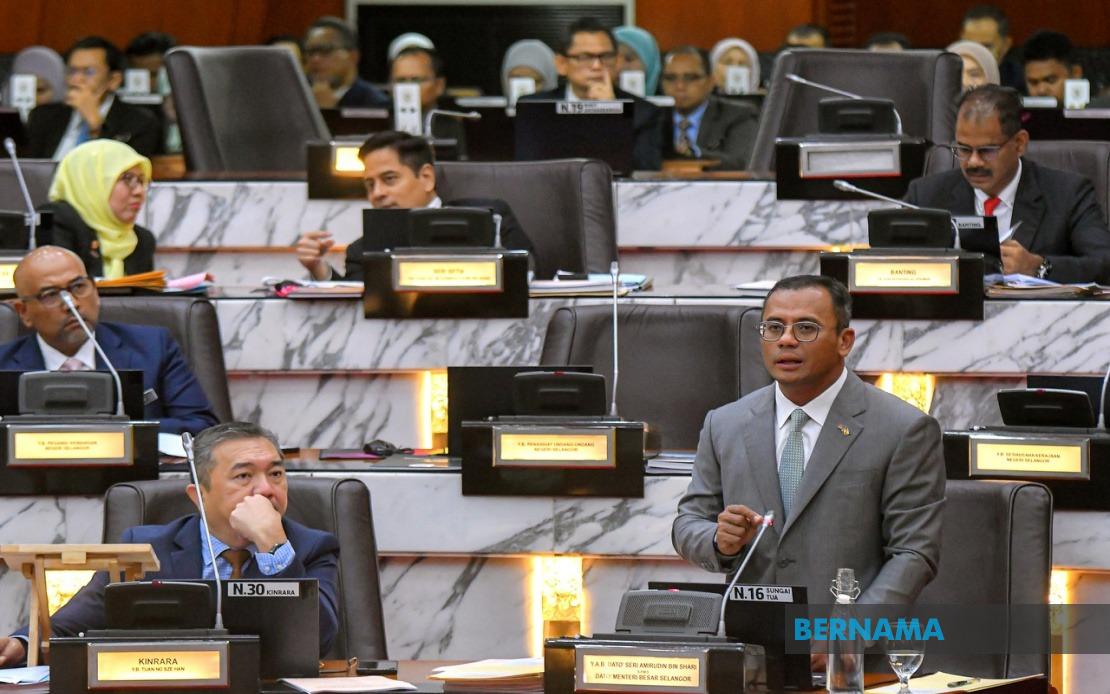
The Selangor government is moving to substantially expand its financial assistance for higher education students, planning to increase recipients of the Higher Education Institution Study Incentive (HPIPT) to 5,000 next year, doubling the current allocation of 3,000 beneficiaries. This expansion represents a significant commitment to tertiary education support in the state and reflects growing demand among students pursuing higher qualifications. Menteri Besar Datuk Seri Amirudin Shari announced the plan during the Selangor State Legislative Assembly sitting, responding to questions about scaling up the programme in light of surging applications.
The impetus behind this expansion is straightforward: applications for the HPIPT have consistently exceeded available slots, with the programme receiving more than 5,000 submissions in both 2025 and the current year. This sustained volume of interest prompted state officials to reassess the sustainability and scope of the initiative within Selangor's fiscal framework. Rather than maintain the status quo, the government recognised that current recipient numbers fail to meet actual demand from qualifying students across the state. By nearly doubling the allocation, policymakers aim to reach a greater proportion of eligible applicants while maintaining financial viability.
Amirudin indicated that the government is currently evaluating whether budgetary constraints would permit raising recipients to between 5,000 and 6,000. This cautious framing suggests that while the political will exists to expand the scheme, officials must balance aspirations against revenue constraints. He noted that the state had previously extended HPIPT support to 5,000 recipients, suggesting this expansion represents a restoration rather than entirely new territory. The proposed increase is expected to be formally incorporated into the 2027 Budget, giving the state legislative body opportunity to scrutinise and approve the allocation during budget deliberations.
Beyond simply increasing beneficiary numbers, Selangor officials are examining operational improvements to make the application process more student-friendly. The government plans to review the HPIPT application window to ensure sufficient time elapses between students receiving higher education institution admission confirmations and the deadline for study incentive applications. Many applicants currently face logistical constraints when institutional acceptance letters arrive late in the admissions cycle, leaving narrow windows to complete additional paperwork. Extending or adjusting this timeline could remove barriers that currently prevent eligible students from accessing support.
A more significant operational refinement involves opening HPIPT applications twice annually rather than maintaining a single annual round. This modification would accommodate students who gain admission to tertiary institutions at different points throughout the calendar year, whether through early rounds, supplementary intake, or late-season placements. Many students pursuing non-traditional pathways or transferring between institutions currently miss funding opportunities because application cycles align poorly with their admission timelines. Semi-annual application windows would create flexibility that acknowledges the diverse entry points into Malaysia's higher education system.
The HPIPT itself is relatively modest in scope: it provides RM1,000 in financial assistance to Selangor students enrolled at recognised public or private higher education institutions. While not transformative on its own, this sum addresses immediate costs such as registration fees, course materials, or living expenses during the critical early months of study. Critically, the scheme extends beyond conventional university pathways, also covering students pursuing Level 4 Skills Certificates, diplomas, and bachelor's degrees. This breadth recognises that not all tertiary education follows traditional four-year university models, acknowledging Malaysia's increasingly diversified post-secondary landscape.
For Malaysian policymakers monitoring workforce development, the Selangor initiative carries implications beyond one state. Higher education participation gaps in Malaysia often reflect financial constraints disproportionately affecting lower-income students, who consequently undertake fewer tertiary qualifications. Study incentives remove one barrier to participation, particularly for students balancing educational aspirations against household budget pressures. By expanding HPIPT reach, Selangor addresses both equity concerns and long-term human capital development, since tertiary-qualified workers command higher lifetime earnings and contribute more substantially to economic growth.
The programme's expansion also signals confidence in Selangor's fiscal position despite macroeconomic headwinds affecting state governments nationwide. Education investment typically reflects political commitment to youth development and future competitiveness. When a state government voluntarily redirects resources toward student support, it demonstrates prioritisation of human development over recurrent expenditure. For Selangor specifically, which positions itself as Malaysia's economic engine, investing in tertiary education aligns with strategies to maintain competitive advantage through skills development.
Regionally, Selangor's move invites comparison with peer jurisdictions across Southeast Asia. Singapore maintains generous education grants and scholarships for lower-income students, while Thailand and Indonesia have experimented with various student financial assistance mechanisms. Selangor's approach represents a moderate middle ground: targeted direct assistance rather than universal free tertiary education, acknowledging fiscal realities while demonstrating genuine commitment to access expansion. Whether other Malaysian states adopt similar strategies may depend on fiscal capacity and political appetite for education-focused expenditure.
The timing of this announcement also warrants consideration within Malaysia's broader electoral and governance context. By moving to expand education support, the Selangor government demonstrates responsiveness to constituent needs and tangible delivery of state benefits. Students and families directly experience study incentive eligibility as evidence of government effectiveness. This populist appeal, coupled with genuine policy substance, positions education initiatives as politically valuable initiatives that also serve developmental objectives.
Moving forward, implementation challenges will determine whether expanded allocations translate into meaningful impact. Application processing capacity, verification procedures, and payment mechanisms must accommodate doubled beneficiary numbers without creating administrative bottlenecks. Selangor should establish clear eligibility criteria and publicise deadlines widely to ensure awareness reaches eligible students, particularly those from less-connected communities who might otherwise miss opportunities. Success will ultimately be measured not merely by budget allocations but by actual students receiving support and deploying it toward tertiary qualification completion.

