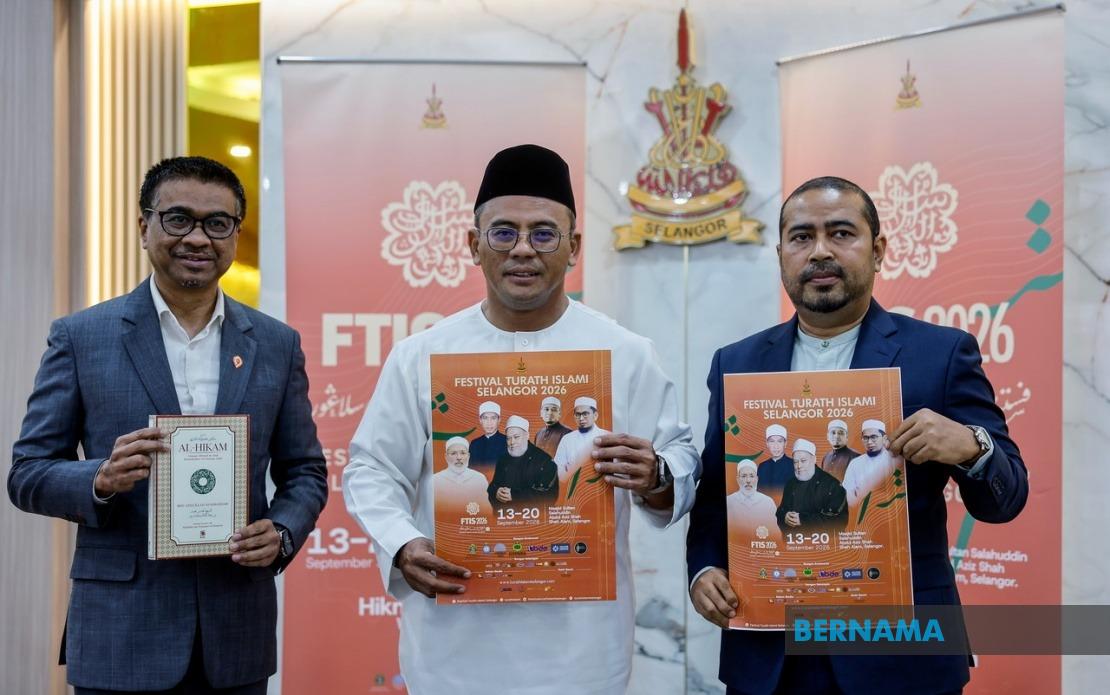
Selangor's government is preparing an ambitious celebration of Islamic scholarship this September, with the fourth edition of the Turath Islami Festival set to convene 23 prominent scholars from Malaysia and the wider Islamic world. The gathering will span eight days from September 13 to 20, centring on Masjid Sultan Salahuddin Abdul Aziz Shah in Shah Alam as the primary venue, though several other locations across the state capital will host complementary activities. Menteri Besar Datuk Seri Amirudin Shari announced the programme at a press conference in Shah Alam on July 28, describing it as a cornerstone initiative in the state's approach to deepening public connection with Islamic intellectual traditions.
The festival's international roster underscores Selangor's ambition to position itself as a regional hub for Islamic scholarship and dialogue. Among the confirmed speakers is Sheikh Professor Dr Ali Jum'ah, former Grand Mufti of Egypt, whose presence signals the calibre of intellectual engagement planned. Beyond Egypt, scholars will travel from Indonesia, Morocco, Thailand, and other nations to participate alongside Malaysian Islamic figures. This composition reflects a deliberate strategy by the Selangor administration to create a genuinely cosmopolitan platform for examining Islamic thought, moving beyond parochial or purely local considerations to embrace the breadth of Islamic scholarly traditions across different cultural and geographical contexts.
Amirudin articulated a vision of the festival that transcends conventional religious programming. He characterised the event as fundamentally concerned with reviving the classical Islamic learning tradition of talaqqi, the direct transmission of knowledge from teacher to pupil—a pedagogical model that has deep historical roots in Islamic education but has been supplemented rather than replaced by modern institutional approaches. This framing positions the Turath Islami Festival as a deliberate effort to recover an educational method that emphasises personal mentorship and intellectual intimacy, qualities that contemporary mass education sometimes struggles to preserve. By returning to this model, the festival argues implicitly that certain dimensions of religious and ethical understanding cannot be adequately transmitted through textbooks or online platforms alone.
The practical scope of the festival demonstrates substantial organisational commitment. Over 42 separate learning sessions will unfold across the eight days, encompassing dawn lectures—a traditional Islamic practice—alongside intensive study of classical Islamic texts. This volume of programming creates an immersive environment designed to accommodate diverse interests and knowledge levels, from those encountering Islamic scholarship for the first time to advanced students seeking deeper engagement with specific texts or intellectual traditions. The breadth of offerings suggests the festival organisers recognise that meaningful engagement with Islamic heritage requires sustained exposure rather than brief encounters.
A notable innovation for this edition is the inaugural National Turath Scholars Dialogue, a dedicated forum for Islamic scholars to deliberate collectively on contemporary challenges confronting Muslim communities. This structured conversation component acknowledges that Islamic scholarship remains a living intellectual enterprise, not merely a historical legacy to be preserved and displayed. By bringing scholars together to address present-day concerns—presumably touching on topics such as education reform, social cohesion, technological change, and ethical questions arising from modern governance—the festival positions Islamic thought as relevant to practical problem-solving rather than confined to historical or theoretical domains. This approach holds implications for how Islamic knowledge is perceived within Malaysian society and potentially influences policy discussions.
The Prime Minister Datuk Seri Anwar Ibrahim is expected to launch the festival, indicating strong federal government alignment with the Selangor administration's priorities. This high-level endorsement reflects broader Malaysian political commitment to positioning Islam centrally within narratives of national development and cultural identity. However, it also suggests potential expectations that the festival will articulate particular visions of Islamic modernity and good governance that align with current national political directions, a dynamic worth monitoring as the festival unfolds.
Selangor's government anticipates welcoming at least 50,000 visitors, matching the attendance from the previous edition. This target represents substantial public interest in Islamic intellectual content and demonstrates that significant segments of the Malaysian population seek deeper engagement with their religious heritage beyond routine observance. The consistency of attendance numbers suggests the festival has established itself as a legitimate and valued fixture within the state's cultural calendar, no longer a novelty but an expected annual gathering.
Logistical planning reveals attention to accessibility and visitor experience. The recent opening of the Shah Alam Line of Light Rail Transit 3 (LRT3) provides unprecedented public transport connectivity to the festival venues, transforming what might previously have required private vehicles into an accessible journey for residents across the Klang Valley metropolitan region. The state government's commitment to arranging connecting transport services from LRT3 stations—such as buses or vans—indicates recognition that last-mile connectivity remains crucial. This infrastructure-minded approach acknowledges that intellectual festivals thrive when they attract diverse audiences beyond those concentrated in immediately surrounding areas, and that removing transport barriers directly expands potential participation.
The timing in September is strategically positioned after the primary school and university examination seasons, potentially allowing students and educators to participate more freely. This scheduling decision reflects an understanding of Malaysia's academic calendar and suggests the festival organisers view young people and educators as priority constituencies. Educational institutions, particularly universities with substantial Islamic studies programmes, may leverage the festival as a learning opportunity for their students, creating potential partnerships between academic and community-based Islamic knowledge production.
For Southeast Asian observers, the Selangor Turath Islami Festival exemplifies how Malaysian states are positioning themselves within regional networks of Islamic intellectual influence. By inviting scholars from Indonesia, Thailand, and Morocco, Selangor—Malaysia's most economically dynamic state—signals aspirations to influence regional Islamic discourse and learning agendas. This soft power dimension extends beyond Malaysia's borders and reflects competitive positioning among Muslim-majority nations regarding Islamic intellectual leadership within Asia-Pacific contexts.
The festival's emphasis on heritage preservation alongside contemporary relevance addresses fundamental questions about Islamic knowledge's role in modern societies. For Malaysian readers navigating rapid social and technological change, the festival represents institutional acknowledgement that Islamic traditions contain resources valuable for understanding present challenges. Whether the festival successfully bridges historical scholarship with immediate relevance remains to be seen, but the organisational commitment to both dimensions suggests seriousness about this ambitious goal.

