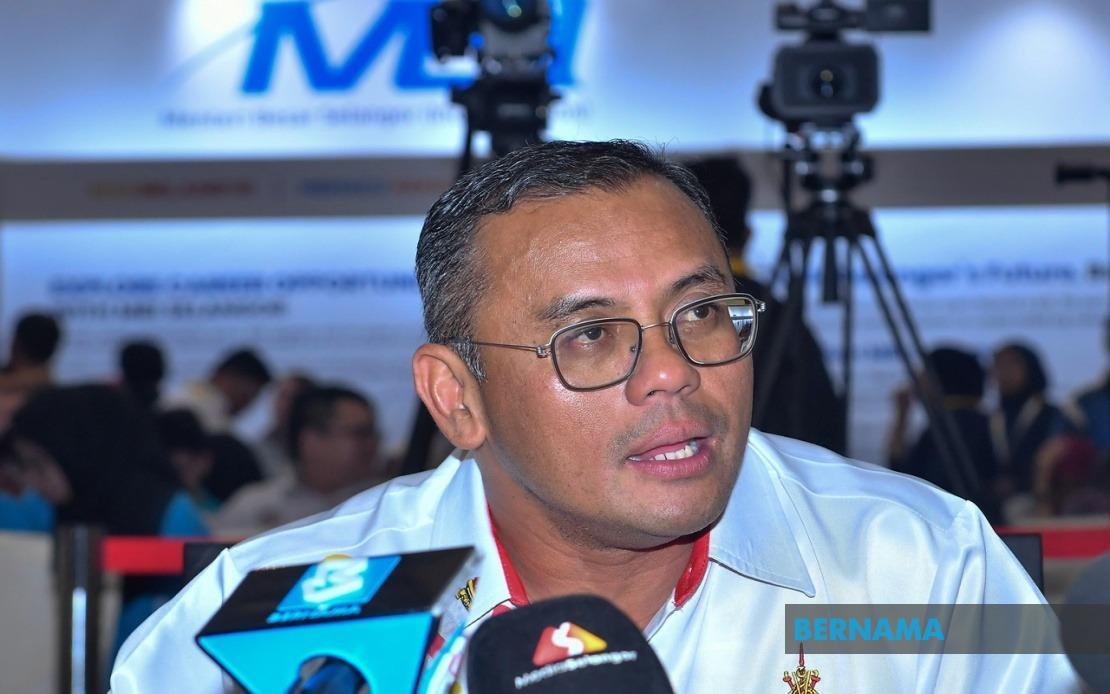
The Selangor state government is moving swiftly to address the employment crisis unfolding at Panasonic AVC Networks Kuala Lumpur Malaysia Sdn Bhd, announcing plans to meet with affected workers next week to chart a path forward through assistance programmes and job placement initiatives. Menteri Besar Datuk Seri Amirudin Shari disclosed the intervention strategy after launching the Selangor Mega Jobcare 2026 programme in Shah Alam, signalling the state administration's commitment to cushioning the impact of the television production facility's imminent closure.
Panasonic Malaysia Sdn Bhd confirmed yesterday that it would cease manufacturing operations for two product lines, eliminating approximately 400 jobs by the end of March 2026. The decision reflects broader pressures within the consumer electronics sector, where production consolidation and shifting manufacturing patterns continue to reshape Malaysia's industrial landscape. For the affected workers, many of whom have developed careers and personal lives anchored to employment in Selangor, the closure represents a significant disruption to their economic security and household stability.
The state government's response demonstrates a structured approach to labour dislocation. V. Papparaidu, chairman of the State Human Resources, Poverty Alleviation, Indigenous & Minority Affairs Committee, will lead negotiations with the impacted workforce alongside representatives from the Social Security Organisation (PERKESO). This collaborative framework aims to gather comprehensive information directly from workers about their circumstances, qualifications, and employment aspirations, laying groundwork for tailored intervention strategies rather than one-size-fits-all solutions.
Immediate relief measures already feature in the government's planning. Amirudin outlined provisions for emergency food assistance, acknowledging that retrenchment often creates urgent household hardships during the transition period. However, the state leadership has framed immediate relief as merely the starting point, with sustained employment placement emerging as the cornerstone of longer-term support. Officials recognize that temporary assistance, whilst essential, cannot substitute for genuine income-generating opportunities that allow workers to maintain the living standards and social integration they have established within Selangor communities.
PERKESO's newly introduced unemployment insurance mechanism represents a significant policy innovation for Malaysia's social safety net. The phased payment structure beginning at eighty percent of monthly salary during the first month following retrenchment, declining to fifty percent in the second month and thirty percent thereafter, provides a scaffolded income bridge as workers search for alternative employment. Papparaidu characterized this initiative as particularly valuable for Selangor residents navigating involuntary job transitions, suggesting the state perceives this PERKESO mechanism as a competitive advantage in managing economic disruption.
The timing of the Panasonic closure arrives as Selangor simultaneously launches an expansive job fair designed to absorb displaced and emerging workers. The Selangor Mega Jobcare 2026 programme has mobilized one hundred forty-seven employers advertising more than eleven thousand vacancies, with approximately sixty-two percent offering monthly compensation exceeding RM3,000. The career fair, operating at the Shah Alam Convention Centre through collaboration with MYFutureJobs, targets individuals aged eighteen to sixty, casting a deliberately broad recruitment net to ensure Panasonic workers compete alongside other job seekers for available positions.
The scale of opportunities presented through the Mega Jobcare 2026 fair substantially exceeds the number of displaced Panasonic workers, mathematically suggesting sufficient vacancies exist within Selangor's economy to absorb most affected employees. However, structural misalignments between available roles and workers' existing skillsets present a complicating factor. Manufacturing workers possessing deep expertise in television production assembly may require retraining or credential acquisition to access positions in service sectors, technology, or other manufacturing segments. The government's emphasis on employment placement implies recognition that simply announcing available jobs falls short; deliberate matching and potentially reskilling support will likely prove necessary.
This employment crisis illuminates broader vulnerabilities within Malaysia's manufacturing ecosystem, particularly regarding consumer electronics production. Panasonic's decision reflects global industry trends favouring production consolidation and geographical redistribution toward lower-cost jurisdictions. For Selangor, historically positioned as a manufacturing hub, such closures signal an evolving economic landscape where automation, regional competition, and multinational corporate restructuring continuously reshape employment terrain. State policymakers increasingly confront the challenge of facilitating workforce transitions whilst simultaneously attracting investment into higher-value manufacturing and emerging sectors.
The government's intervention strategy also carries implications for how Malaysia manages corporate restructuring broadly. Rather than treating retrenchment as purely a private sector matter between employers and workers, Selangor has positioned itself as an active facilitator, leveraging state employment infrastructure and social security partnerships to mitigate individual hardship. This approach reflects recognition that labour market dislocation generates spillover costs throughout communities—reduced consumer spending, strained household finances, educational disruptions for workers' children—justifying proactive state engagement alongside employer responsibility.
Looking toward implementation, the success of Selangor's intervention depends substantially on coordination between multiple actors. PERKESO must efficiently process unemployment insurance claims and ensure workers understand entitlements. The government must actively match worker profiles with Mega Jobcare vacancies through counselling and placement services. Employers participating in the job fair must genuinely accommodate workers seeking transitions rather than treating the programme as a recruitment exercise focused on ideal candidates. Workers themselves must navigate retraining requirements, potential relocations within Selangor, and psychological adjustment to post-redundancy circumstances.
The Panasonic closure, ultimately, tests whether Selangor's institutional capacity for managing labour transitions matches political rhetoric about supporting displaced workers. The next weeks will prove instructive as government officials meet with the affected workforce, translating announced support measures into concrete assistance plans. For the four hundred television production workers, the state government's response will determine whether retrenchment becomes a catalyst for career advancement within Selangor's evolving economy or whether inadequate placement and reskilling support creates sustained underemployment and economic anxiety within families previously anchored to manufacturing stability.

