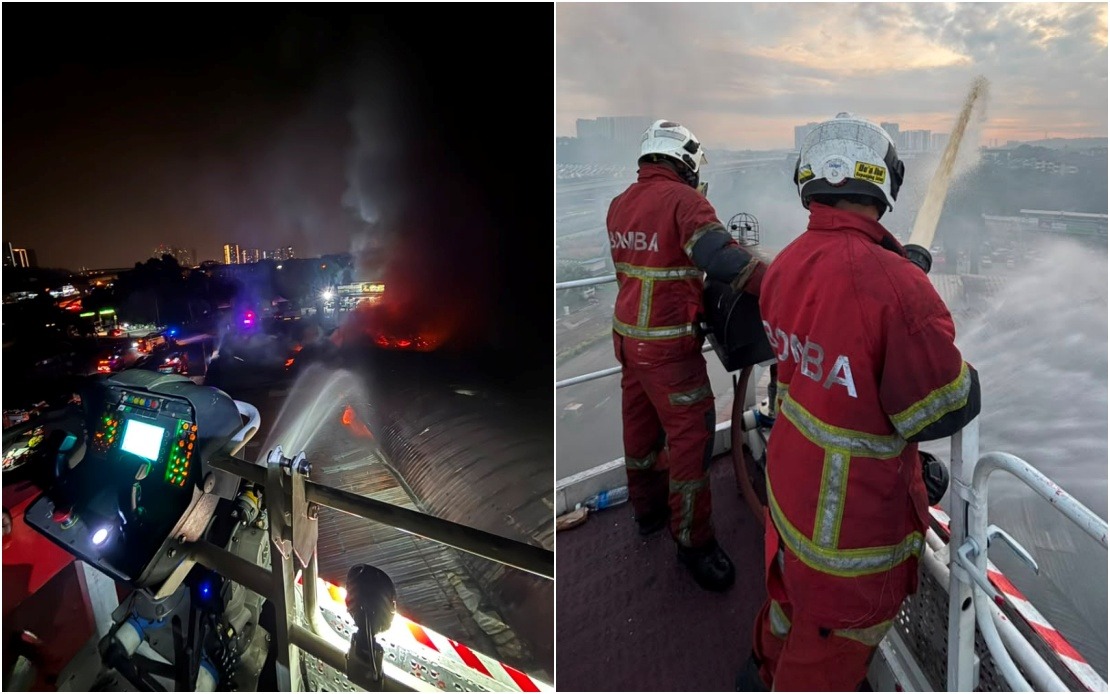
The Selangor Wholesale Market in Serdang has resumed normal trading following a major fire that destroyed three commercial units in the early hours of yesterday morning, according to the Selangor Agricultural Development Corporation (PKPS), which oversees the facility's operations. The blaze, which ignited around 11 pm and required nearly seven hours to fully extinguish, demonstrated the market's resilience as neighbouring traders reopened their businesses and continued servicing customers throughout the day.
Three distinct commercial premises fell victim to the flames: a retail kitchenware outlet, an egg wholesaling business, and a hardware shop. Despite the concentrated damage to these three units, the incident had minimal cascading impact across the sprawling wholesale complex, which houses dozens of active retailers serving the broader Klang Valley region. Datuk Izham Hashim, chairman of Selangor's Agriculture Committee, visited the site to assess the situation and reassure stakeholders about market continuity, observing that neighbouring shopkeepers had immediately resumed operations and customer traffic remained steady.
The emergency response involved coordinated efforts from multiple agencies, reflecting the seriousness of the situation. A total of 68 personnel from the Selangor Fire and Rescue Department (JBPM) worked alongside volunteers from the state's firefighting corps, uniformed police officers, and officials from the Subang Jaya City Council to contain and ultimately eliminate the blaze. The coordinated effort prevented the fire from spreading to adjacent structures, a critical outcome given the tightly packed configuration of the market's buildings and the predominance of flammable goods stored throughout the facility.
The fire's cause remains under investigation, with forensic specialists beginning their examination of the destroyed units. Ashrul Riezal Asbar, assistant director of the Selangor JBPM Operations Division, indicated that investigators expect to complete their preliminary report within two weeks. No injuries or fatalities were recorded during the incident, a fortunate outcome given the nighttime timing and the speed at which the fire spread across the three affected premises.
Lee Chee Leong, the 42-year-old proprietor of the destroyed kitchenware shop, recounted the shock of receiving an urgent call from staff around 11 pm on the evening of the incident. By the time he arrived at the market some 20 minutes later, the fire had already reached catastrophic proportions, making any salvage efforts impossible. Lee, who had operated continuously from the same premises for the past 18 years, assessed his financial losses in the millions of ringgit, representing the destruction of inventory, fixtures, and business equipment accumulated over nearly two decades of trading.
The incident's silver lining for the wholesale market sector lies in the state government's accelerated timeline for facility modernisation. Datuk Izham announced that Selangor authorities are finalising comprehensive plans to construct a purpose-built replacement facility incorporating contemporary design standards and enhanced fire safety mechanisms. This new supermarket-style complex is scheduled to commence construction during the opening months of 2025, representing a significant capital investment in upgrading one of the region's most important agricultural trading hubs.
The redevelopment project reflects growing concerns across Southeast Asian supply chains about infrastructure resilience and regulatory compliance in wholesale markets. The new facility will prioritise centralised business operations that consolidate dispersed trading functions into an integrated environment where regulatory oversight and safety protocols can be more effectively implemented. This modernisation aligns with broader trends in Malaysia's urban planning, where aging wet markets and wholesale centres are gradually being replaced with climate-controlled, sanitised facilities that meet contemporary food safety and commercial standards.
The Selangor Wholesale Market holds particular significance for the broader region's food distribution network. As the largest wholesale trading centre managed by PKPS across Selangor, the facility serves as a crucial intermediary between agricultural producers and downstream retail networks throughout the Klang Valley and surrounding areas. The institution of improved building safety standards and centralised operations will therefore have multiplier effects throughout the regional supply chain, enhancing overall resilience and reducing vulnerability to catastrophic disruptions.
For traders like Lee and other business operators at the market, the promised reconstruction offers both opportunity and uncertainty. While modern facilities typically command premium rental rates compared to older premises, they generally provide improved access to utilities, waste management systems, and customer amenities that can enhance overall commercial performance. However, the transition period during construction will inevitably displace established businesses, requiring careful planning and possibly temporary relocation arrangements by PKPS to minimise losses for affected vendors.
The timeline for the 2025 construction start represents an aggressive schedule by Malaysian standards, suggesting that state authorities regard the modernisation as a priority infrastructure project. Successful completion would likely position the new facility as a benchmark facility for agricultural wholesale operations across the Klang Valley, potentially influencing similar redevelopment efforts at other aging markets throughout Selangor and neighbouring jurisdictions. The project also demonstrates how crisis incidents can catalyse longer-term infrastructure improvements that might otherwise face implementation delays due to budget constraints or competing priorities.

