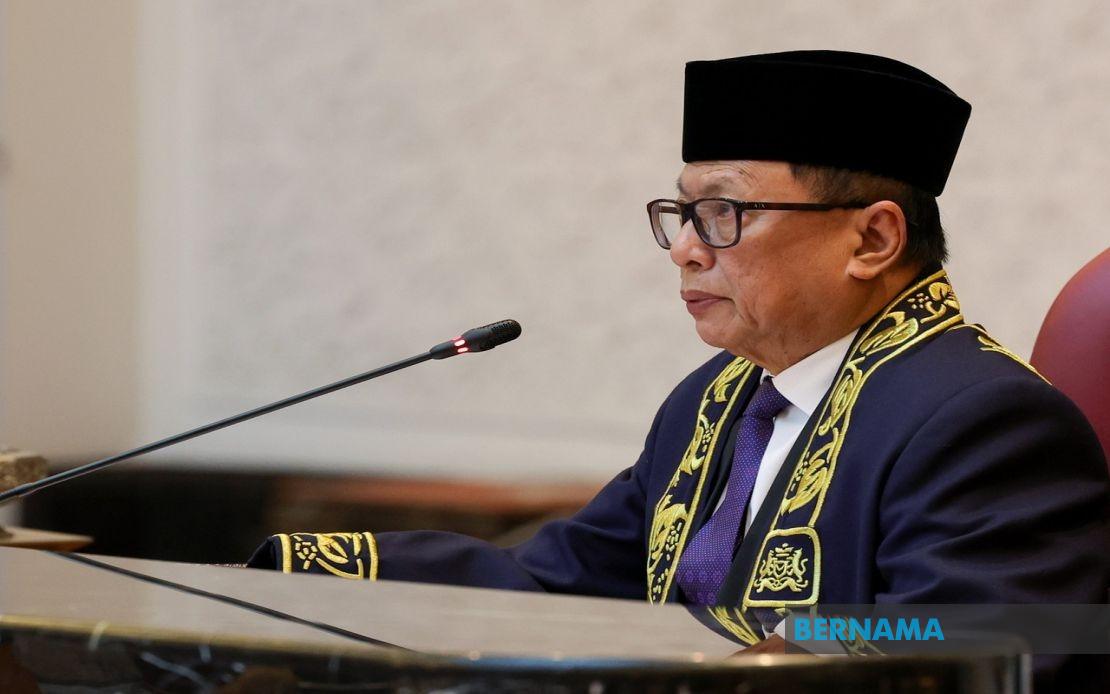
A significant rupture within Johor UMNO emerged on June 25 when Datuk Dr Mohd Puad Zarkashi, a Supreme Council member and incumbent Rengit state assemblyman, publicly announced his resignation from the party. In a statement distributed through social media, Zarkashi declared his immediate departure, framing the decision as a calculated step to preserve his political integrity and speaking space within Malaysia's complex partisan landscape.
The timing of Zarkashi's exit holds particular weight given his prominent standing within UMNO's hierarchy and his lengthy service record. As a former Johor State Legislative Assembly Speaker and onetime Deputy Education Minister from 2009 to 2013, he represents precisely the type of experienced, credentialled figure whose departure signals deeper institutional concerns. His decision to leave voluntarily, rather than wait for potential party disciplinary action, underscores his conviction regarding the seriousness of his grievances and his desire to avoid the stigma of expulsion.
Zarkashi's central complaint centres on what he characterises as a fundamental absence of principled leadership within the Johor UMNO apparatus. He has specifically portrayed Johor's Chief Minister, Onn Hafiz, as a "pak turut"—a colloquial term meaning yes-man—suggesting that the state party leadership operates without independent judgment or willingness to challenge questionable decisions from above. This accusation extends beyond personality to structure: Zarkashi describes Johor UMNO itself as a "tethered puppet," implying the state party lacks genuine autonomy in critical matters and operates under external constraints that prevent it from functioning with authentic integrity.
The allegation gains credibility when contextualised against Zarkashi's earlier public statements regarding irregularities in the candidate selection process for the upcoming Johor state election. On June 24, he hinted that significant misconduct had occurred in how Barisan Nasional candidates were chosen, suggesting that systemic problems in party governance had prompted his decision. Zarkashi's framing of his departure as an act of "political courage" rather than opportunistic defection indicates he views his exit as a principled response to institutional dysfunction that, if left unaddressed, could metastasise into more serious governance failures.
Central to understanding Zarkashi's motivation is recognising that his political trajectory offered him alternative paths. He had already decided not to defend his Rengit seat in the forthcoming election, suggesting he was considering stepping back anyway. Rather than quietly withdraw from active politics, however, he has chosen to use his departing moment as a platform for public criticism. This strategy allows him to highlight his concerns while avoiding accusations that personal frustration or electoral disappointment drives his dissent—a preemptive strike against the predictable narrative that disgruntled politicians inevitably cite organisational malfeasance when their own political fortunes decline.
Zarkashi's parliamentary record provides context for his standing within the party. He won Batu Pahat in the 12th General Election with a majority of 12,968 votes, subsequently losing the seat in the 13th General Election to PKR's Datuk Mohd Idris Jusi by a narrower margin of 1,524 votes. This mixed electoral performance—a significant victory followed by a closer defeat—suggests Zarkashi remains a politically competent figure rather than a marginal operator, lending weight to his institutional critique. Additionally, his tenure as Director-General of the Special Affairs Department from March 2015 to April 2018 demonstrates administrative experience at the federal level, reinforcing his credibility when commenting on governance standards.
For Malaysian political observers, Zarkashi's departure reflects ongoing tensions within UMNO's Johor machinery between established figures of the pre-Sheraton Move era and the current leadership alignment. The Sheraton Move of 2020, which dramatically reshuffled the federal political landscape, created ripple effects throughout state party structures. Johor's political machinery, once dominated by certain factions, has undergone significant recalibration under current leadership. Veterans like Zarkashi, whose formative political experiences predate these recent upheavals, may find themselves increasingly sidelined or constrained in expressing views that deviate from current leadership preferences.
The implications for UMNO's internal cohesion merit careful consideration. While individual departures do not necessarily indicate systemic collapse, a figure of Zarkashi's seniority raising public concerns about governance integrity signals that frustrations extend beyond isolated personal disputes. His specific allegations regarding candidate selection processes touch on mechanisms fundamental to party legitimacy—if UMNO cannot be trusted to choose candidates transparently and fairly, it undermines core claims to represent Malay-Muslim interests authentically. This remains a sensitive issue within Malaysian politics, where perceptions of fair dealing within major coalitions carry substantial weight with voters.
Zarkashi's self-positioning as a champion of "differing views" without fear of accusations of disloyalty also resonates with broader debates about intellectual freedom within Malaysia's major political parties. His statement that leaving UMNO frees him to criticise without being accused of betrayal suggests he experienced real constraints on dissenting speech while remaining within the party structure. For a party claiming to represent Malaysia's largest ethnic group, such restrictions on internal debate potentially undermine its capacity to develop nuanced policy responses or challenge problematic decisions from leadership.
Looking forward, Zarkashi's departure may influence other potentially restless UMNO figures contemplating their political futures. His public justification—framed in terms of principle rather than personal grievance—provides a template for others considering exit strategies. Whether his warnings about governance standards within Johor UMNO catalyse internal reform discussions or merely represent a high-profile exit remains uncertain. However, his detailed allegations regarding candidate selection irregularities suggest substantive concerns rather than ideological splits, making them potentially more damaging to party unity than personality-driven conflicts.
The broader significance of this rupture extends to questions about UMNO's capacity to retain experienced, credentialled figures who prioritise institutional integrity. As Malaysia navigates post-Sheraton Move political realignments, retaining and empowering voices within major parties who insist on governance standards becomes increasingly important. Zarkashi's decision to leave rather than continue compromising suggests that for some senior figures, the distance between personal loyalty to party leadership and commitment to institutional standards has become unbridgeable. This tension, playing out across Malaysia's major coalitions, will likely continue shaping political dynamics in coming months.

