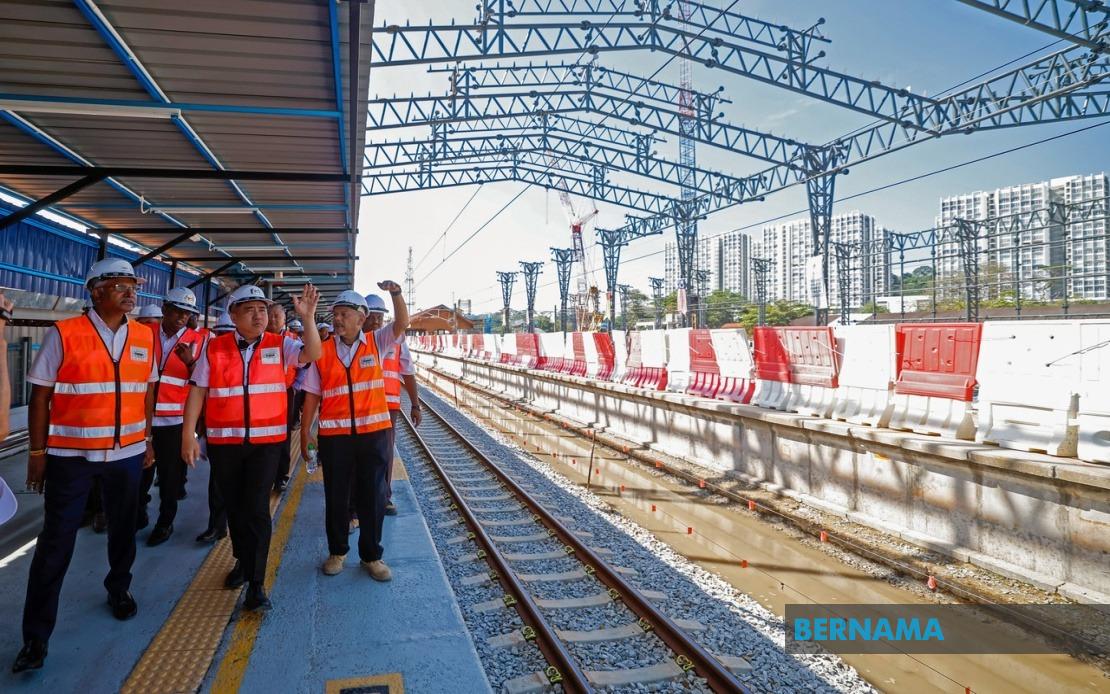
Seremban is preparing for a major transport transformation with its ambitious Seremban Sentral railway station project now at 35 per cent completion and on track for a March 2027 opening. Transport Minister Anthony Loke announced the milestone during an inspection of the site, emphasizing that critical foundational work—including complex piling and underground utility relocation—is now finished, paving the way for faster construction progress in the coming months.
The RM100 million undertaking represents a significant infrastructure investment for the city and the broader Klang Valley region. At its heart lies an intriguing blend of preservation and modernity: the project will seamlessly integrate the heritage Seremban KTMB Station, a structure over a century old, with an entirely new modern transport facility. This fusion is far more than cosmetic; it reflects a broader national strategy to respect historical landmarks while meeting contemporary transportation demands. The architectural vision incorporates Minangkabau-inspired design elements and green building principles, signaling an approach that balances heritage conservation with sustainability considerations.
Loke's explanation of the construction phases reveals why initial progress appeared sluggish. The first stage involved precisely locating underground piling points and carefully relocating underground cables and utilities—painstaking work that cannot be rushed without compromising structural integrity. These foundational tasks, though lengthy, were essential prerequisites. Now that they are substantially complete, construction crews can move into faster-paced phases involving roof installation, glass structures, and interior finishings. This transition typically accelerates project momentum significantly, offering reasonable confidence in the March 2027 delivery target.
The station's capacity design demonstrates forward-thinking infrastructure planning. Initially designed to handle 30,000 passengers daily, the facility can eventually expand to accommodate 120,000 daily travellers. To achieve this flexibility, planners incorporated six platform positions but are constructing only three initially, with three additional slots available for future development. This scalable approach anticipates Seremban's growth trajectory over the next three to five decades, avoiding the costly expansions that plague inadequately planned stations elsewhere in the region. When coupled with completed double-track improvements, increased Komuter and Express Rail Transit (ETS) frequencies will make commuting from Seremban increasingly attractive.
Traffic management at the new station reflects careful urban planning. Dual entrance and drop-off points—one fronting Jalan Tunku Antah and another at the rear—are designed to distribute traffic flows and minimize congestion around the station precinct. This two-pronged access approach is particularly important in Seremban's context, where the station anchors the city centre and attracts significant vehicular volumes during peak hours. The thoughtful circulation planning should ease integration with existing city traffic patterns.
Parallel work on the heritage station itself has already concluded. The restoration of the original Seremban KTMB Station finished last month, incorporating electrical system upgrades and modern wiring while preserving the building's historical character. However, functional improvements extend beyond aesthetics. A newly constructed sewerage system now channels rainwater directly into Sungai Temiang, bypassing the station area entirely. This addresses a persistent operational headache: the platform and tracks were prone to flooding during heavy downpours, disrupting services and creating safety hazards. By redirecting stormwater, the new drainage infrastructure transforms the station into a more resilient facility capable of operating reliably through monsoon seasons.
For Malaysian railway enthusiasts and commuters, the Seremban project fits into a larger transport modernization narrative. The Klang Valley Double Track Phase 2 (KVDT2) project—a companion initiative critical to the region's rail capacity—has now reached 55.8 per cent completion. The temporary afternoon frequency reductions in Komuter services are a deliberate trade-off: accepting short-term service adjustments on one track allows the other to proceed with accelerated construction work. This strategy prioritizes long-term capacity gains over immediate convenience, a common approach in major transit upgrades worldwide.
The implications for Seremban are substantial. Once complete, Seremban Sentral will function as a catalyst for urban development, particularly through the planned transit-oriented development (TOD) project behind the station. The TOD Seremban Sentral mega-development leverages the new station's connectivity to encourage mixed-use development—residential, commercial, and recreational spaces clustered around high-quality public transport. This model, increasingly adopted across Southeast Asia, creates vibrant urban precincts while reducing car dependency. Seremban's positioning as a commuter hub between Kuala Lumpur and other northern destinations makes such development economically viable.
For regional context, Seremban Sentral represents the type of integrated transport infrastructure that Southeast Asian cities are prioritizing. As urbanization intensifies and traffic congestion worsens across Malaysia and the broader region, modernizing smaller city rail networks becomes essential. Seremban, historically overshadowed by Kuala Lumpur's dominance, gains enhanced connectivity and economic potential through improved rail infrastructure. The project also demonstrates Malaysian commitment to multimodal transport integration, merging local commuter rail, express services, and future connections into a single coherent facility.
Looking ahead, the March 2027 completion date assumes no significant setbacks during the remaining construction phases. While piling completion is genuinely a positive milestone reducing uncertainty, structural and finishing work often presents unforeseen challenges. However, Loke's confidence in accelerated progress appears grounded: foundational risks have largely been mitigated. For commuters, businesses, and residents in Seremban and surrounding areas, the new station promises improved connectivity, reduced journey times, and enhanced commercial opportunities. The integration of heritage and modernity also sends a cultural message that development need not obliterate Malaysia's architectural past.

