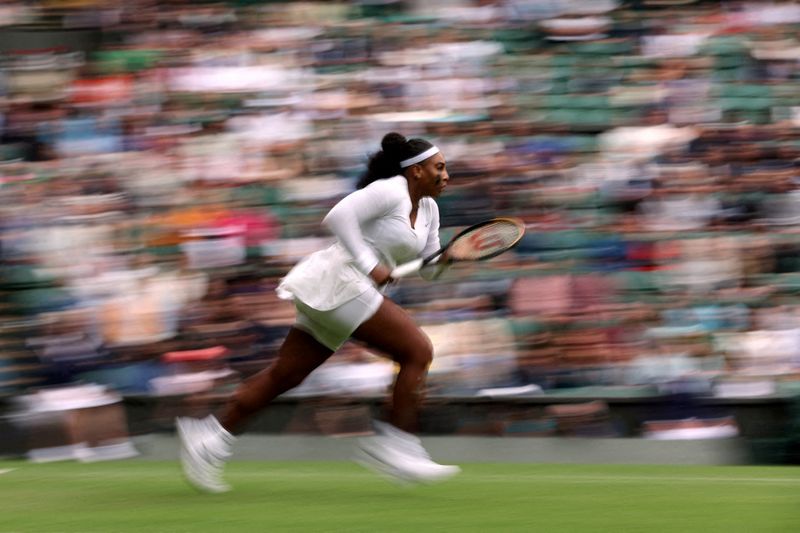
Serena Williams will walk on to Centre Court next week as the story that overshadows all others at Wimbledon, despite a women's draw stacked with formidable contenders seeking to claim the sport's most prestigious grass-court title. The 44-year-old American icon is making her return to singles competition for the first time since the 2022 U.S. Open, a four-year absence that has captured the imagination of tennis fans worldwide and secured the veteran champion a wildcard berth as the eighth and final entry into the main draw. Her comeback has transformed what was already shaping up to be a fiercely competitive tournament into an unmissable spectacle, guaranteeing soaring television audiences and dominating social media conversations across every corner of the globe.
Williams' decision to stage her comeback at Wimbledon—the venue where she claimed seven singles titles and cemented her legacy as arguably the greatest player in tennis history—speaks volumes about her confidence and ambition. Rather than easing back into professional tennis through a series of lower-profile tournaments as most athletes would choose, the 23-time Grand Slam champion has elected to make her statement at the sport's most hallowed venue. This choice has generated considerable intrigue within the professional tennis community, with former world number one Andy Roddick expressing astonishment at the psychological fortitude required to return directly at such an elite level. According to Roddick, scheduling a singles return at Wimbledon after such a prolonged absence would require a level of self-assurance that few athletes ever possess, let alone demonstrate when returning from years away from competition.
The logistics of Williams' comeback have been meticulous and purposeful. Having rejoined the World Anti-Doping Agency's testing pool in December following her initial retirement, she has undertaken significant physical preparation under the guidance of coach Rennae Stubbs. Reports indicate she has shed approximately 20 pounds using weight-loss medications and has been engaging in rigorous training sessions to restore her competitive sharpness. Her recent doubles appearance alongside Victoria Mboko at Queen's Club provided an encouraging glimpse of her readiness, with her signature 120 miles-per-hour serve—one of the most devastating weapons in the history of women's tennis—remaining potent and her baseline power undiminished by the years away from the professional tour.
Despite this promising preparation, singles competition presents a fundamentally different challenge from doubles play. Grass courts, in particular, demand specific tactical adjustments and physical demands that differ markedly from the clay and hard courts where Williams spent much of her recent competitive life. As fellow American Grand Slam champion Lindsay Davenport observed in commentary for the BBC, grass surfaces place unique pressures on returning players due to the speed of the ball, its low bounce, and the overall physical intensity required to succeed. Nevertheless, if historical precedent serves as a guide, Williams could potentially become the oldest woman to win a singles match at Wimbledon since Martina Navratilova achieved the feat at age 47 in 2004, suggesting that her prospects, while uncertain, are far from negligible.
The women's draw itself presents a landscape dramatically different from the one Williams dominated throughout her career. World number one Aryna Sabalenka will seek her first Wimbledon title after disappointing results at the French Open, where she suffered a shocking collapse in the quarter-finals, losing the final 10 games consecutively. Poland's Iga Swiatek brings momentum as a two-time reigning Wimbledon champion attempting to become the first back-to-back winner since Williams herself in 2016. Russian teenager Mirra Andreeva, at just 19 years old, recently became the youngest French Open champion in 34 years and will test her aggressive game against Wimbledon's demanding grass surface. American Coco Gauff continues her quest to finally master grass-court tennis, while defending champion Elena Rybakina and homegrown hopeful Emma Raducanu represent additional formidable contenders in a draw of unprecedented depth and unpredictability.
The remarkable turnover in Grand Slam champions over the past decade underscores how the women's game has fragmented into a collection of powerful but inconsistent competitors rather than one dominant force. Since Williams' last Wimbledon victory in 2016, eight different players have claimed the title, reflecting a strategic depth and competitive equilibrium that would have been unthinkable during the peak years of her dominance. Over the most recent six Grand Slam tournaments, six different players have captured the major titles, a statistic that illustrates the fundamentally competitive nature of modern professional women's tennis. While Sabalenka has held the world number one ranking since October 2024, her form and mental resilience remain questionable given her recent tendency to collapse under pressure during crucial matches.
Sabalenka's recent performances have raised legitimate questions about her psychological resilience on the court. In Berlin during her Wimbledon preparation, she squandered a deciding set against Jessica Pegula, losing it 6-0 and demonstrating the same unraveling of composure that characterized her French Open exit. Sabalenka visibly wears her emotions during matches, and the pressure of defending the favourite's label at Wimbledon while harboring knowledge of her recent setbacks could prove destabilizing. More problematically for the Belarusian champion, if she encounters Williams in the early rounds, the dynamic becomes psychologically intriguing: a victory against someone returning after four years away offers no competitive vindication, while a defeat would carry enormous reputational damage.
The possibility of a Williams-Sabalenka matchup illustrates the unprecedented challenge confronting the world number one at this tournament. Should Williams secure even three or four service holds and collect a set during their opening encounter, Sabalenka would face an impossible narrative regardless of the match's ultimate outcome. A win would be perceived as expected and hollow—defeating a returning 44-year-old—while a loss would instantly become the defining story of the tournament and further undermine confidence in her claims to world supremacy. This asymmetrical dynamic represents the unique leverage that Williams' presence injects into the entire competitive structure of the draw, transforming every potential matchup into a narrative minefield for opponents seeking to contest the more conventional tournament storylines.
From a Southeast Asian perspective, Williams' return carries broader implications for the sport's global appeal and competitive narrative. Tennis in the region has cultivated growing audiences, particularly for Grand Slam tournaments, and Williams' comeback dramatically elevates the tournament's must-watch status across Malaysian, Singaporean, and broader Asian markets. Her story—of athletic reinvention, physical resilience, and competitive ambition defying age—resonates across cultural contexts and appeals to audiences far beyond traditional tennis enthusiasts. The uncertainty surrounding her performance and the sheer improbability of her venture simultaneously captivates casual observers and serious followers alike, creating the type of compelling human-interest narrative that transcends sport.
While the conventional analysis focuses on whether Williams can advance through early rounds against younger, fresher competitors, the more profound question concerns how her presence reshapes the entire psychological landscape of the tournament. Her comeback implicitly challenges assumptions about athletic decline and competitive viability in the post-prime years, creating a subliminal narrative that influences how all other contenders approach their matches. The traditional favourites must contend not merely with each other but with the symbolic weight of Williams' unexpected return, and this intangible pressure could prove decisive in a draw where mental resilience and emotional control often determine outcomes at the margins. Whether Williams advances or exits early, her presence has fundamentally altered Wimbledon's narrative dimensions and guaranteed that this championship will be remembered as the tournament that belonged entirely to one returning legend, regardless of which younger champion ultimately claims the trophy.

